Transformer Hire in Reading, Berkshire
Transformer hire in Reading for running 110V site tools and setting up temporary power. Coppard supplies a range of kVA ratings across Berkshire. Call 0118 979 2828 with the tools you need to run, whether several go at once, and the supply already on site.
A transformer is chosen by what hangs off the far end of the cable, not by how many sockets it has. On a Reading fit-out or refurbishment the supply is often a single 240V point in a part-stripped building, so the real question is what that has to feed and whether the tools all run together. Get the loads down first and the rating follows.
The Range Runs From Portable Units to Larger Site Transformers
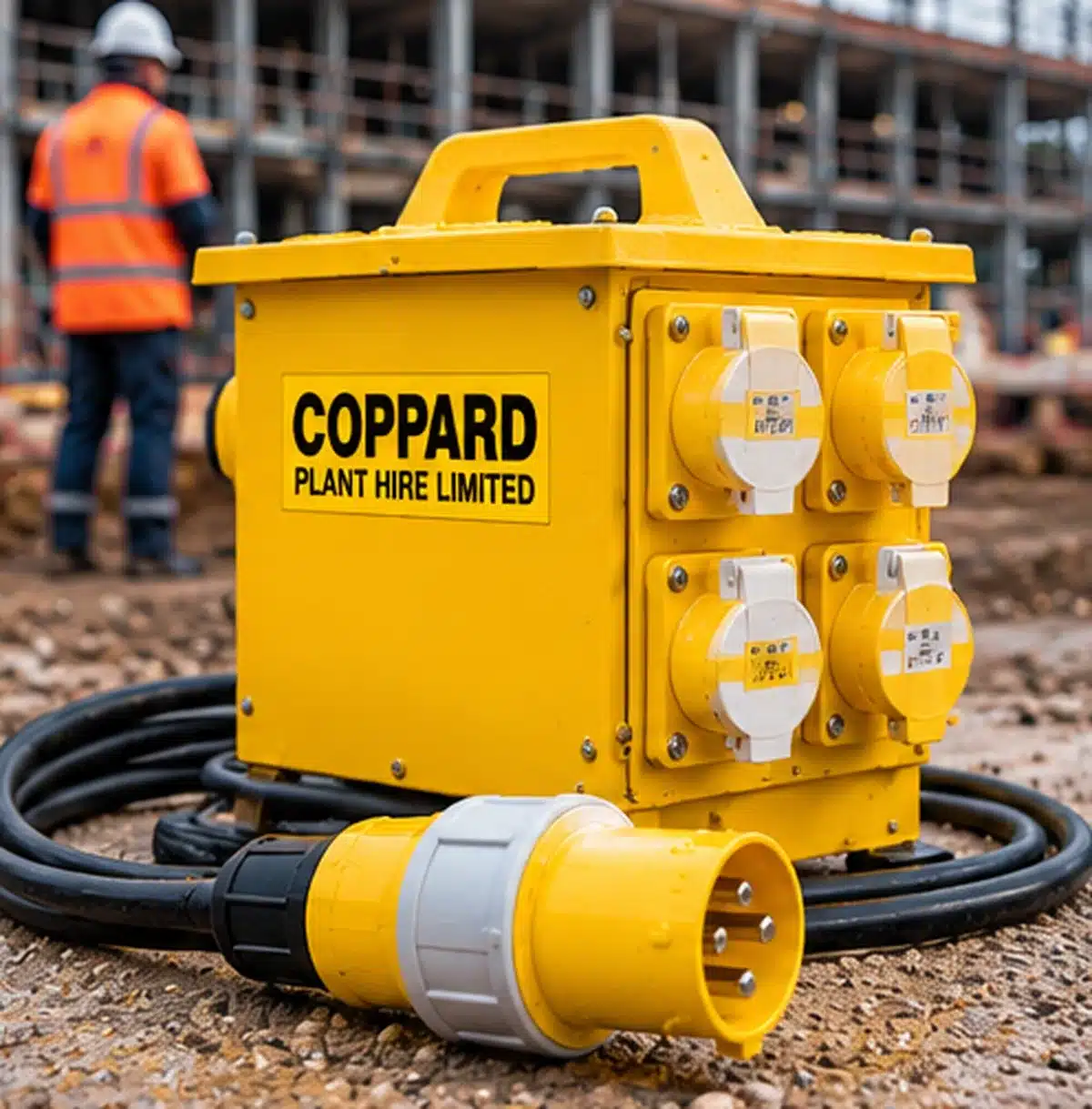
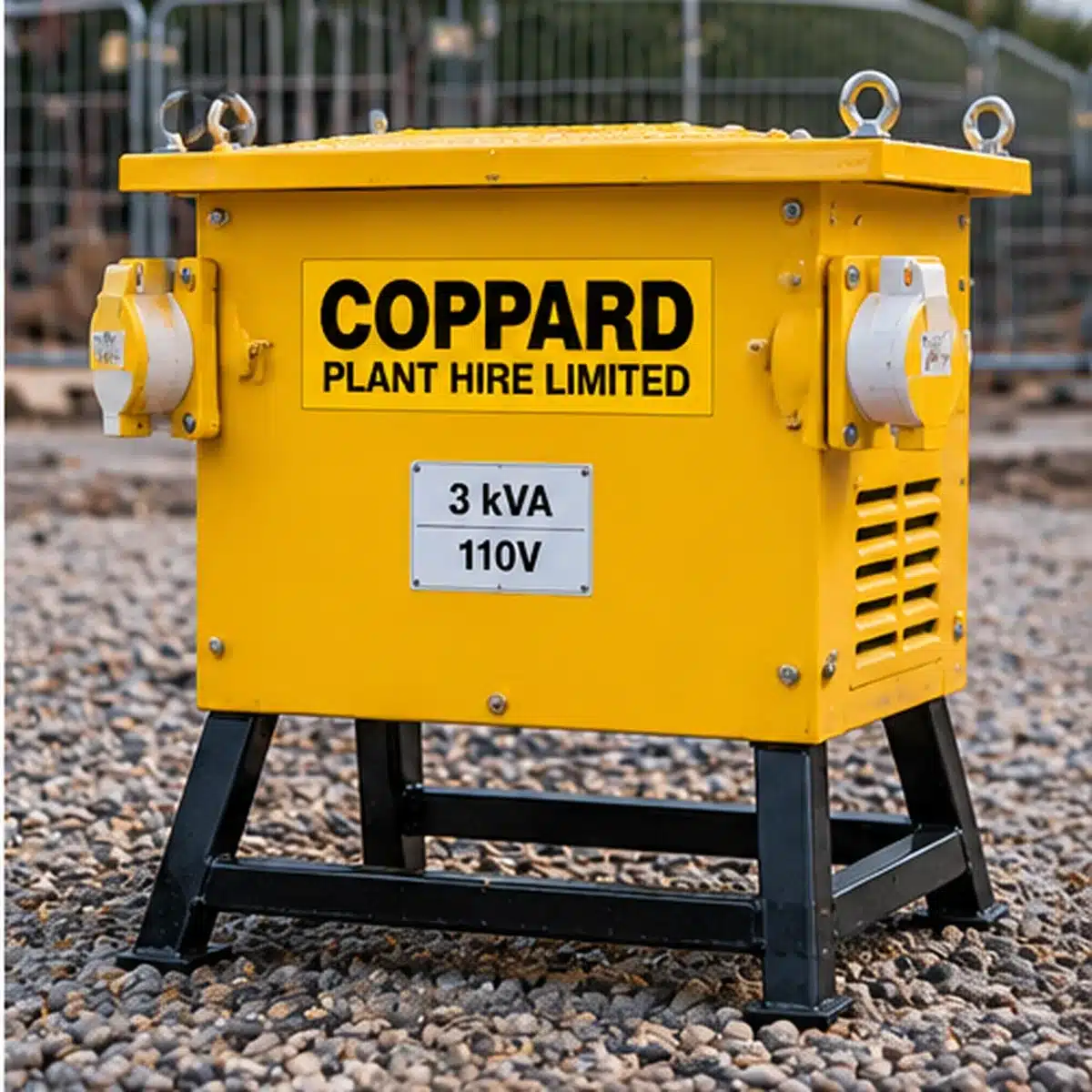
Coppard hires transformers from small portable units with one or two outlets up to larger site transformers, and the Coppard transformer range lists the kVA ratings available. Most convert a 240V supply down to 110V for construction tools. A one- or two-outlet portable suits a single tradesman on a small Reading job; a larger unit feeds several tools or a busier site.
Tell the depot the tools and how they will be used rather than asking for a rating cold. A transformer that runs one drill comfortably can be swamped once site lighting, a vacuum and a second power tool join it, so the choice starts with the work, not the box.
A 110V Supply Is a System, Not Just the Transformer
The transformer is one link in a temporary supply that also takes in the incoming 240V feed, the connectors, the extension leads and the tools themselves, and all of them have to be compatible. On a Reading refurbishment where the mains point sits well away from the work, the lead route and any distribution matter as much as the unit’s rating.
Site it where it connects without long, trailing runs, keep leads clear of doorways, damp patches and anywhere they get walked on or driven over, and think about how the supply reaches each work position. Planning the whole circuit at the point of hire beats sorting out cabling once the tools are already on site and the job has started.
Size the kVA by How the Loads Behave, Not the Socket Count
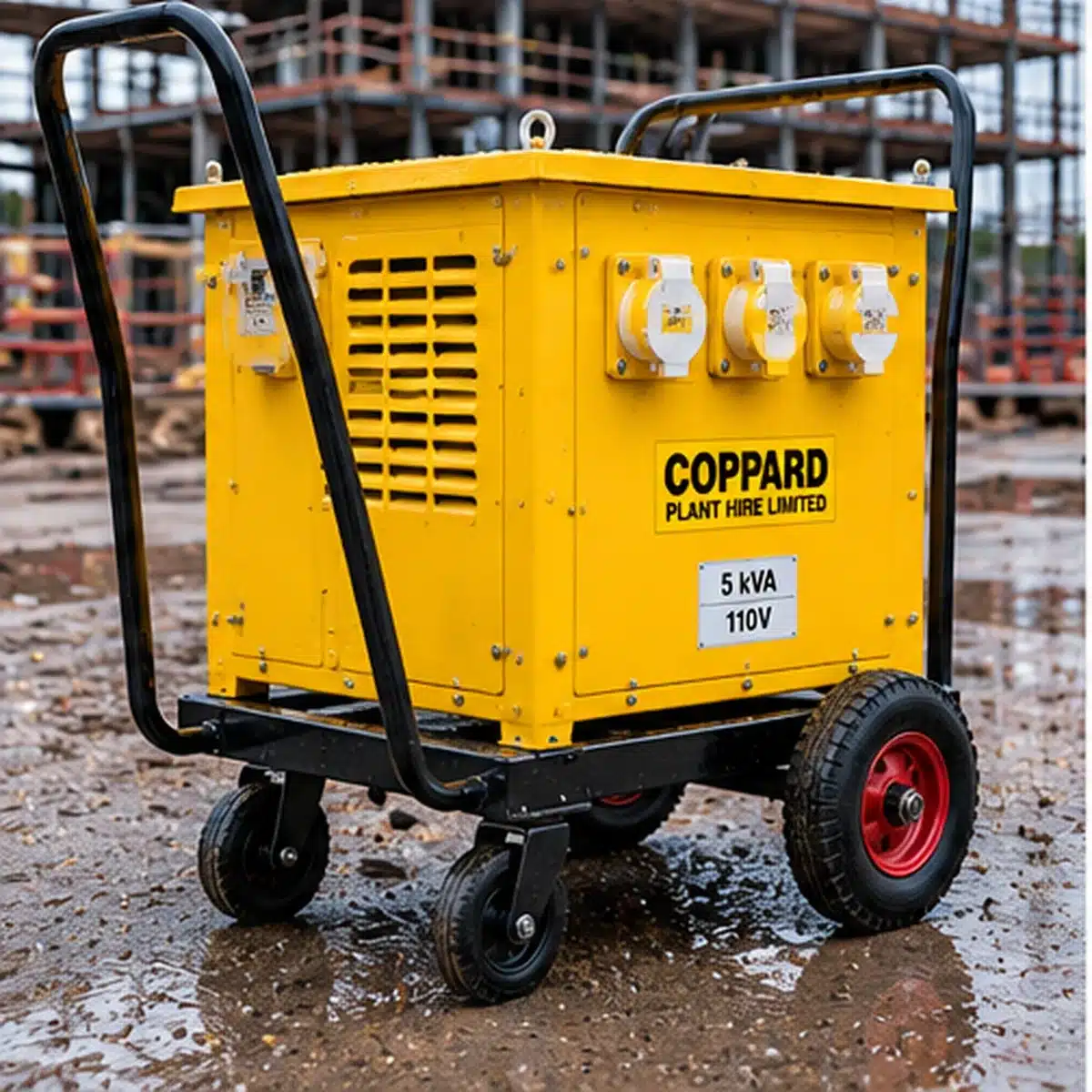
The kVA number tells you what a transformer can supply; what you need depends on the way the connected tools pull power in practice. Note the rated demand of each item and, importantly, which run at the same time, because a unit sized to the arithmetic total can still fall short once a motor’s higher starting current is added in.
Do not simply reach for the biggest unit either, since a larger transformer can need a different input supply and is heavier to move around a Reading site. If the labels are hard to read, give the Reading Tool Rental Service the tool makes and models and the rating can be checked against a realistic picture of what runs together.
Know When the Job Has Outgrown a Portable Transformer
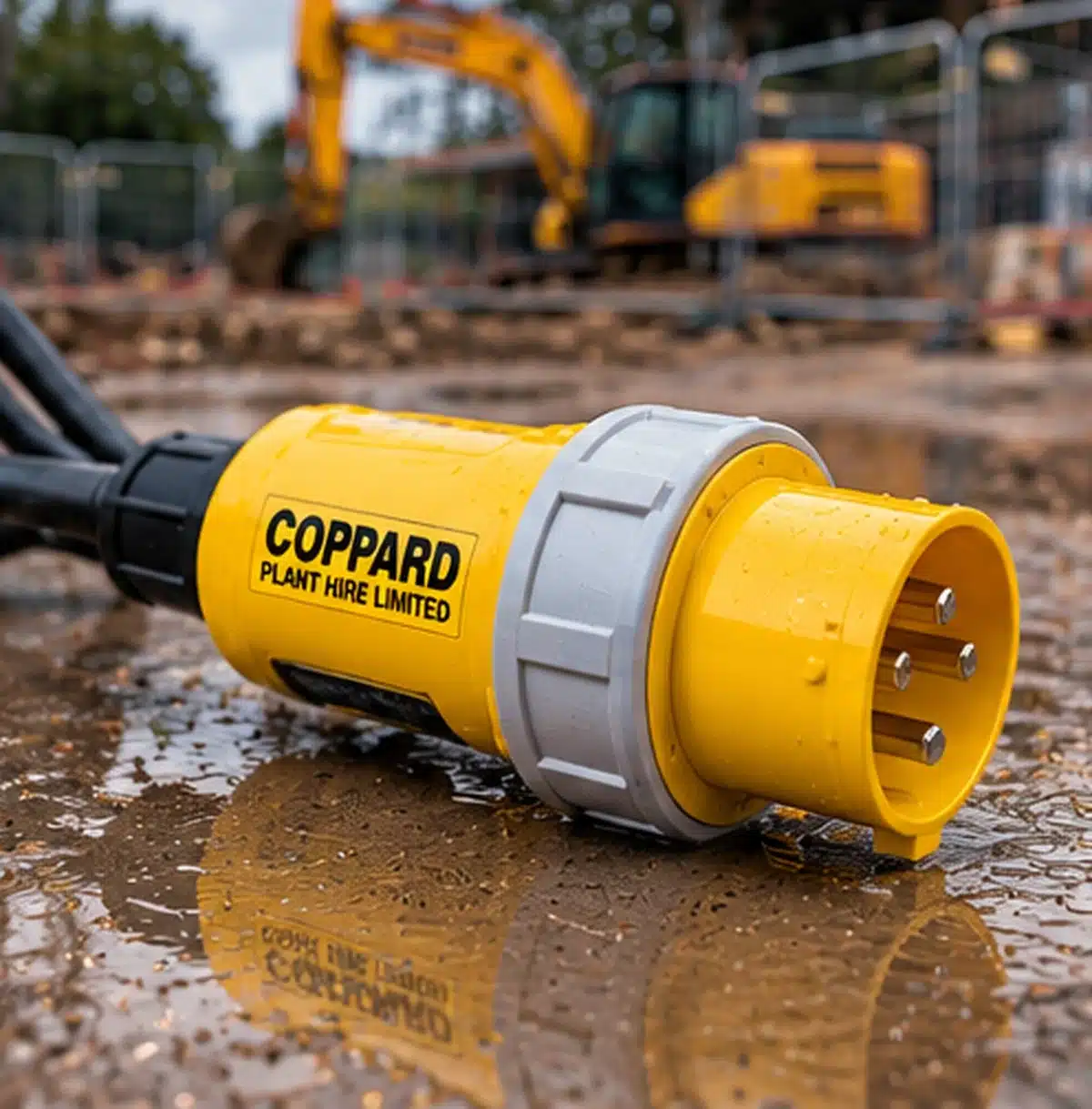
A portable transformer feeding a few tools is one thing; distributing power around a larger Reading project is another. Several circuits, higher combined loads, hard-wired connections or a three-phase supply point to distribution equipment and competent electrical input, not a string of portable units chained together.
Where a connection is not simply plug-and-play, a competent person should set the installation method. The value in recognising this early is that the right people and the right kit are arranged before anything is energised, rather than a portable unit being pushed past what it was meant to do.






Give the Reading Depot the Supply and the Load Together
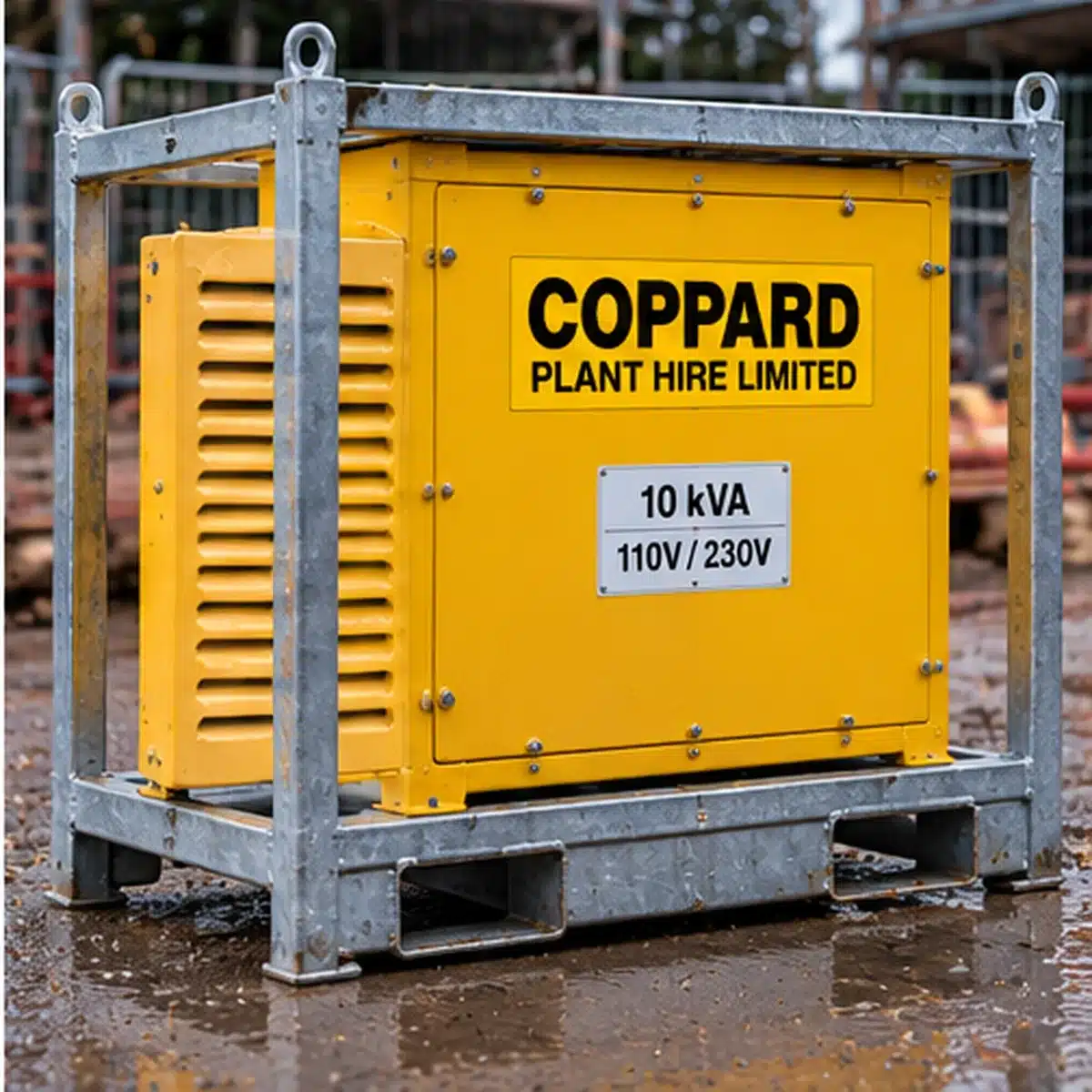
When you book, give three things: the incoming supply, the voltage the tools need, and the rough combined demand with a note of what runs at once. Add the distance from the supply to the work and, for a bigger job, how many separate work areas need feeding.
That lets the team match the transformer capacity and any compatible leads or distribution to the actual set-up rather than a guess at collection. Call 0118 979 2828 once the tool list is known, for work across Reading and the Thames Valley, so the unit suits the job before the site team starts connecting up.
Frequently Asked Questions - Transformer Hire in Reading, Berkshire
Why is 110V used for tools on a construction site?
Site tools run at 110V because that reduced voltage limits how hard a shock hits if something goes wrong, which is why it is the construction standard for portable equipment. It is not a free pass on safety, though. The unit, the leads and the plugs all still have to be right for a wet, dusty or knocked-about Reading site, and a lead with a cracked sheath is just as dangerous at 110V, so it comes out of service the same as any other.
How do I work out the kVA rating I need?
Add up what will be drawing power together, then leave room on top for the surge a motor pulls as it starts and for tools brought in later. Do not read the socket count as a capacity figure; two outlets can sit on a small unit. If you cannot make out the ratings on the tools, read Coppard the makes and models and the sizing can be worked from those instead of a guess that leaves the transformer straining.
Can I chain portable transformers for a bigger site?
For anything past a couple of tools, no. Once you have several circuits, heavier loads together, a hard-wired link or three-phase, the job wants designed distribution and a competent electrician, not a daisy-chain of portable units. Tell the depot how many work areas need feeding and what is already wired in, and they can sort the hire kit and point out where the connection method has to be set by someone qualified.
What should I tell the depot before hiring a transformer?
Four things get you the right unit: the feed coming in, the voltage your tools run at, roughly how much is drawing at once, and how far the work sits from the supply. On a bigger Reading job, add the number of areas needing power and anything already distributed. With that the depot sizes the capacity and the leads to what the site actually pulls, not to a socket count that says nothing about load.
What UK law covers temporary transformers and electrical systems at work?
The Electricity at Work Regulations 1989 require electrical systems to be built, maintained and used so as to prevent danger, and that applies to temporary site supplies as much as permanent ones. You can read the official regulations at Electricity at Work Regulations 1989 on legislation.gov.uk. So the transformer should be considered together with suitable leads, connectors, protective measures and the environment the equipment will work in.
Need transformer hire in Reading?
Give us the tools to run, whether they run together, and the supply on site. Call Coppard on 0118 979 2828.