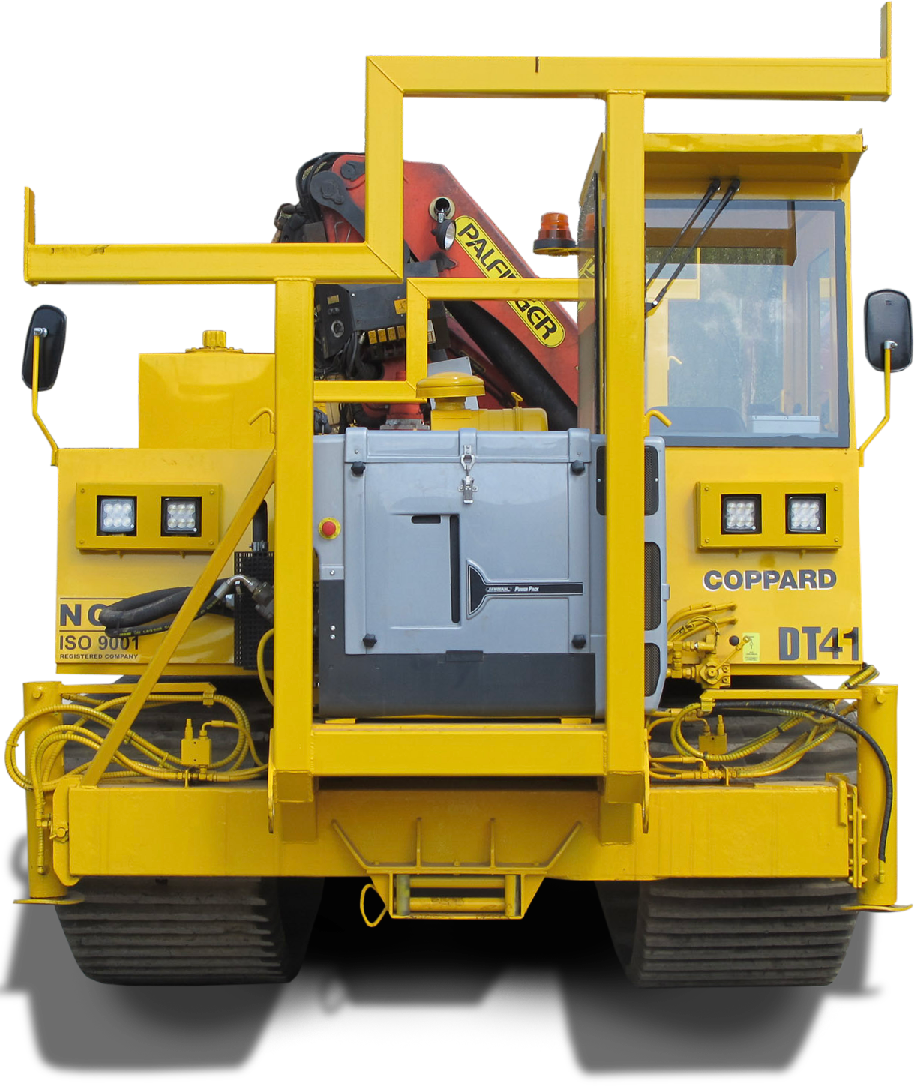
Load Mover Hire in Reading, Berkshire
Load mover hire in Reading for repositioning machinery and heavy equipment where a forklift cannot go. Coppard supplies multidirectional skates, rollers and a pallet truck across Berkshire. Call 0118 979 2828 with the weight, the floor and the route, including any lift, ramp or basement involved.
Around Reading much of this work is inside buildings still in use: a plant item out of a basement boiler room, a machine repositioned on an upper floor reached only by a goods lift, a heavy cabinet across a finished office slab. The limiting factor is rarely the skate’s rated capacity; it is the doorway, the lift plate and whether the floor takes a concentrated load. Start there.
Reading Jobs Are Often Basements, Upper Floors and Live Offices
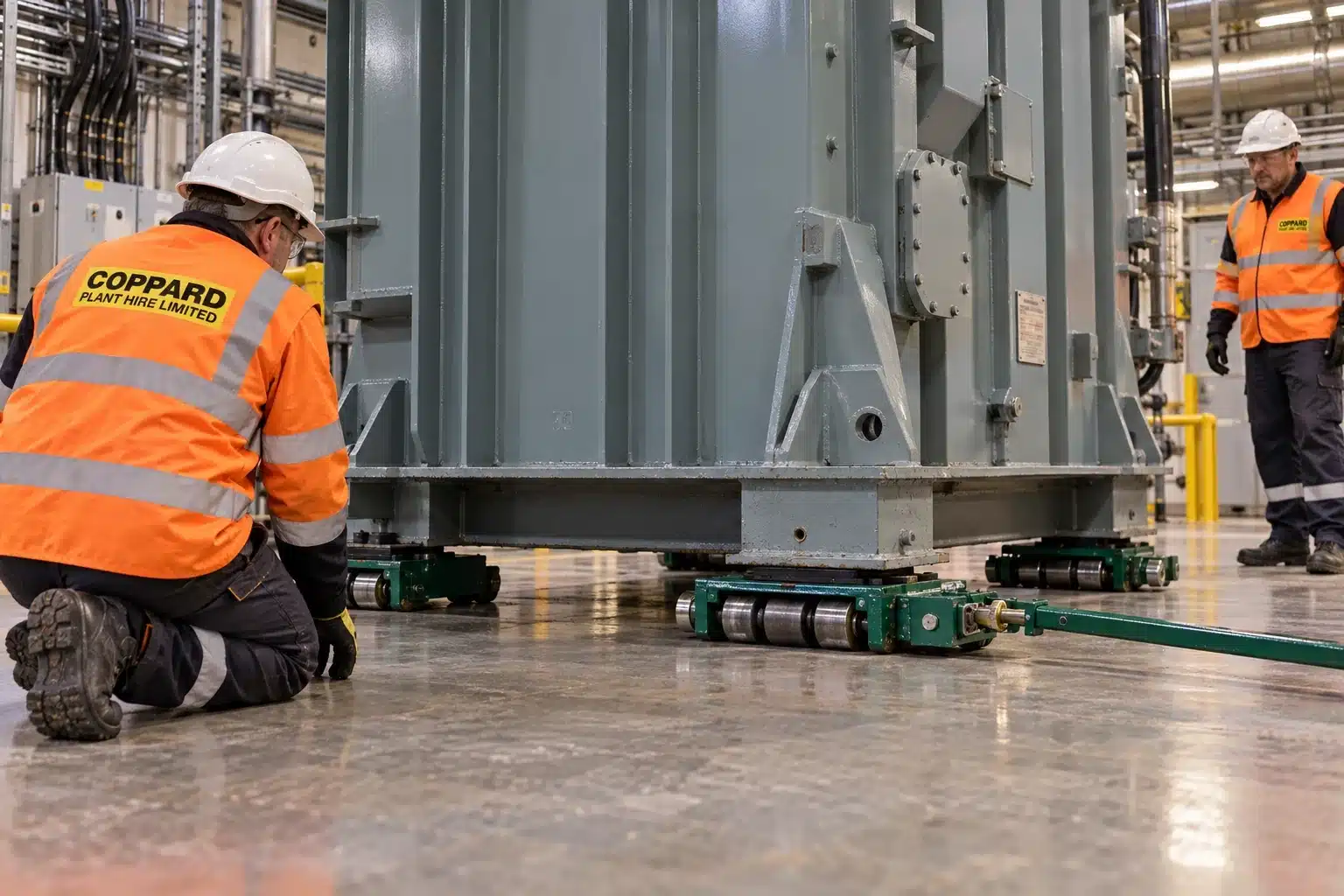
The typical Reading load-moving job is not an open yard. It is a machine coming out of a basement plant room up a tight stair-adjacent lift, a unit repositioned on the third floor of an occupied office, or heavy kit crossing a raised access floor in a fit-out. Each of those is set by access and floor strength long before the weight matters, and each usually has other people in the building at the same time.
So the first questions are practical: can the goods lift take the weight and does its floor plate sit level with the landing; will the route pass through fire doors that must not be wedged for long; can the finished floor carry a concentrated wheel load. Give the Reading Tool Rental Service those answers and the equipment is chosen for the building, not a tonnage in isolation.
Check the Floor Can Take a Concentrated Load
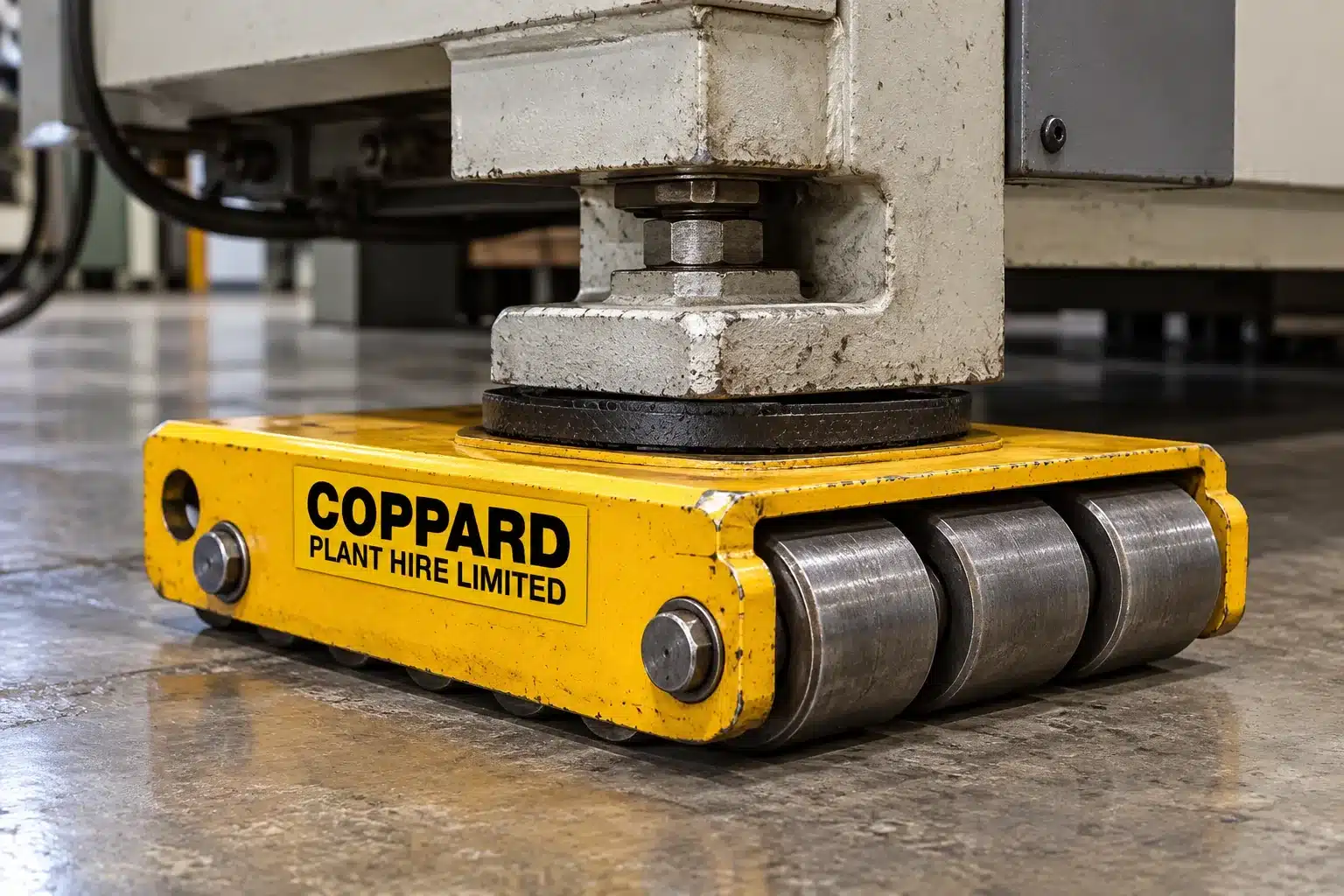
A floor that comfortably holds people and desks can still be overloaded by a heavy machine sitting on a few small skate wheels, because the load is concentrated into a small contact area. Suspended slabs, mezzanines and raised access floors common in Reading offices have real point-load limits that are easy to exceed without realising.
Spread the load where you can, keep to the structurally stronger lines of the floor where these are known, and if there is any doubt get the floor checked before the move rather than after. A cracked slab or a failed access-floor panel mid-move is a far bigger problem than a slower method chosen up front.
Pick the Mover for the Turns, Not the Straight
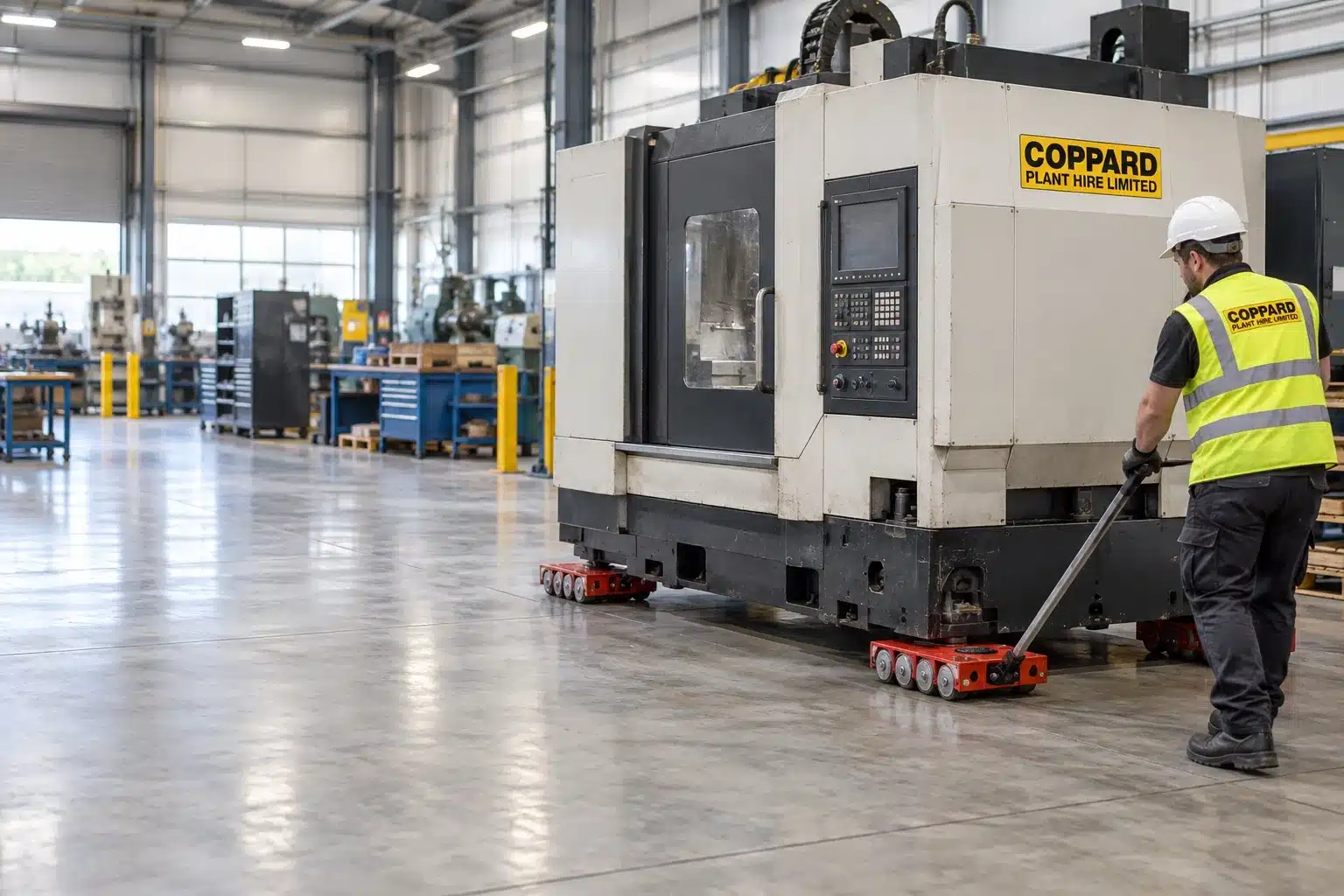
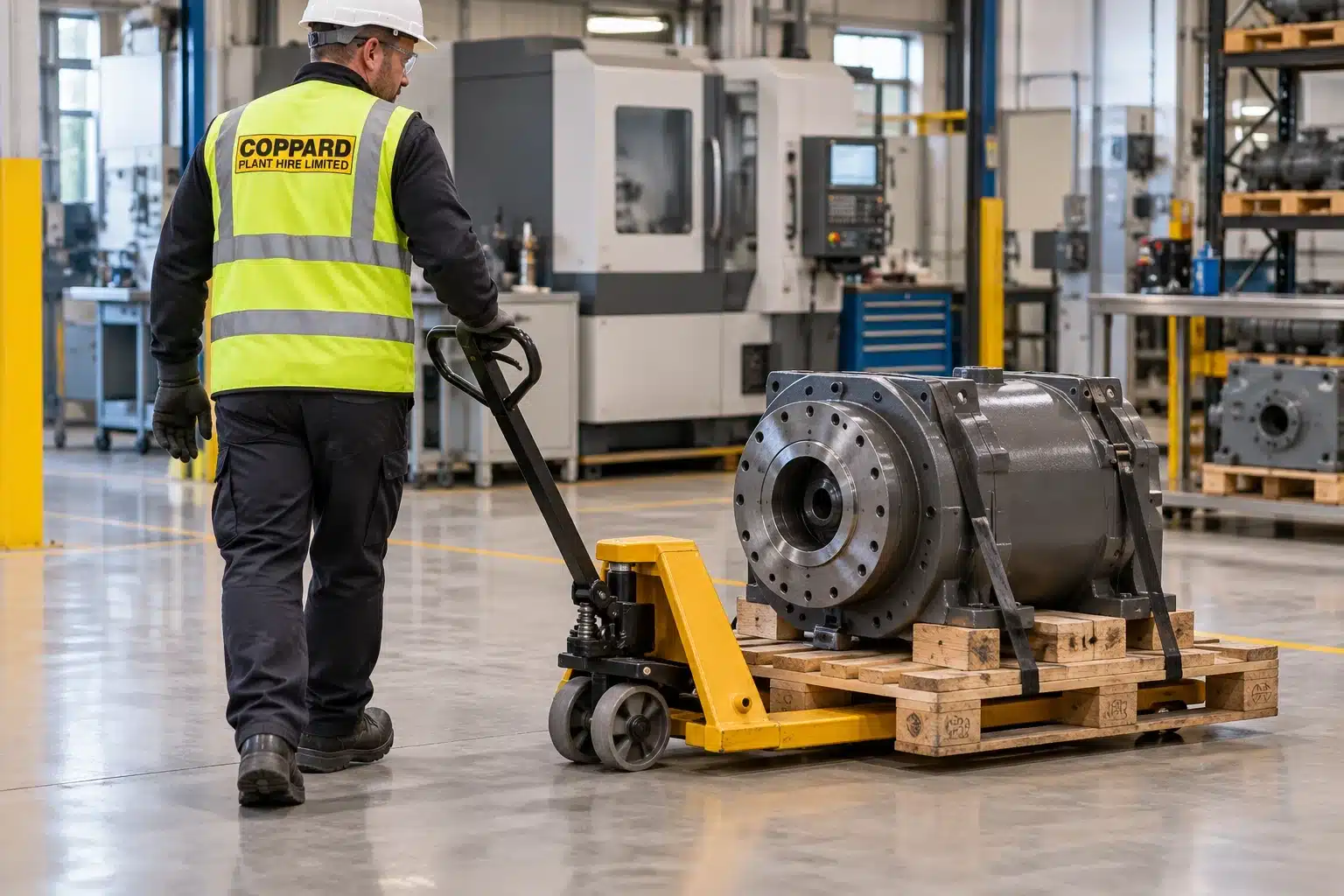
The Coppard load mover range covers multidirectional skates, rollers and a pallet truck. What usually decides between them on a Reading job is the tightest turn, not the longest straight. A multidirectional skate turns on the spot, which is what gets a machine round a corridor dog-leg or through a doorway into a plant room; rollers suit a clear straight run once the load is out in the open.
Measure the narrowest point and the tightest corner first, and check the movers can be steered there under load. A set-up that rolls easily down a corridor can jam solid at the turn into the lift lobby, so plan the awkward metre, not the easy ten.
Plan the Raise and the Set-Down at Both Ends
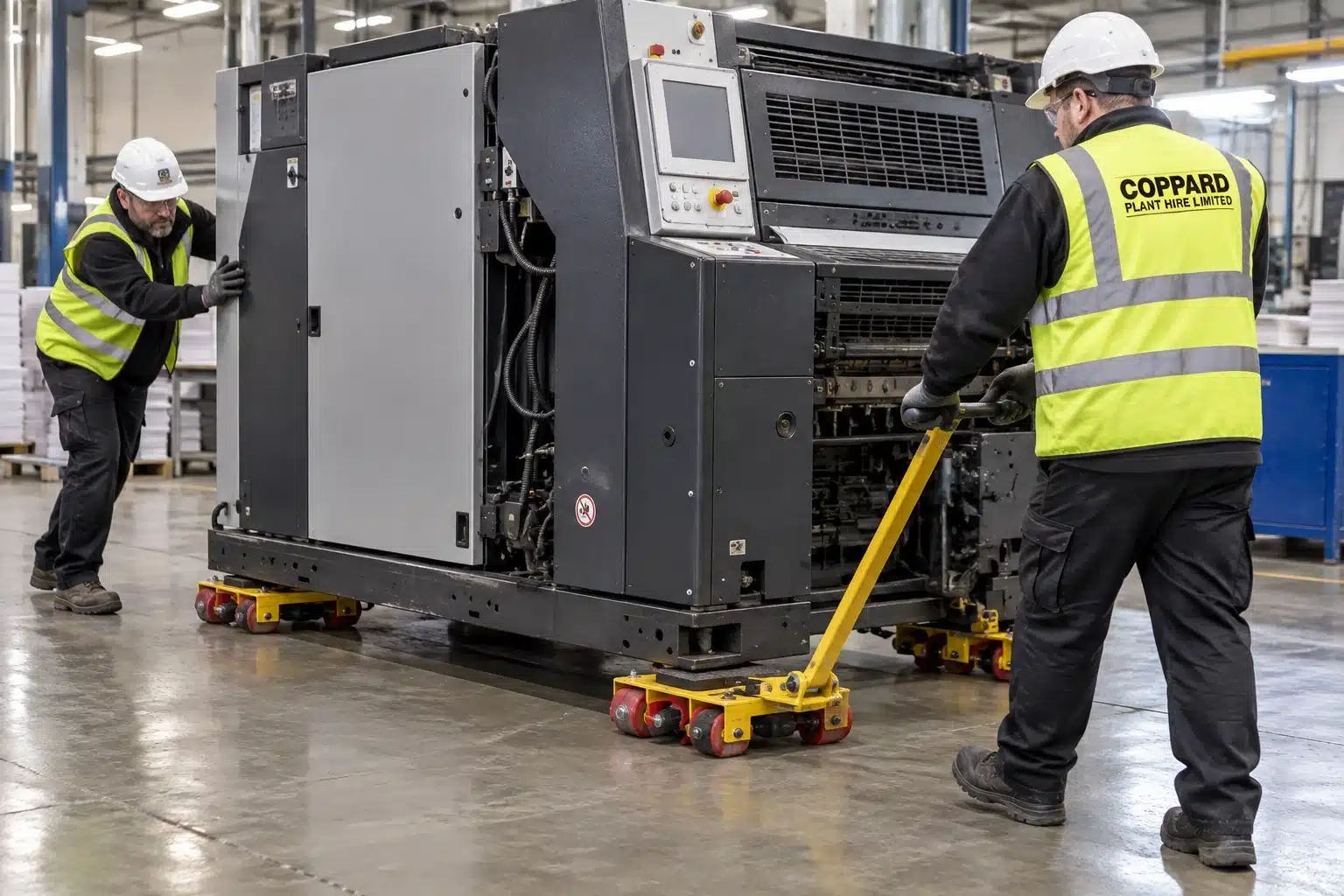
Skates and rollers move a load along, but something has to lift it onto them at the start and lower it at the end. Arrange that lifting gear, jacks or toe jacks, as part of the same hire rather than an afterthought, and decide where the machine is raised and how it stays supported while the movers go under.
On a two-level Reading job, factor the goods lift into the sequence: how the load comes off the movers to enter the lift, and back on again at the far landing. A move that is planned at both ends and at every transfer is calm; one where the raising and lowering are improvised around a half-supported machine is not.






Give the Reading Depot the Access, Not Just the Weight
When you call, lead with the route: doorway widths, the goods lift capacity and plate level, ramps, thresholds, the tightest turn and the floor type and strength. Then the weight, the dimensions and where the machine must finish. Say whether the building is occupied, because that shapes how and when the move can run.
That lets the team confirm whether skates, rollers, a pallet truck and the right lifting gear are needed together, and flag where a difficult basement or upper-floor job warrants competent handling input. Call 0118 979 2828 before the machine is disconnected, so the plan matches the building.
Frequently Asked Questions - Load Mover Hire in Reading, Berkshire
Can I move a heavy machine across an office or raised-access floor?
Only if the floor can take the concentrated load the skate wheels impose, which is a tougher test than whether it holds people and furniture. Suspended slabs, mezzanines and raised access floors, common in Reading offices, have point-load limits that a heavy machine on small wheels can exceed. Spread the load where possible, and if there is any doubt get the floor assessed before the move rather than discovering the limit when a panel or slab gives way.
Will a machine fit in the goods lift, and does that matter for the move?
It often decides the whole method. Check the lift’s rated capacity, the door and car dimensions and whether its floor plate sits level with each landing under load. A machine that clears every corridor can still be stopped by a lift that is too small, too light or steps up at the threshold. Give the depot the lift details with the route, so the movers and the sequence are planned around getting the load between levels, not just along one floor.
Why choose a multidirectional skate over rollers?
Because most Reading jobs are decided by the turns, not the straights. A multidirectional skate can turn on the spot, which is what gets a load round a corridor corner or through a doorway into a plant room, while rollers suit a clear straight run. Measure the tightest turn and the narrowest doorway before choosing, since a set-up that rolls easily down an open corridor can jam at the turn into a lift lobby or a plant-room door.
Do I need jacks as well as the movers?
Usually, yes. The machine has to be raised for the skates or rollers to go under suitable support points and lowered again at the destination, and that needs jacks, toe jacks or other lifting gear. Plan it as part of the same hire. On a job between floors, also plan how the load comes off the movers to enter a goods lift and back on at the far landing, so every transfer is controlled rather than improvised on the day.
What UK rules are relevant to moving heavy loads with mechanical aids?
The Manual Handling Operations Regulations 1992 require employers, so far as reasonably practicable, to avoid hazardous manual handling and otherwise to assess and reduce the risk of injury. You can read the official regulations at Manual Handling Operations Regulations 1992 on legislation.gov.uk. Mechanical movers cut some effort, but the plan must still cover floor strength, the lifting stages, access between levels, load stability and the competence of the people doing the work.
Need load mover hire in Reading?
Tell us the weight, the floor type, the goods-lift limit and the tightest turn on the route. Call Coppard on 0118 979 2828.