Lifting Chain and Strop Hire in Reading, Berkshire
Lifting chain and strop hire in Reading for planned lifts on construction, steelwork and plant. Coppard supplies chain slings, webbing strops and shackles across Berkshire, each with its own examination record. Call 0118 979 2828 with the load weight, the lifting points and the length you need, and confirm the paperwork for the exact items at handover.
Two things decide a lifting-accessory hire and both are quick to state: the weight with its lifting points, and the examination record for the exact item you take away. Get those right and the rest follows. This page is deliberately short on lifting theory, which does not change from job to job, and long on what Coppard can confirm for a Reading lift.
What the Reading Depot Holds
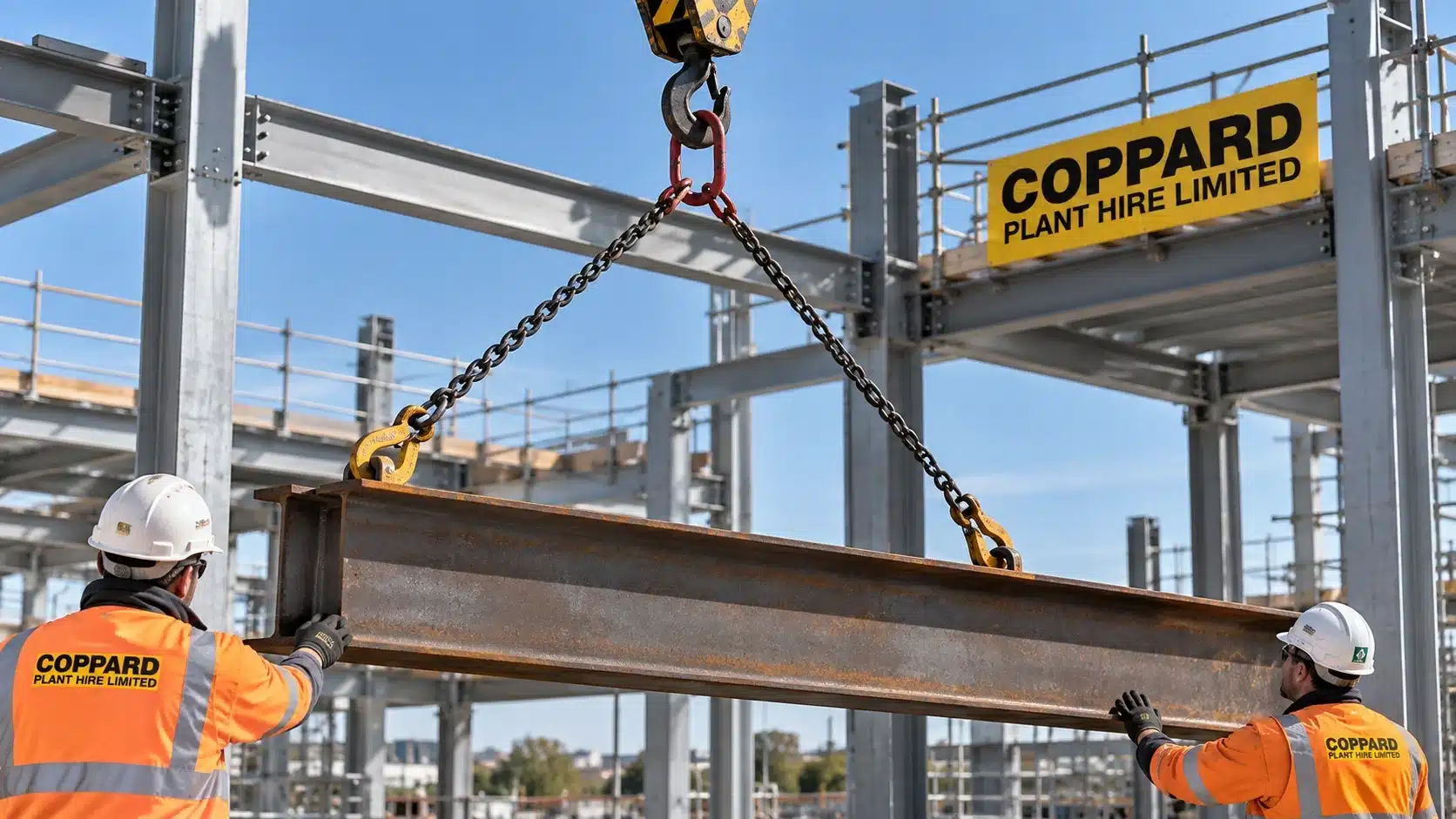
The Coppard lifting chains, strops and shackles range covers chain slings in single, twin, triple and quad-leg forms, webbing strops and the shackles that connect them to the load. Chain suits steelwork, plant and general construction lifts; webbing gives a wider, softer contact for a load that would mark. The depot can set out which capacities and lengths are available for your dates across Berkshire.
Tell the team the load weight, the number of lifting points and the sling length you need, and whether the load has a coated or machined finish that a chain could damage. That is enough to match the accessory type before the lift day, with the exact capacities confirmed against stock.
The Examination Record Belongs to the Exact Item
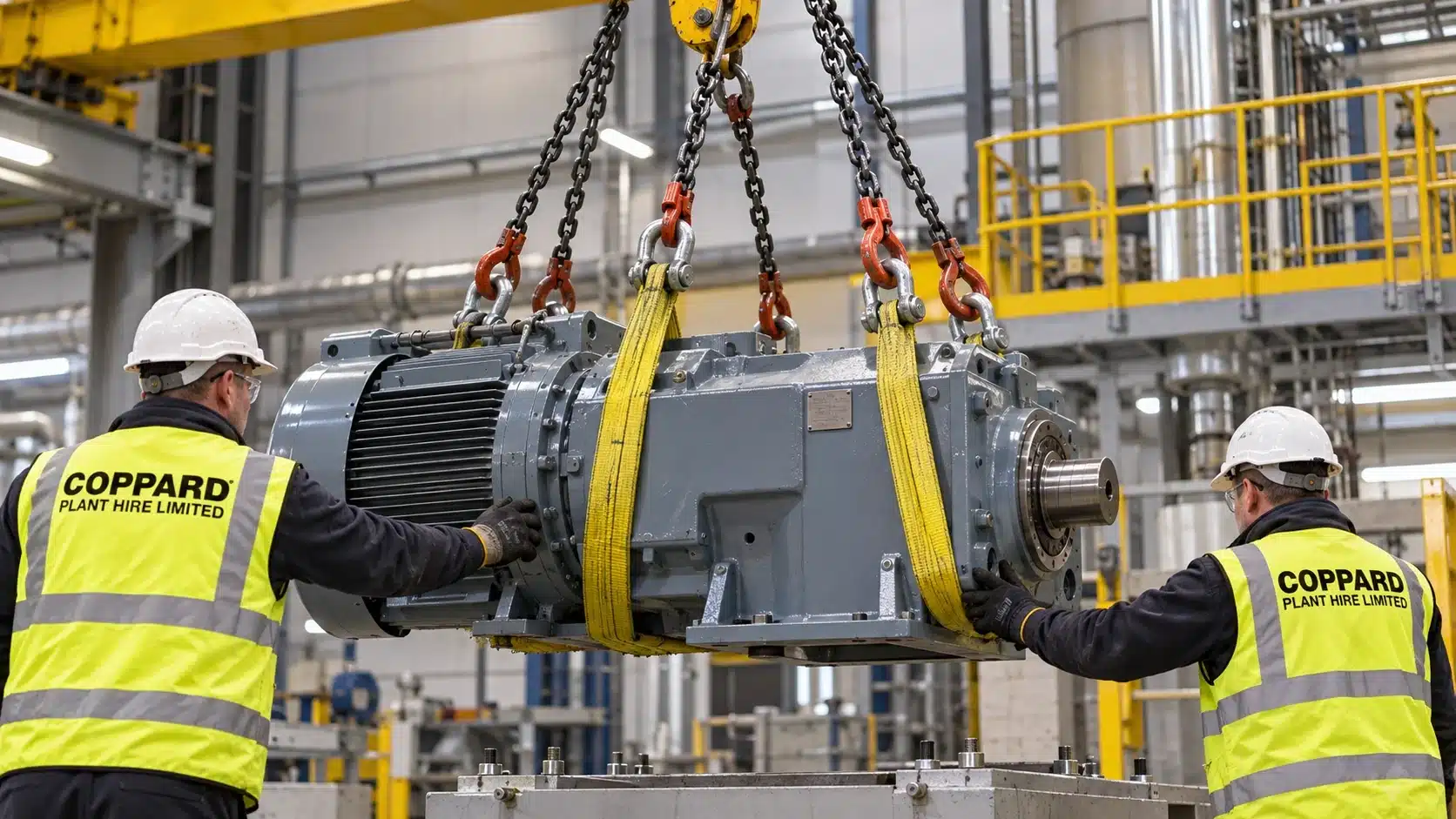
A lifting accessory used at work carries a report of thorough examination, and that record is tied to a specific, identifiable item rather than the range in general. When you hire from the Reading Tool Rental Service, confirm the record, the identification mark and any certification for the exact chain, strop or shackle you take, and check the user knows the pre-use checks required.
Treat that paperwork as part of the hire, not something to chase afterwards, because a rated sling without current examination evidence is not ready for a planned lift. This is the single most important thing to get right at handover, and it is quick to do if it is asked for up front.
Sling Angle Raises the Load in Each Leg
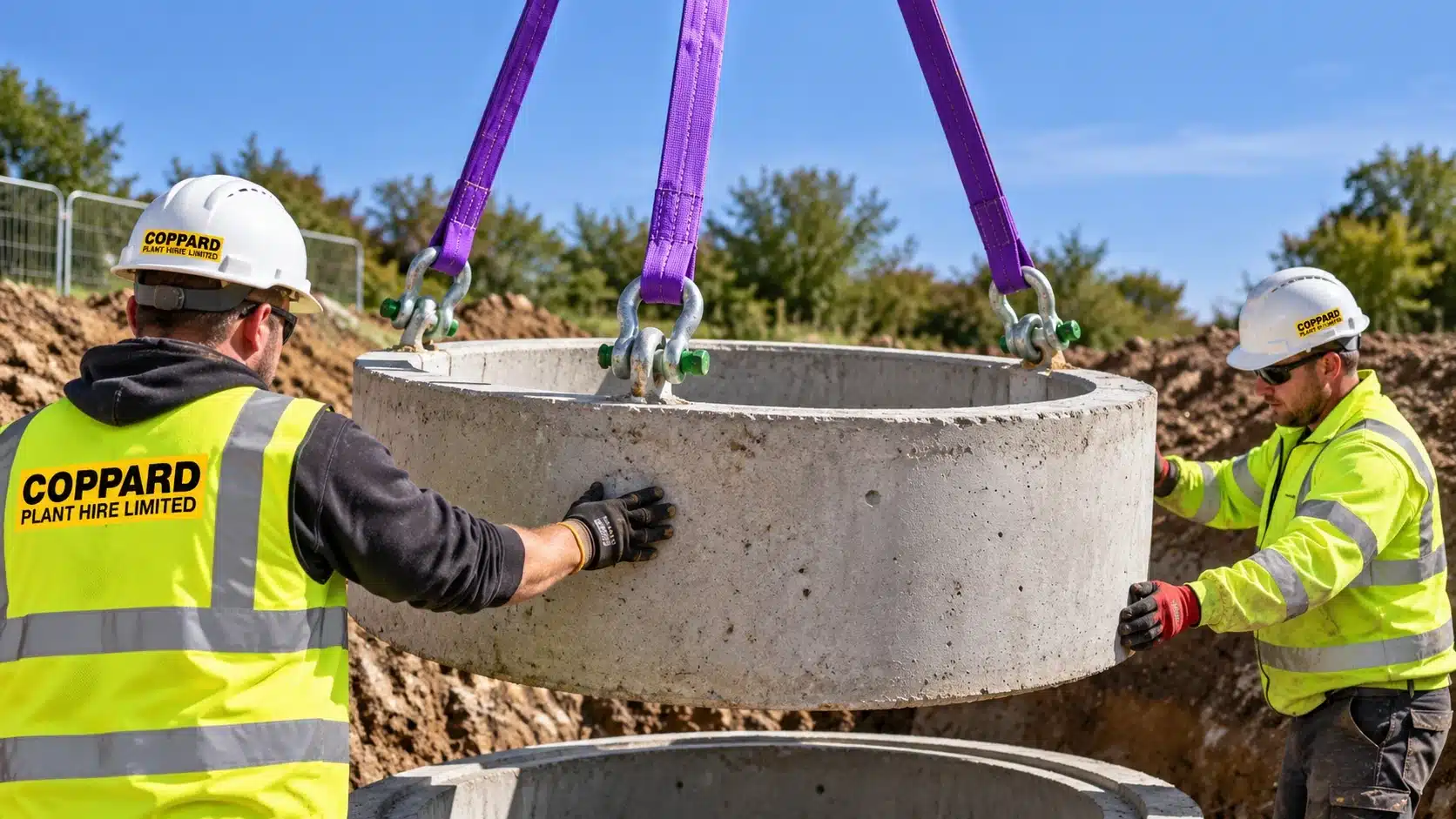
One piece of physics matters enough to state plainly: as sling legs spread from vertical, the force in each leg rises, so you cannot simply divide the weight by the number of legs. An angled or multi-leg lift should be planned by someone competent, not estimated on the hook. That is the whole of the theory this page needs; the depot and your appointed competent person handle the detail for the specific lift.
Match the Shackle and Guard the Edges
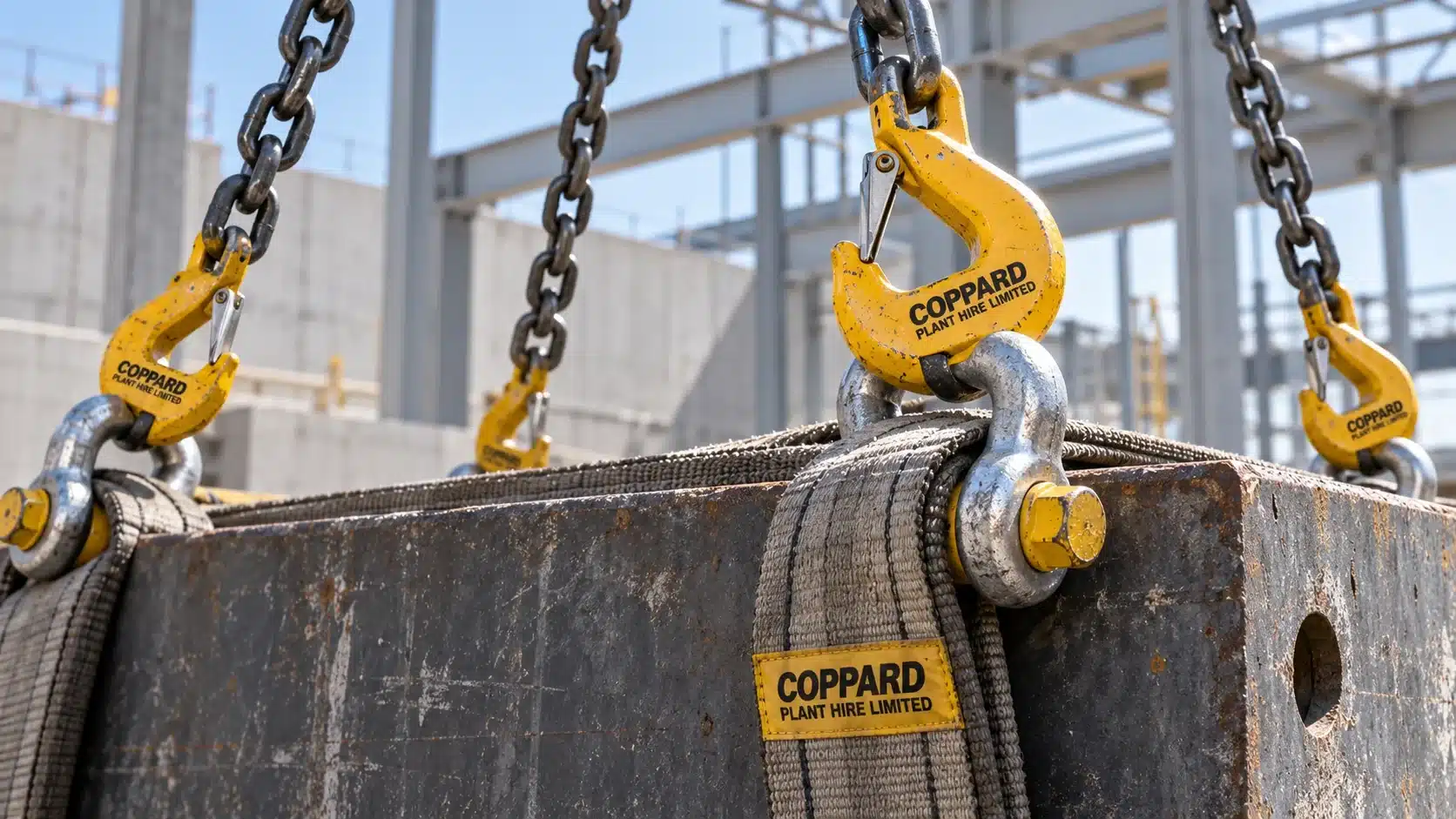
The connection is where a good sling is often let down. The shackle or hook must match the sling and the load’s lifting point in size and shape so it seats naturally under load, so check pin size, jaw width and the clearance around a lifting eye, especially on plant where guards restrict access. Where a sling bears on a sharp edge, use edge protection or a material that suits, since a cut strop or a chain forced across a corner is a failure waiting to happen.
Photographs and a couple of dimensions let the Reading team confirm the connection before collection, and it is worth deciding how the accessory comes off once the load is landed, so a sling is not trapped under the load.





Book the Lift with Reading and Confirm the Paperwork
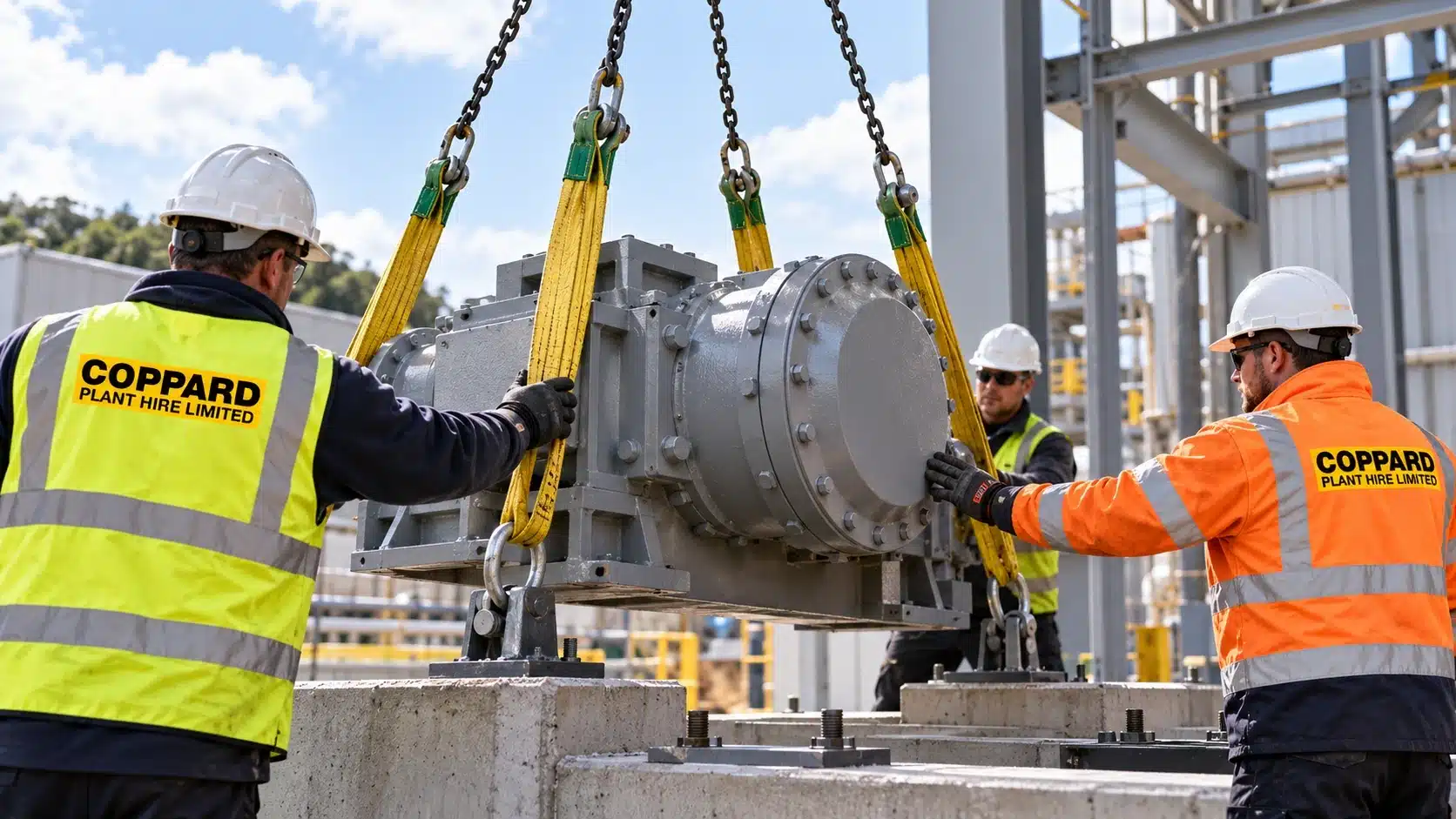
Give the depot the load weight, the lifting-point layout, the sling length and the appliance doing the lifting, plus any finish to protect or edge to guard. The team can match chains, strops and shackles and confirm the examination records for the items issued.
Call 0118 979 2828 while the lift is still being planned, so the accessories and their paperwork are sorted together rather than on the morning. For a heavily angled or unusual lift, arrange the competent-person input before collection.
Frequently Asked Questions - Lifting Chain and Strop Hire in Reading, Berkshire
Does each hired accessory come with its own examination record?
It should, and you should confirm it. A report of thorough examination relates to a specific, identifiable accessory, not the range in general, so ask the Reading depot for the record, identification mark and certification for the exact chain, strop or shackle you take away. Treat it as part of the hire and check it at handover, because a correctly rated sling without current examination evidence is not ready to go into a planned lifting operation.
Which is better for my load, chain or webbing?
It depends on the load and its surface. Chain suits steelwork, plant and general construction lifts and stands up to hard use; webbing gives a broader, softer bearing surface that protects a coated or machined finish a chain could mark. Edges matter too, since a sharp corner can cut webbing. Tell the depot the load, the finish and any sharp edges, and the material can be matched rather than chosen by habit.
Why can I not divide the load weight by the number of legs?
Because sling angle changes the sum. As the legs spread away from vertical, the tension in each rises above a simple share of the weight, and the legs may not carry equally in practice, so a four-leg sling does not give four equal quarters. The lifting points, the angle and the connections all shape the real loading. An angled or multi-leg lift should be planned by a competent person rather than estimated by dividing the weight.
How do I know the shackle suits the sling and the load?
It has to match both in size and geometry so it seats and aligns naturally under tension instead of bearing across an edge or twisting. Check the pin size, the jaw width and the space around the lifting eye, particularly where guards or bodywork restrict access on plant. Photographs and a couple of dimensions let the depot confirm the connection before collection, rather than finding on the lift day that the parts do not fit together properly.
What UK law applies to lifting accessories at work?
Lifting accessories are covered by the Lifting Operations and Lifting Equipment Regulations 1998, known as LOLER, which deal with suitability, safe working loads, planning and thorough examination. You can read the official regulations at LOLER 1998 legislation on legislation.gov.uk. The duties run across the whole lifting operation, so the accessory is one part: the appliance, the people and the method all have to suit the planned lift as well.
Need lifting chain and strop hire in Reading?
Give Coppard the load weight, the lifting points and the length, and confirm the examination records at handover. Call 0118 979 2828.