Winch Hire in Melksham, Wiltshire
Winch hire in Melksham for pulling, recovering and holding loads on soft, low-lying and waterlogged ground near the Kennet and Avon Canal and the flat Wiltshire valley floor. Coppard supplies cable, manual and 110V electric winches across Wiltshire. Call 01380 828988 with the load, the ground and what you can anchor to.
Around Melksham the problem is rarely a slope; it is flat, low-lying ground beside the canal and the river valley that stays soft or waterlogged for long stretches of the year. A machine bogged down in wet meadow or towpath ground needs pulling out along the flat, not up a bank, and the anchor for that pull can be just as hard to find on flat wet ground as on a steep one.
Flat, Soft Ground Is Its Own Recovery Problem
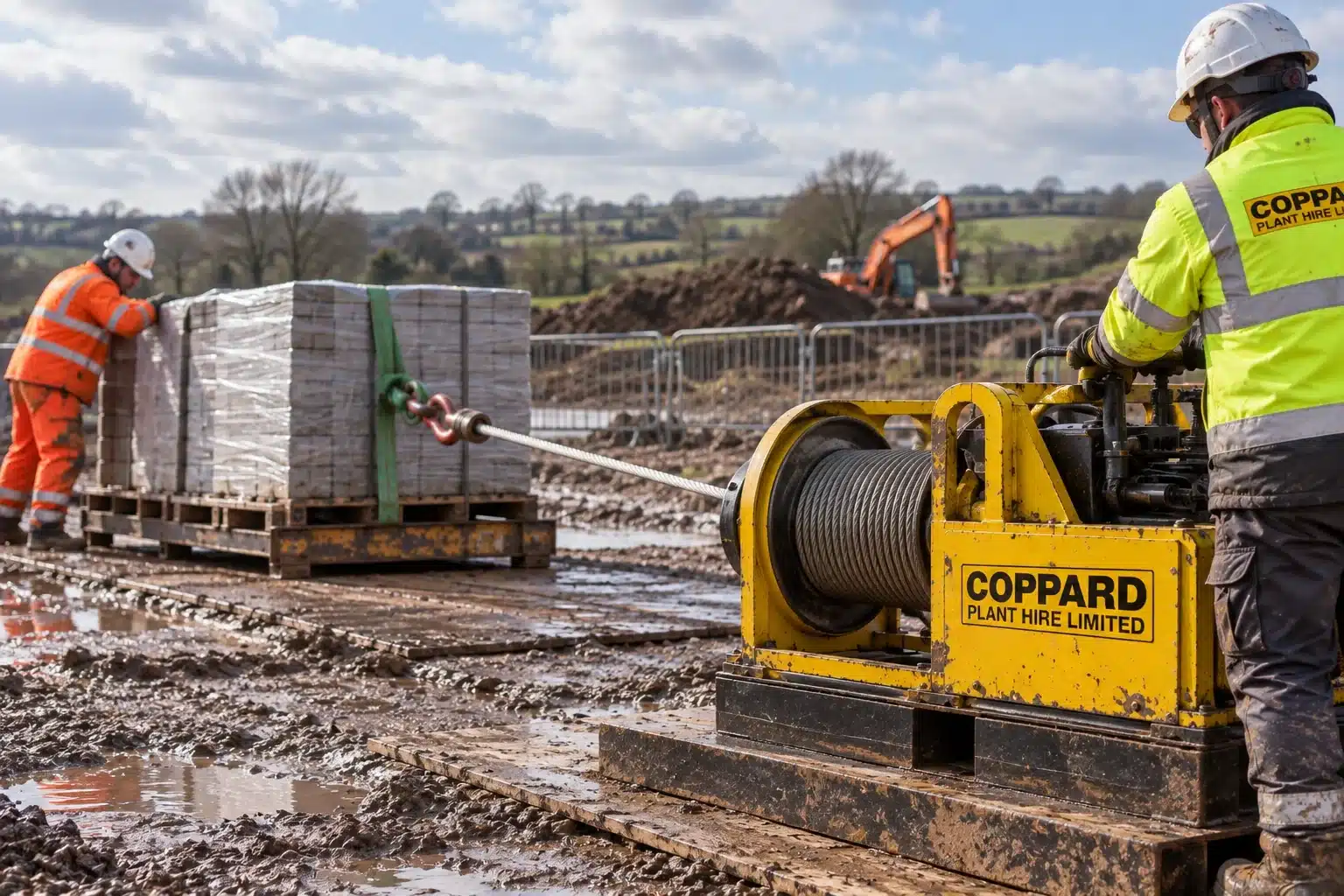
A vehicle or machine stuck in wet meadow, towpath ground or a waterlogged field near the Avon or the canal is not held by gravity the way something on a slope is; it is held by suction and soft ground gripping the wheels or tracks, which needs a steady, sustained pull along the flat rather than a controlled descent. That changes the winching problem from what a hillier depot deals with.
Work out the direction of the pull needed to break the machine free, usually straight back along firmer ground rather than up or down anything, and check that ground for a suitable anchor before assuming one exists nearby. Through the Melksham Tool Rental Service, describe the ground condition, not just the load, since wet clay or waterlogged meadow soil behaves quite differently underfoot from a dry field.
Cable, Manual or Electric for a Wet Ground Recovery
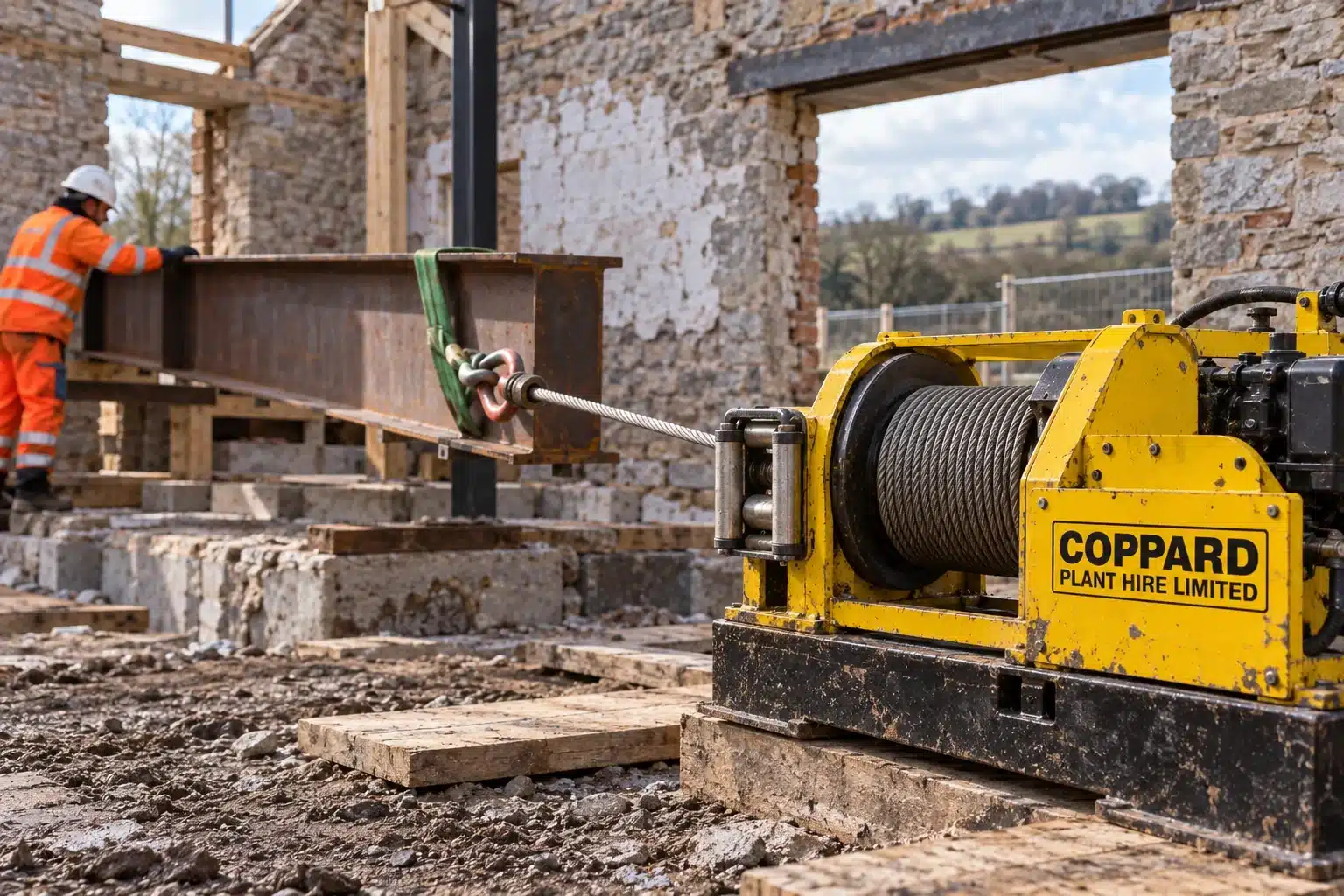
The Coppard winch range runs from a heavy cable winch through manual units to a 110V electric winch supplied with rope and a rated maximum load. A cable winch suits a heavier vehicle or machine recovery from soft ground; a manual unit gives control with no power source, useful where a wet site has no electrics anywhere near; the electric unit helps where repeated pulls are needed and a supply exists nearby.
On waterlogged ground, keep the winch body itself out of standing water and on the firmest patch available, since the machine’s own footing matters as much as the anchor it pulls against. Choose by the ground and the recovery task rather than the tonnage alone, and check the unit’s own stability before loading it up.
Finding an Anchor on Flat, Open Valley Ground
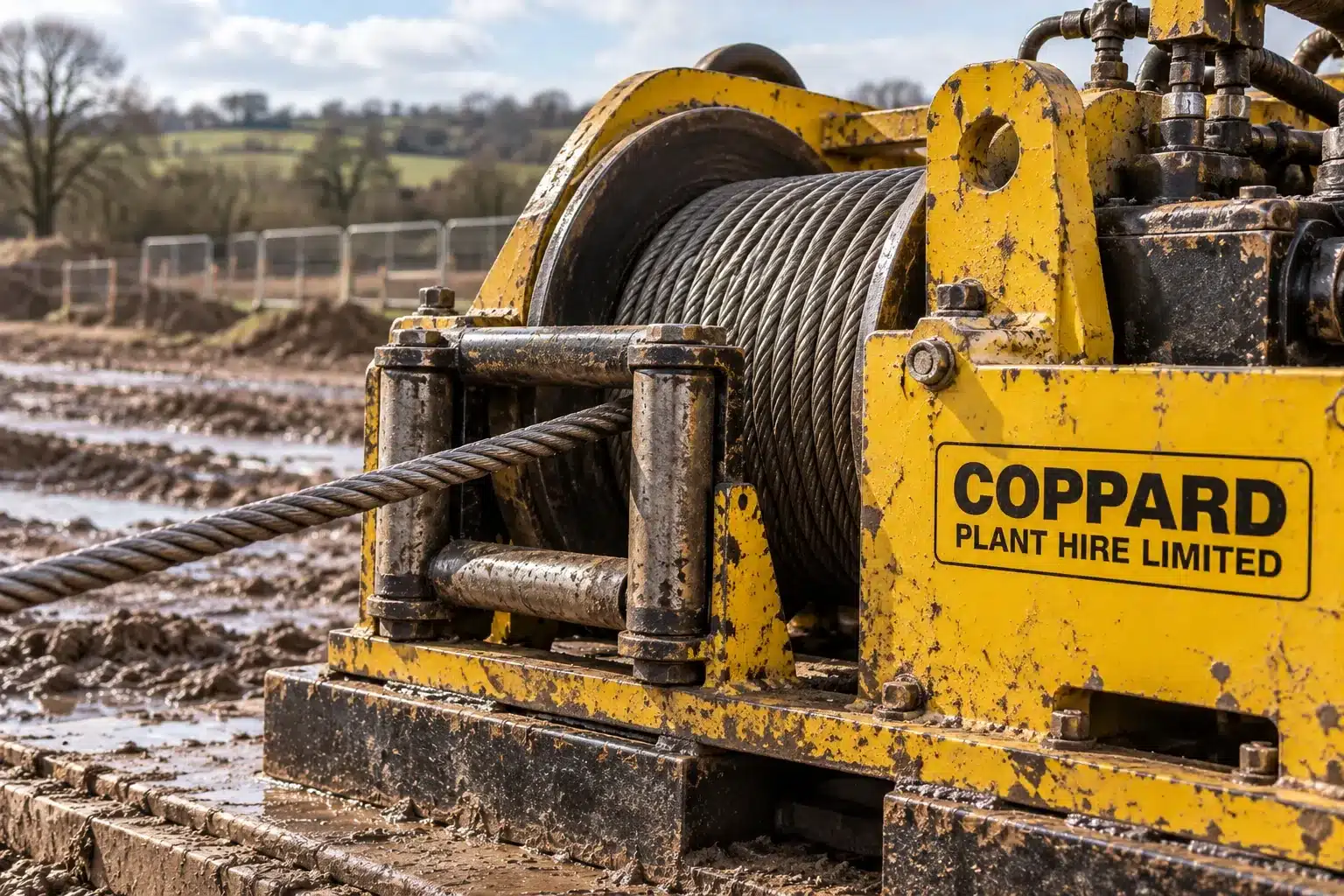
A hillside depot worries about steep, wooded slopes hiding an anchor; around Melksham the concern is the opposite, flat, open meadow or towpath ground with very little structure to anchor to at all, no convenient bank, no nearby wall, sometimes nothing but a fence line or a gate post that is not rated for the load. Identify a genuinely rated point before relying on it.
Where nothing suitable is nearby, a second vehicle, plant, or a properly rated ground anchor may be needed rather than making do with whatever fence or gate happens to be closest. Through the Coppard winch range, describe what is actually available to anchor to on the flat ground you are working, since assuming a hillside-style fixed point exists is often wrong on the valley floor.
Canal and Waterway Proximity Changes the Plan
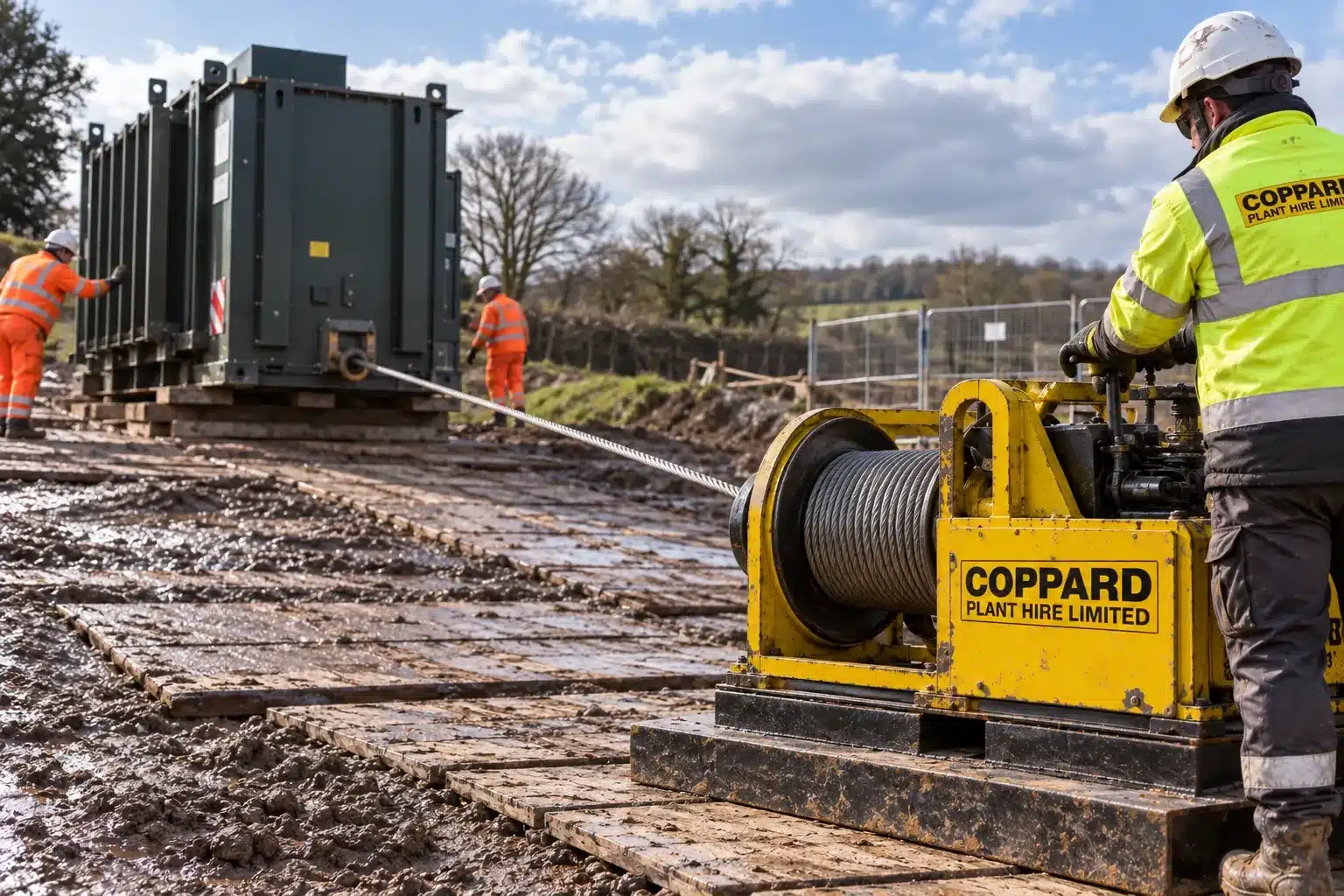
Working near the Kennet and Avon Canal or the River Avon itself adds a consideration a purely inland recovery does not: keep the winching operation, the load and anyone involved clear of the water’s edge, and be alert to towpath users passing during the work. A load recovered toward open water rather than away from it is a hazard worth planning around specifically.
Check the towpath or bankside ground bears the winch and anyone standing near it, since canal-side ground can be softer and less predictable than it looks, and plan the direction of pull away from the water rather than assuming the nearest firm-looking spot is automatically the safest one.





Tell the Melksham Depot the Ground and the Water
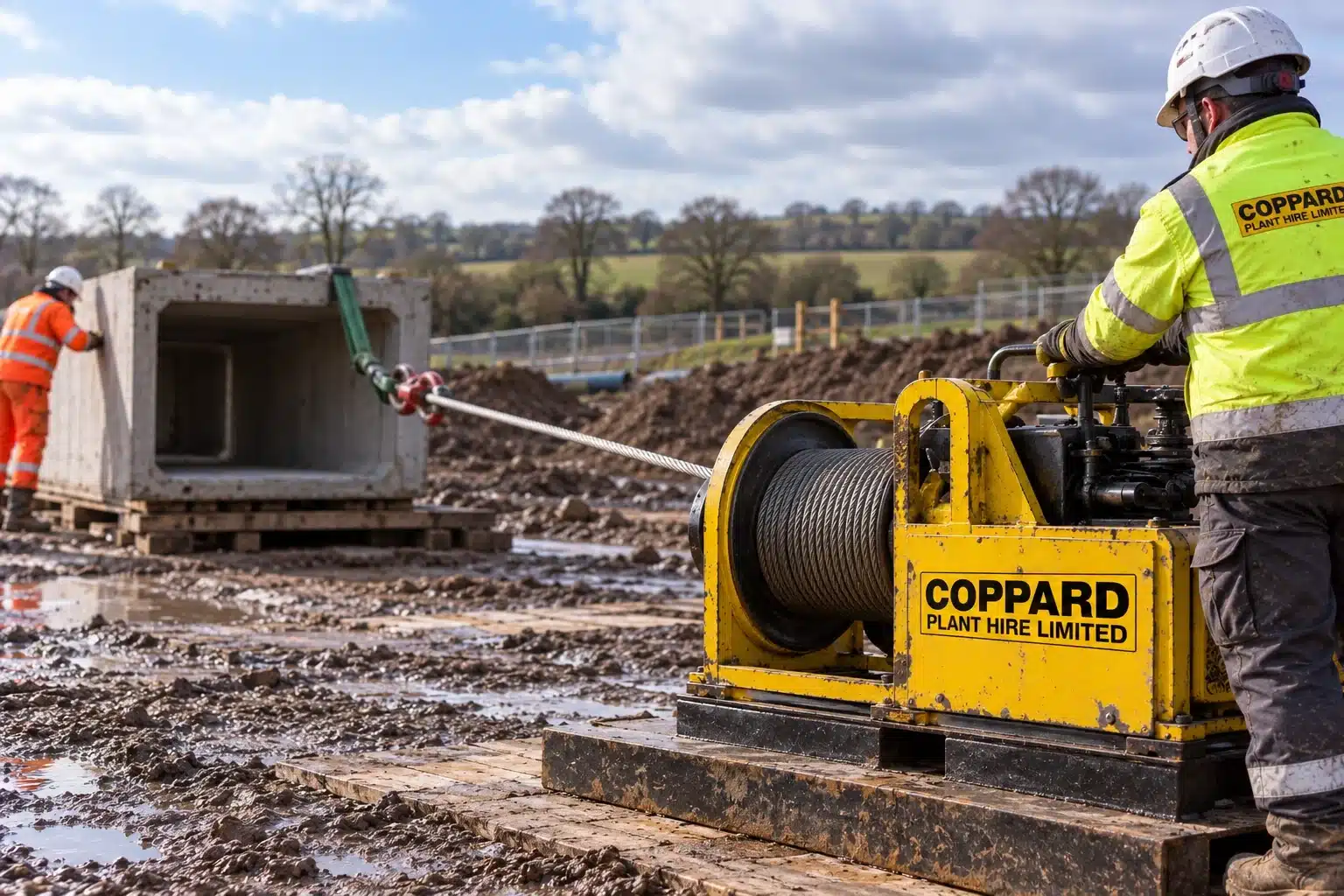
When booking, describe the ground, wet meadow, towpath, waterlogged field, and how close the work is to open water. Give the load, the direction the pull needs to go to reach firmer ground, and the anchor points genuinely available.
The team can then match cable, manual or 110V electric to the actual recovery, for work across Melksham and the wider Wiltshire area. Call 01380 828988 before committing to a method, particularly where the ground is wet, low-lying or close to the canal or river.
Frequently Asked Questions - Winch Hire in Melksham, Wiltshire
Why is winching different on flat, waterlogged ground?
Because the machine is usually held by suction and soft ground rather than gravity on a slope, so the pull needed is a steady, sustained one along the flat toward firmer ground, not a controlled descent. Wet meadow or towpath ground near Melksham can grip a vehicle firmly even with no gradient at all. Describe the ground condition to the depot, not just the load, since wet clay or waterlogged soil behaves quite differently from a dry field underfoot.
Where do I anchor a winch with no hills or convenient structures nearby?
That is the genuine challenge on flat valley ground: little natural structure to anchor to, sometimes only a fence line or gate post that is not rated for the load. Identify a properly rated point before relying on it, and where nothing suitable exists nearby, a second vehicle, other plant, or a proper ground anchor may be needed rather than making do with whatever is closest. Do not assume a fixed anchor point exists just because one usually would on hillier ground.
What extra care does working near the canal or river need?
Keep the winching operation, the load and anyone involved clear of the water’s edge, and plan the direction of the pull away from open water rather than toward it. Towpath and bankside ground near the Kennet and Avon Canal or the River Avon can be softer and less predictable than it looks, so check it bears the winch and the people working before starting, and be alert to towpath users passing during the recovery.
Should the winch itself stand on wet ground?
Avoid it where you can. Keep the winch body out of standing water and on the firmest patch available, since its own footing matters as much as what it is anchored to or pulling against. On genuinely waterlogged Melksham ground, checking the machine’s own stability before loading it is as important as finding a rated anchor for the pull itself.
What UK rules apply when a winch lifts rather than pulls?
If a winch is used to lift a load rather than draw it along, the Lifting Operations and Lifting Equipment Regulations 1998, known as LOLER, apply on top of the general duty to provide suitable, maintained equipment. The text is at LOLER 1998 legislation on legislation.gov.uk. Lifting has to be planned by competent people, so treat a pulling winch and a lifting winch as different tools and tell the depot which duty the job actually involves.
Need winch hire in Melksham?
Tell us the ground condition, the load, the direction of pull and the anchor available. Call Coppard on 01380 828988.