Scabbler Hire in Melksham, Wiltshire
Scabbler hire in Melksham keys concrete surfaces ahead of a new screed, coating or repair. Coppard hires single, triple and pole scabblers across Melksham, Chippenham and Devizes, matched to the surface and the working position.
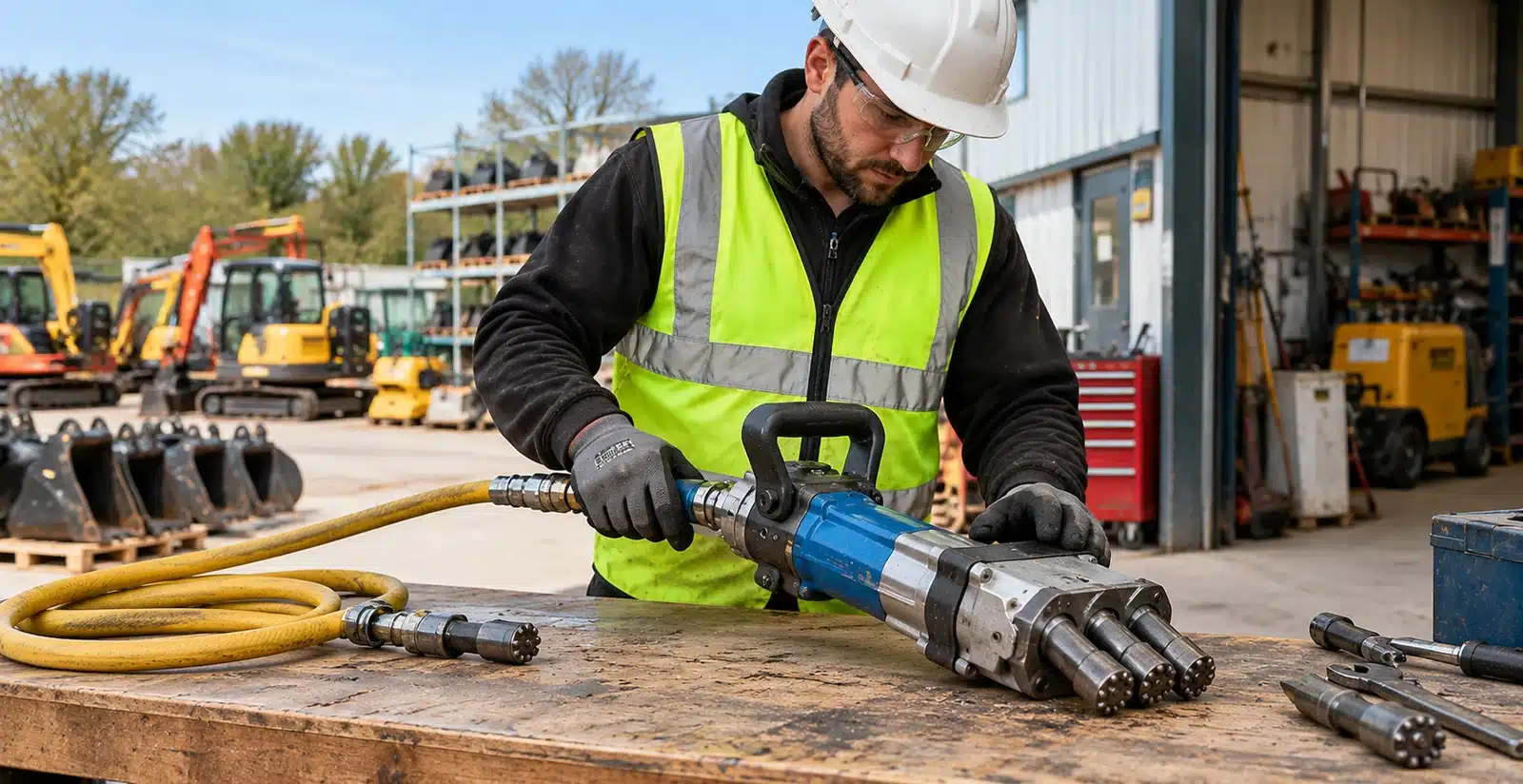
Scabbling roughens a concrete surface so a new layer bonds well on top of it. The right head depends on the area, the finish, and whether you are working on a floor, a wall or overhead.
Start With What Goes Down Next, Not Just the Surface
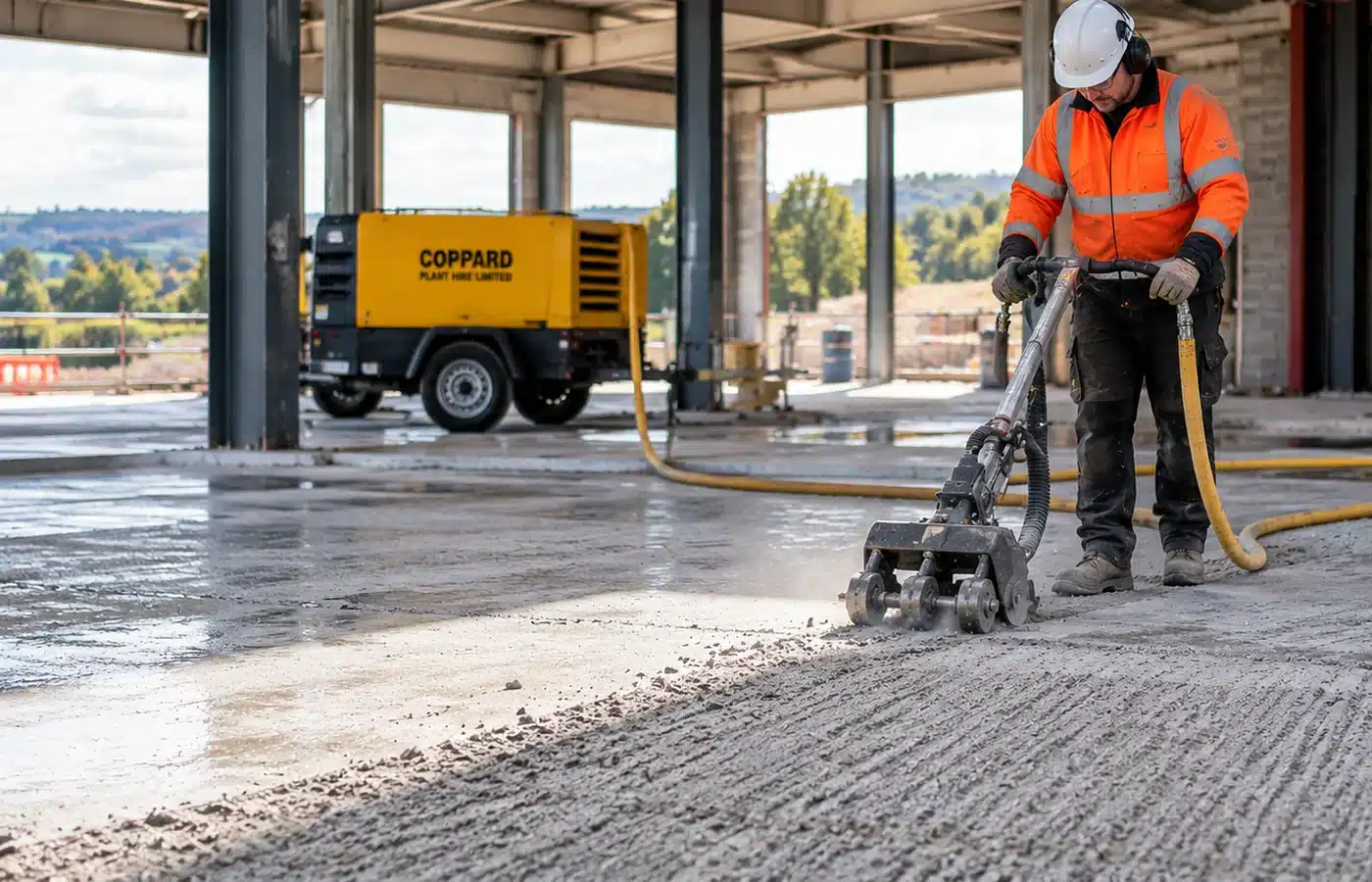
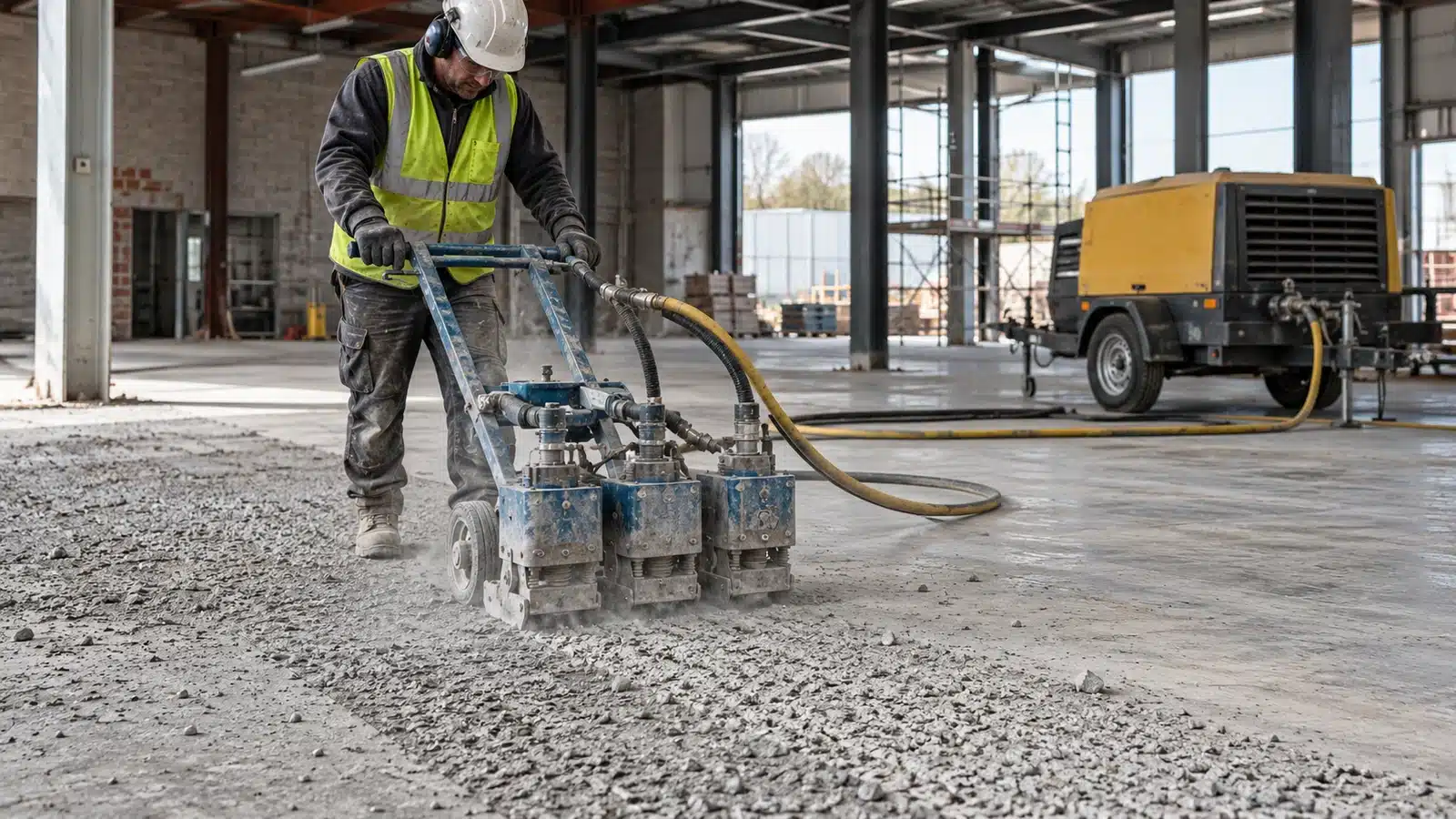
A light key ahead of a thin coating needs a different approach from preparing a floor for a full screed. Choosing the right head starts with knowing what comes after the scabbling, not just the concrete sitting in front of you. A single-head scabbler suits detail work and small areas. A triple-head clears a floor far faster once the area runs into hundreds of square metres.
Tell the Melksham depot what is being applied afterwards. A coating supplier’s own spec sheet often states how rough the surface needs to be. This decides the head, rather than leaving it to guesswork on the day of the job. Getting this right from the start avoids re-doing a key that turns out too light, or too heavy, for the coating going on top of it.
Working Position Changes Which Tool Actually Suits
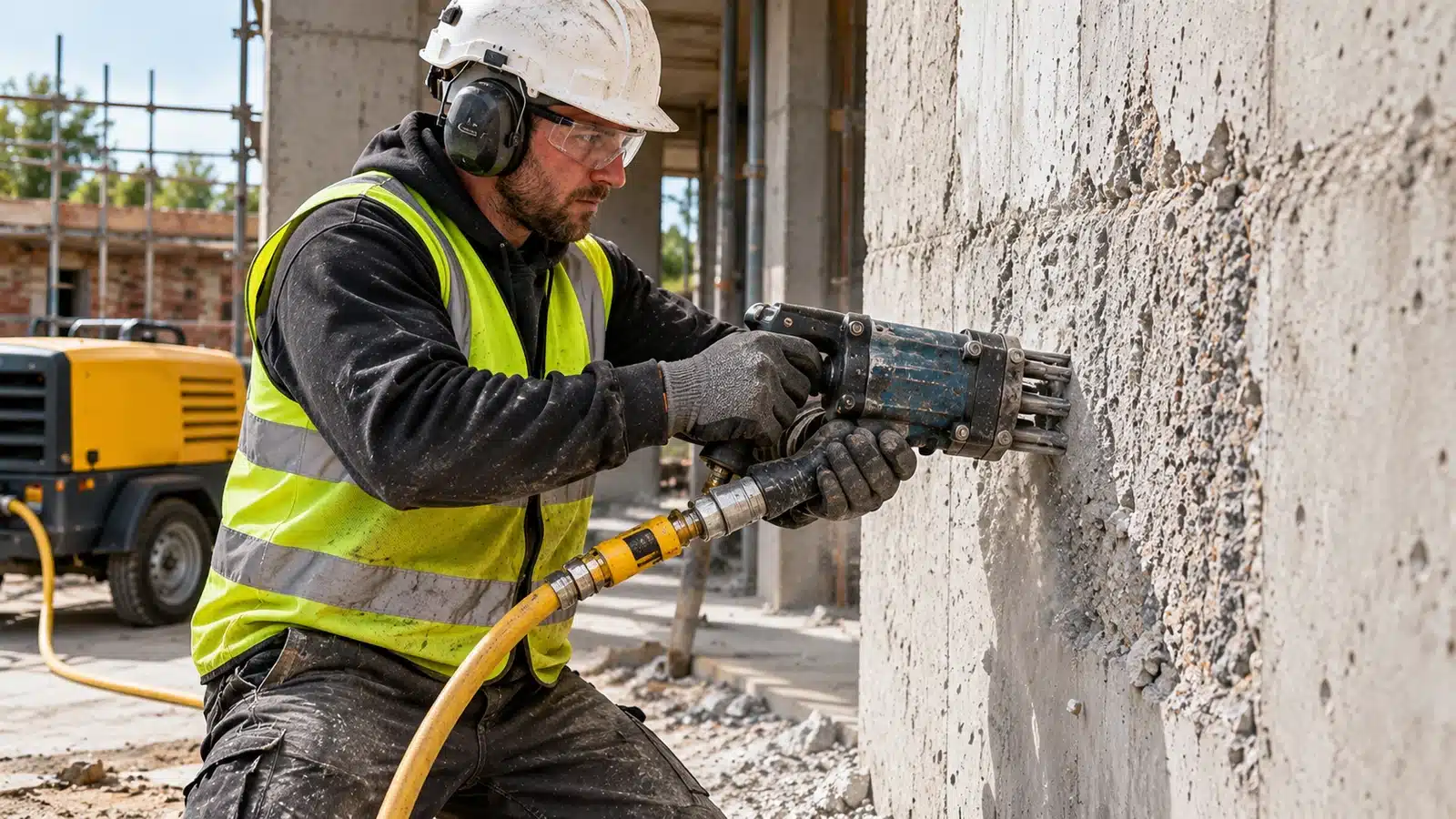
See our other Air Compressor Supplier services on the Melksham Air Compressor Supplier page, and compare scabbler heads on the Compressor Equipment collection. A floor scabbler is pushed along the ground in a steady pattern across the slab. A pole scabbler lets you work standing up on a wall or soffit without holding a heavy head overhead by hand for long stretches.
Phone 01380 828988 and describe whether you are working a floor, a wall or a ceiling. The team will confirm which model actually suits the position, not just the total surface area involved in the job you are quoting that week. Describing the job this way also helps the depot bring the right head on the first trip, rather than needing a second visit.
Overhead and Vertical Work Tires a Crew Faster
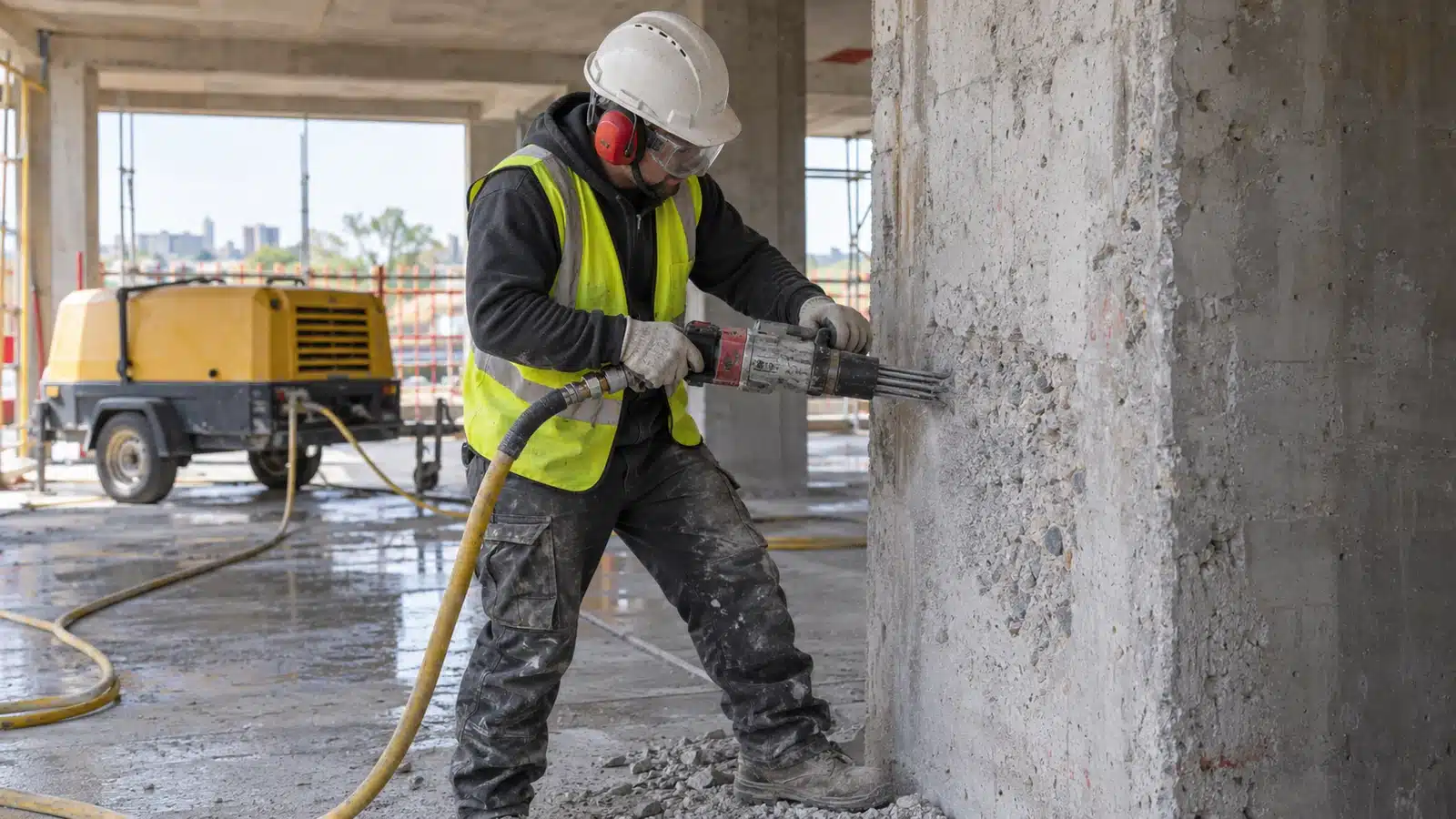
Scabbling a soffit or a high wall is noticeably more tiring than the same job on a floor. The operator is holding and steadying the tool against gravity the whole time, rather than letting its own weight do part of the work. Plan shorter shifts on overhead work and share it between two or more people through the day.
A pole scabbler cuts the strain a lot compared with holding a head overhead by hand. Ask the depot about one if your job involves much ceiling or high-wall work this week. Sharing the job this way also keeps the finish more even across the whole wall or soffit, rather than tiring and rushing towards the end.
Plan Dust Control Before the First Head Goes On
Scabbling throws up a large amount of fine concrete dust very quickly. Sorting extraction or wetting down before the job starts is far easier than trying to manage it once the tool is already running at full pace. An occupied building nearby makes this matter more. Phone 01380 828988 to ask about extraction-hood attachments if your job sits close to other trades or finished areas on the same floor.
Silica dust from concrete is a real health risk if breathed in regularly. Treat dust control as part of planning the job properly, rather than an afterthought once work is already under way. Sorting this early also keeps the job on good terms with neighbouring trades, who will notice dust drifting onto their own finished work.




Book Around the Trade Waiting to Start Behind You
Scabbling almost always sits ahead of another trade, whether that is a screeder, a waterproofing crew or a coatings applicator waiting their turn. A delay here pushes the whole schedule back for everyone on the job. Call 01380 828988 with your target finish date. The Melksham team will work back from it to confirm a hire date that leaves room for the job to run over slightly.
Coppard covers Melksham, Chippenham and Devizes. A swap or an extra day can often be arranged quickly if the area turns out larger than first measured. A quick call as soon as the area looks different from the original measurement is always better than waiting until the deadline is close.
Frequently Asked Questions
Which scabbler do I need for a small area?
A single-head scabbler suits detail work, edges and smaller areas where handling matters more than raw speed across open ground. A triple-head covers ground far faster but is heavier and less suited to tight corners or awkward shapes. Tell the depot the area size and whether the space is open or awkward, and they will point you towards the right head. A quick photo of the area, sent to the depot, also helps them judge which head will clear it fastest without guesswork.
Can a scabbler be used on walls and ceilings as well as floors?
Yes, mainly a pole scabbler, which lets you work standing up on walls and soffits rather than holding a heavy head overhead by hand for long stretches. Overhead work is more tiring than floor work, so plan shorter shifts and share the job between workers through the day where you can. Check the tool’s weight with the depot before booking for a long spell overhead.
What air supply does a scabbler need?
A scabbler runs on compressed air, and the compressor feeding it must supply more air than the head actually uses, not less than that figure. The scabbler’s handbook states its air need, and the depot can confirm this for you over the phone before you book. If the same compressor is feeding other tools too, add their air use together first. Checking this detail before booking also means the right head arrives on the first trip, with no need for a swap partway through the job.
How do I control dust when scabbling concrete?
Sort extraction or wetting down before the job starts, rather than once the tool is already running at full pace. Scabbling throws up a large amount of fine concrete dust very quickly once the first head goes on. Ask the depot about extraction-hood attachments if your job sits near other trades or finished areas nearby. Silica dust is a real health risk if breathed in regularly.
What UK guidance covers dust when scabbling concrete?
The Control of Substances Hazardous to Health Regulations 2002 set out good practice, combining breathing protection with dust extraction or wetting the surface down before work starts. It recommends following every control measure in the rules, or using measures that work just as well. Read the rules on legislation.gov.uk: Control of Substances Hazardous to Health Regulations 2002. Following this guidance properly also protects the crew on the next job over, not just the one scabbling on the day.
Looking for Scabbler Hire near me?
Call Coppard at 01380 828988 to discuss the surface, how much needs removing and which scabbler head suits it.