
Concrete Preparation Equipment Hire in Godstone, Surrey
Concrete preparation equipment hire in Godstone for old farm floors, dairy parlours and agricultural buildings changing use, plus general grinding and scabbling. Coppard supplies floor grinding and scabbling equipment across Surrey. Call 01883 743322 with the floor’s history and what has soaked into it.
An old dairy floor or a livestock building being converted has usually absorbed decades of oil, silage effluent, animal waste or chemical residue into the surface, which is a genuinely different preparation problem from construction laitance or a tired coating. Grinding through the surface layer may reveal contamination going deeper than a visual inspection suggests.
Agricultural Floors Hide What Construction Sites Rarely Do
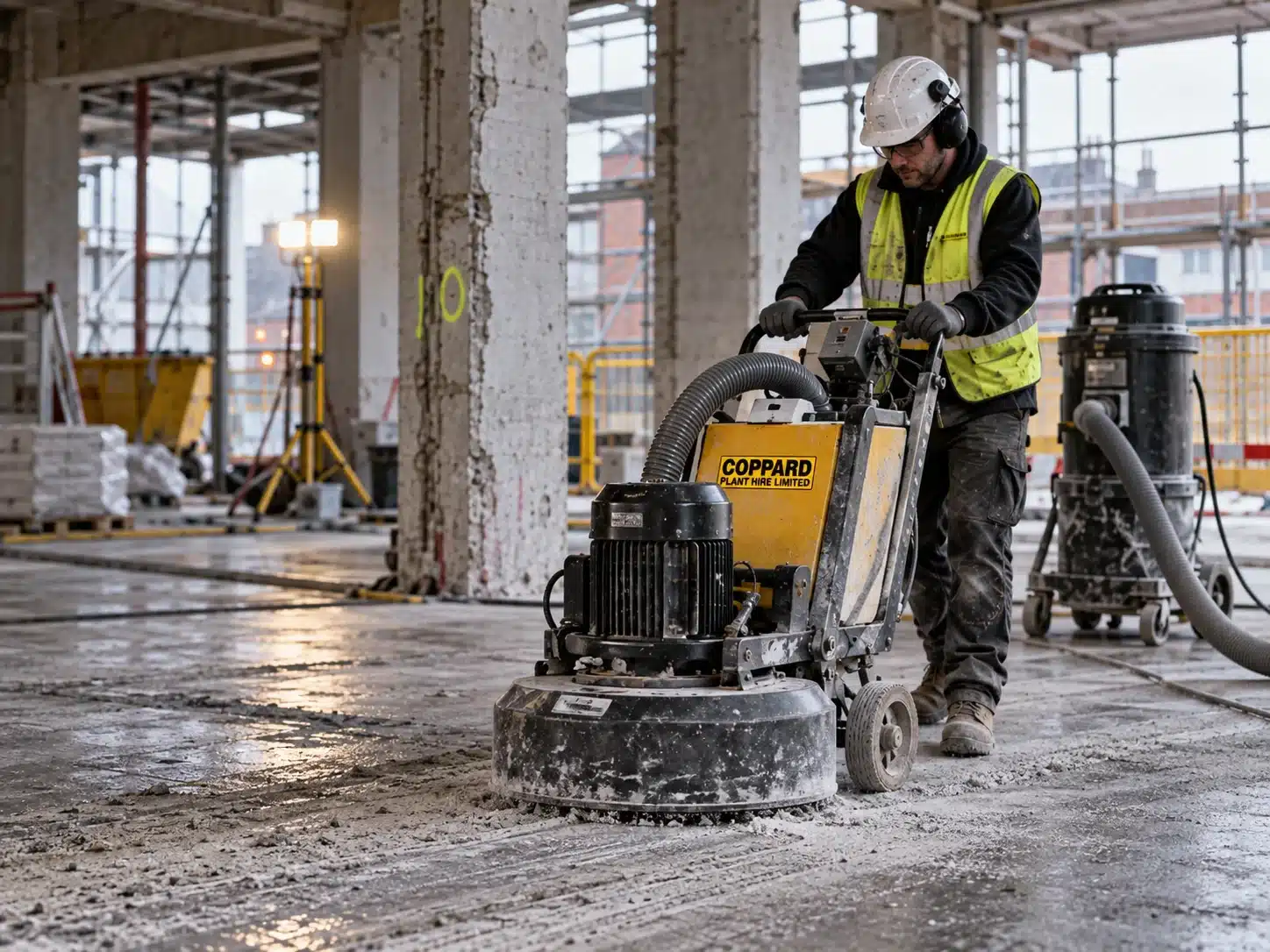
A dairy floor, a livestock building or an old farm workshop floor being converted has often taken up years of oil spills, silage acid, animal waste or cleaning chemicals, and that contamination does not always stop at the visible surface. Grinding into it can expose material that goes deeper than expected, which changes the disposal and handling requirement significantly compared with ordinary construction dust.
Before starting through the Godstone Tool Rental Service, think honestly about what the floor has been used for over its life, not just what it looks like now. A floor that looks like plain old concrete can still carry decades of absorbed contamination that needs proper identification and disposal, not treatment as routine laitance removal.
Grinding for a Genuine Change of Use
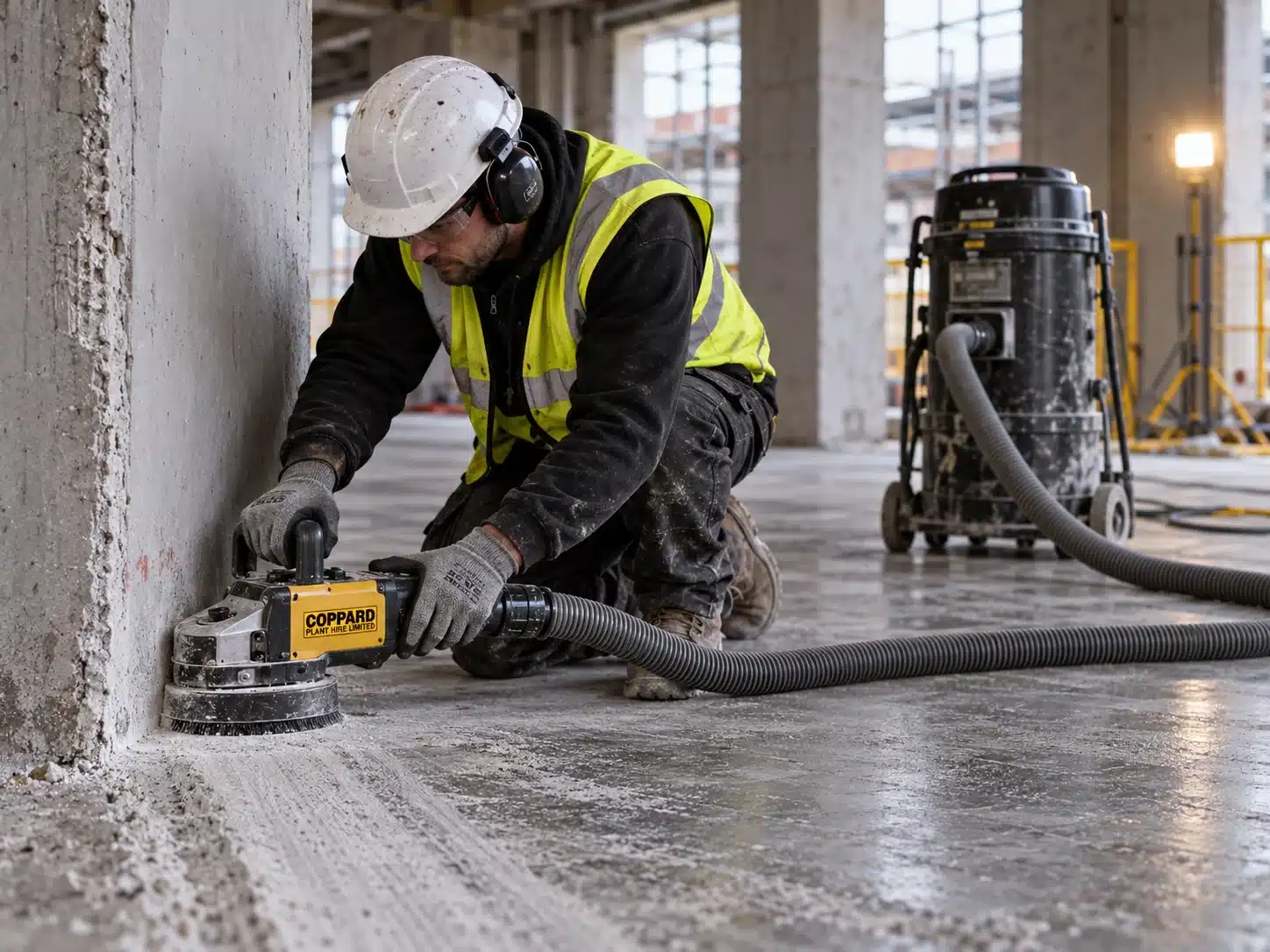
A floor grinder does controlled abrasion: taking off laitance, oil staining, old coatings and surface contamination, keying a surface, or preparing a converted barn or dairy floor for a new use entirely, workshop, storage, even residential. The Coppard concrete preparation and finishing range covers the grinding side, and on an agricultural conversion the target condition is often a genuine change of use, not just refreshing an existing finish.
Work in stages and check what the surface reveals as you go, since contamination can be uneven across an old farm floor, heavier near where animals stood or machinery leaked, lighter elsewhere. Do not assume one pass across the whole area addresses what is actually a patchy problem.
Scabbling Where the Surface Itself Must Go
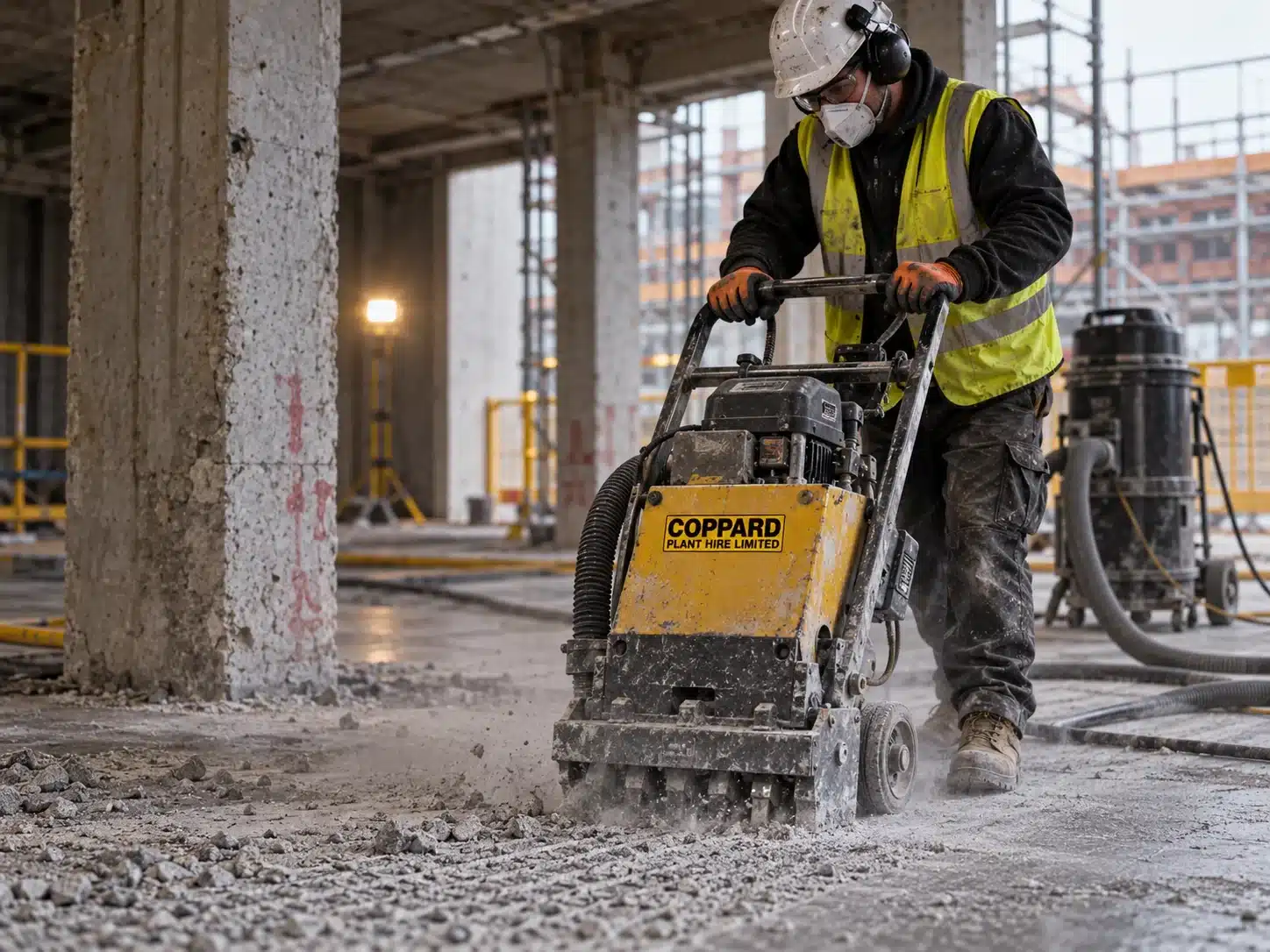
Where contamination has soaked in more deeply, or a stronger mechanical key is needed for a completely new floor system over a converted agricultural building, scabbling removes surface material by repeated impact rather than abrasion, leaving a rougher finish and taking more of the surface layer with it. This can matter where grinding alone would not remove absorbed contamination fully.
Match the depth of removal to what the floor actually needs, informed by what the grinding has already revealed about the contamination, not to a standard specification pulled from a construction job with no agricultural history behind it.
Plan Disposal for Genuinely Different Waste
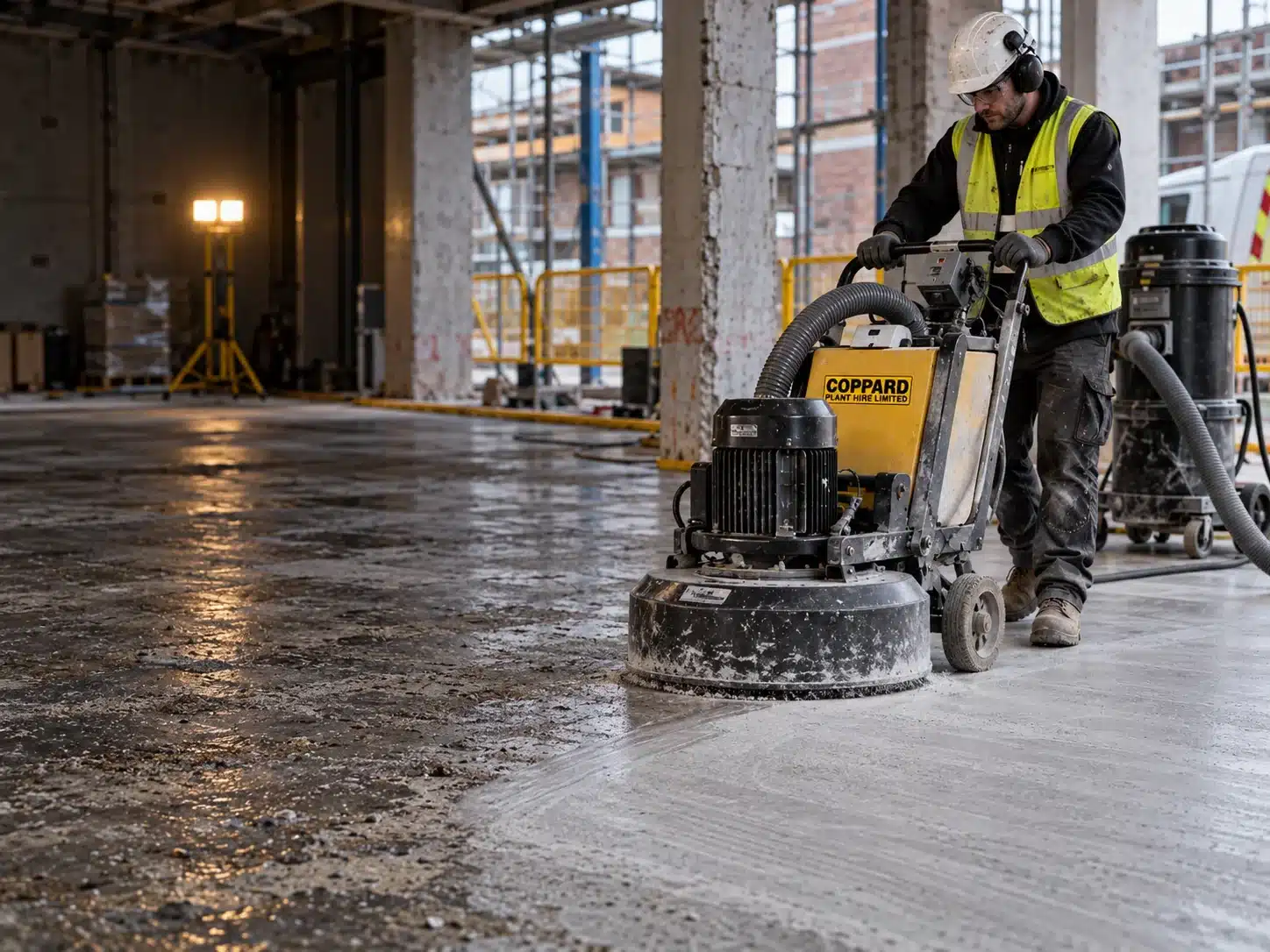
Dust and debris from an old agricultural floor can carry contamination that ordinary construction dust does not, oil residue, chemical traces, biological material from livestock use, and that changes what counts as safe handling and lawful disposal. Establish what the floor’s history suggests before assuming standard construction waste routes apply.
Protect anyone working on the conversion from exposure to a contamination history they may not expect from what looks like an ordinary old concrete floor, and arrange disposal appropriate to what has actually come up, rather than defaulting to a standard skip as if it were routine construction dust.






Tell the Godstone Depot the Floor's History
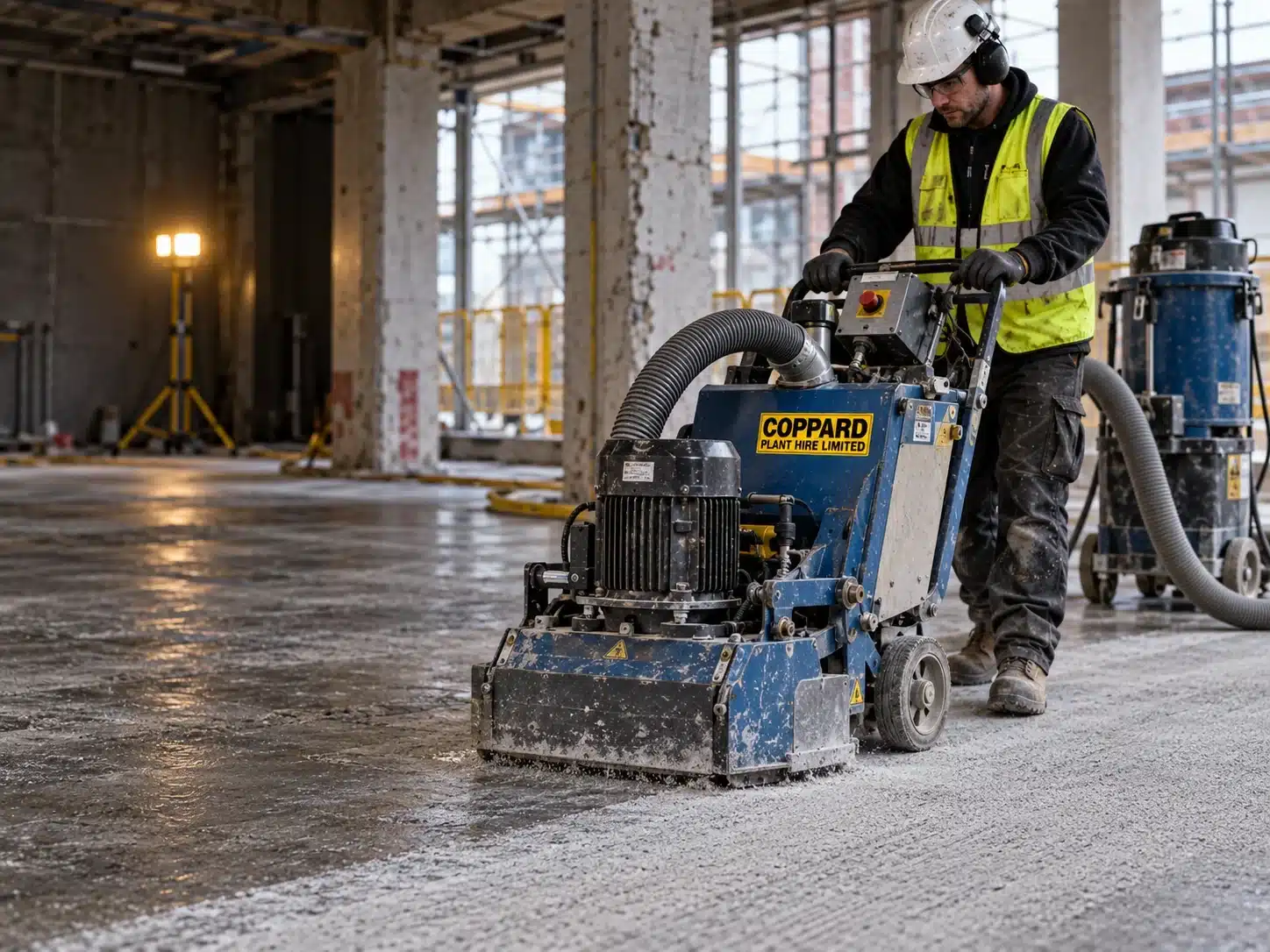
The most useful thing you can say is what the building was used for and for how long, dairy, livestock housing, a farm workshop, alongside the area and the finish needed for the new use. Flag any known spills, chemical use or visible staining.
The team can then recommend suitable grinding or scabbling equipment for work across Godstone and the wider Surrey area and flag where the contamination picture needs professional assessment before work starts. Call 01883 743322 once you know the building’s history, not just its current condition.
Frequently Asked Questions - Concrete Preparation Equipment Hire in Godstone, Surrey
Why is an old dairy or livestock floor different to prepare?
Because it has usually absorbed years of oil, silage effluent, animal waste or cleaning chemicals, not just laitance or a tired coating. Grinding into it can reveal contamination that goes deeper than the visible surface suggests, which changes the disposal and handling requirement. Think honestly about what the floor was actually used for before treating it as routine preparation, since a floor that looks like plain concrete can carry a contamination history a construction site rarely has.
Will grinding be enough to remove old farm floor contamination?
Sometimes, but not always. Grinding takes off laitance, staining and old coatings through controlled abrasion, and works in stages so you can see what the surface reveals as you go. Where contamination has soaked in more deeply, scabbling removes more of the surface layer through repeated impact, which can matter for absorbed material grinding alone would not fully clear. Let what the grinding reveals guide whether scabbling is needed, rather than assuming one method covers it.
Is dust from an old farm floor handled the same as construction dust?
Not necessarily. Dust and debris from an old agricultural floor can carry oil residue, chemical traces or biological material from livestock use, which ordinary construction dust does not, and that changes what counts as safe handling and lawful disposal. Establish the building’s history before assuming standard construction waste routes apply, and treat protecting the people doing the work as a real consideration given what may come up.
What if the contamination turns out worse than expected?
That is a real possibility on a genuine change-of-use conversion, since a floor that looks like ordinary old concrete can hide decades of absorbed material. If grinding reveals contamination going deeper or wider than anticipated, that may need professional assessment before continuing, rather than pushing on with a standard preparation approach. Flag any known spills, chemical use or visible staining to the depot early so the equipment and the plan account for the possibility.
What UK rules apply when preparation creates hazardous dust?
Concrete dust, and especially the silica in it, is covered by the Control of Substances Hazardous to Health Regulations 2002, known as COSHH, which require employers to assess and control exposure that can harm health. The text is at Control of Substances Hazardous to Health Regulations 2002 on legislation.gov.uk. On an agricultural conversion this extends to whatever else the floor’s history suggests may be present, not just ordinary construction dust.
Need concrete preparation equipment hire in Godstone?
Tell us the building’s history, what may have soaked into the floor, and the new use planned. Call Coppard on 01883 743322.