Vacuum Cleaner Hire in Crowborough, East Sussex
Vacuum cleaner hire in Crowborough for wet and dry site cleaning, liquid recovery and post-build housekeeping. Coppard supplies a commercial wet and dry vacuum across East Sussex. Call 01892 662777 with the material being collected and the clean-up method required.
A commercial vacuum is most useful when it is matched to what is being collected, not just the size of the room. Standing water, mixed debris and fine dust from cutting or grinding are different jobs with different demands on the tank, the hose and the filtration. Define what the machine will pick up, and whether it is wet, dry or mixed, before booking.
Separate General Clean-Up, Liquid Recovery and Fine-Dust Control
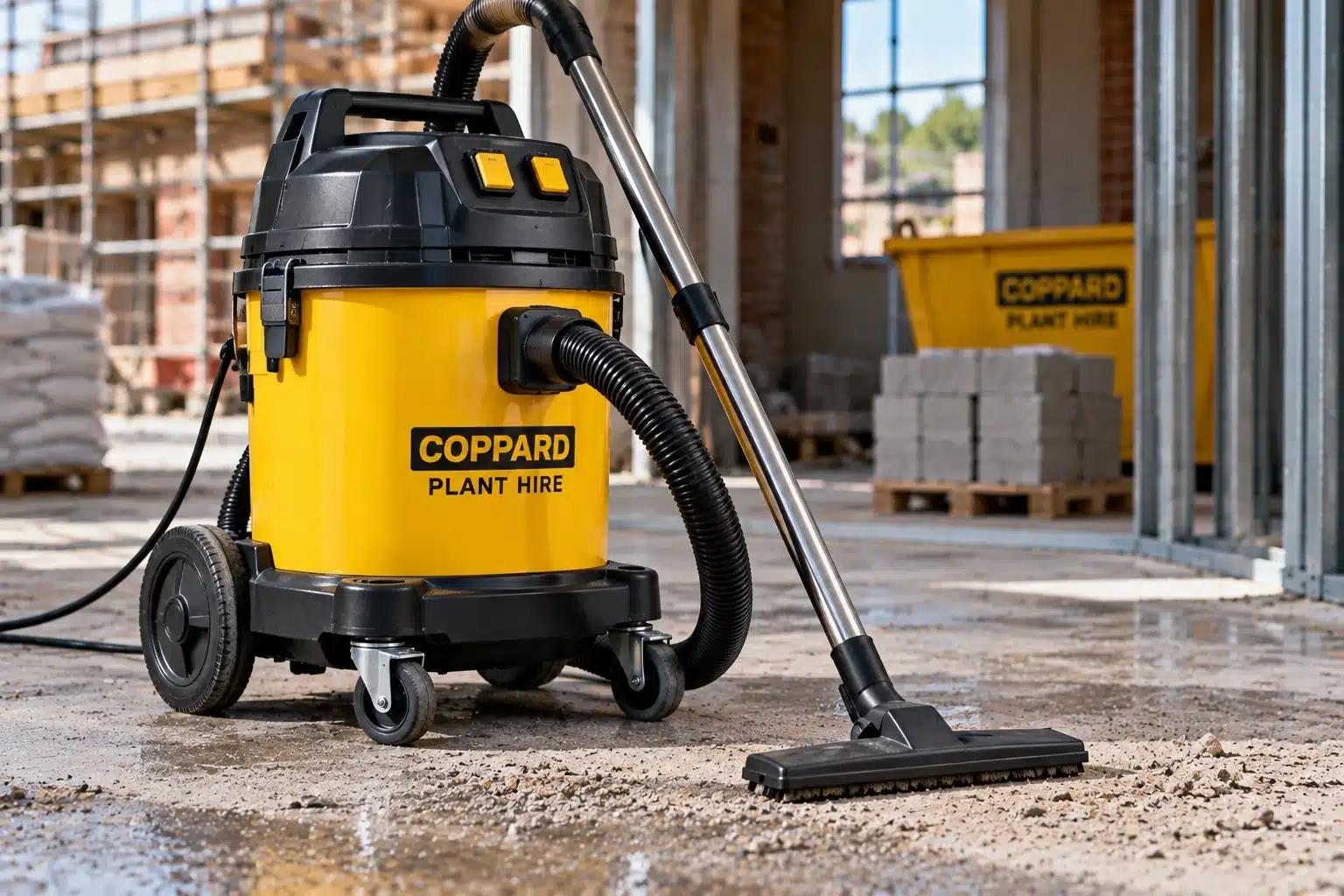
A wet and dry vacuum covers several site-cleaning jobs, but they should not be treated as identical. Collecting standing water after a minor ingress depends on tank capacity, hose handling and a practical emptying route. Removing mixed construction debris is more about hard-wearing general clean-up.
Fine dust from drilling, cutting or grinding raises a different question: whether the vacuum’s filtration classification and connection method suit the dust source. Start by defining what the machine will collect and whether the material is wet, dry or mixed. If you need point-of-source extraction from a power tool, say so, rather than describing the job as ordinary housekeeping, so a general wet vacuum is not treated as a dedicated dust-control machine.
Tank Capacity Affects the Working Cycle More Than the Headline Size
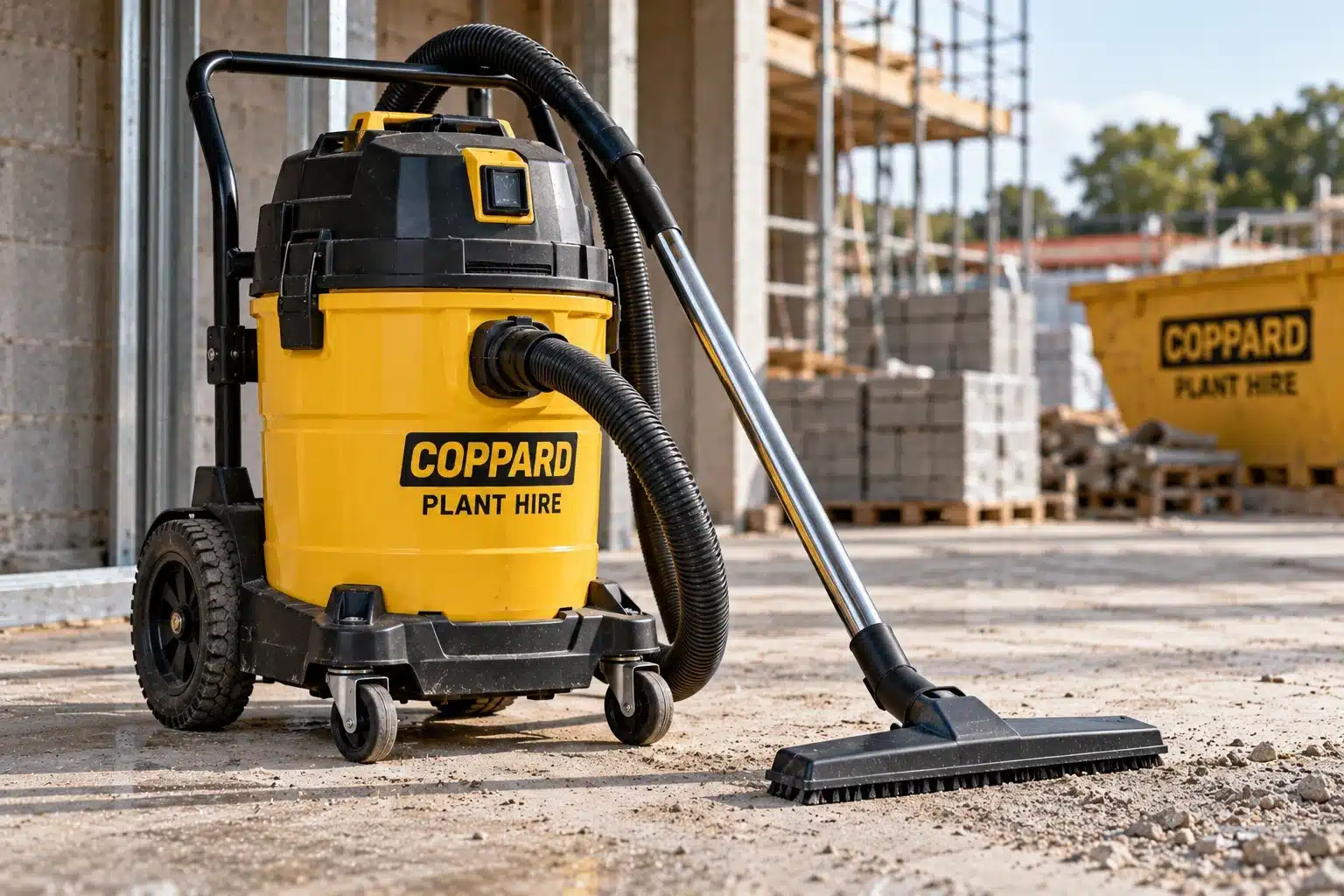
A large tank can cut interruptions on bigger clean-ups compared with a small domestic unit, but the capacity only helps if the operator can move the vacuum around the site, reach the material with the hose and empty the contents without creating another handling problem. Liquid work also needs a sensible drain or transfer point; a drain hose makes emptying easier, but the contents still have to go somewhere appropriate.
For refurbishment or post-build cleaning, think about stairs, thresholds, door widths and the distance between work zones. A vacuum that is efficient in one open workshop can be awkward in a multi-storey property. Matching the clean-up sequence to the machine’s movement and emptying cycle often saves more time than choosing on drum volume alone.
Check the Filtration Class Before Relying on It for Dust
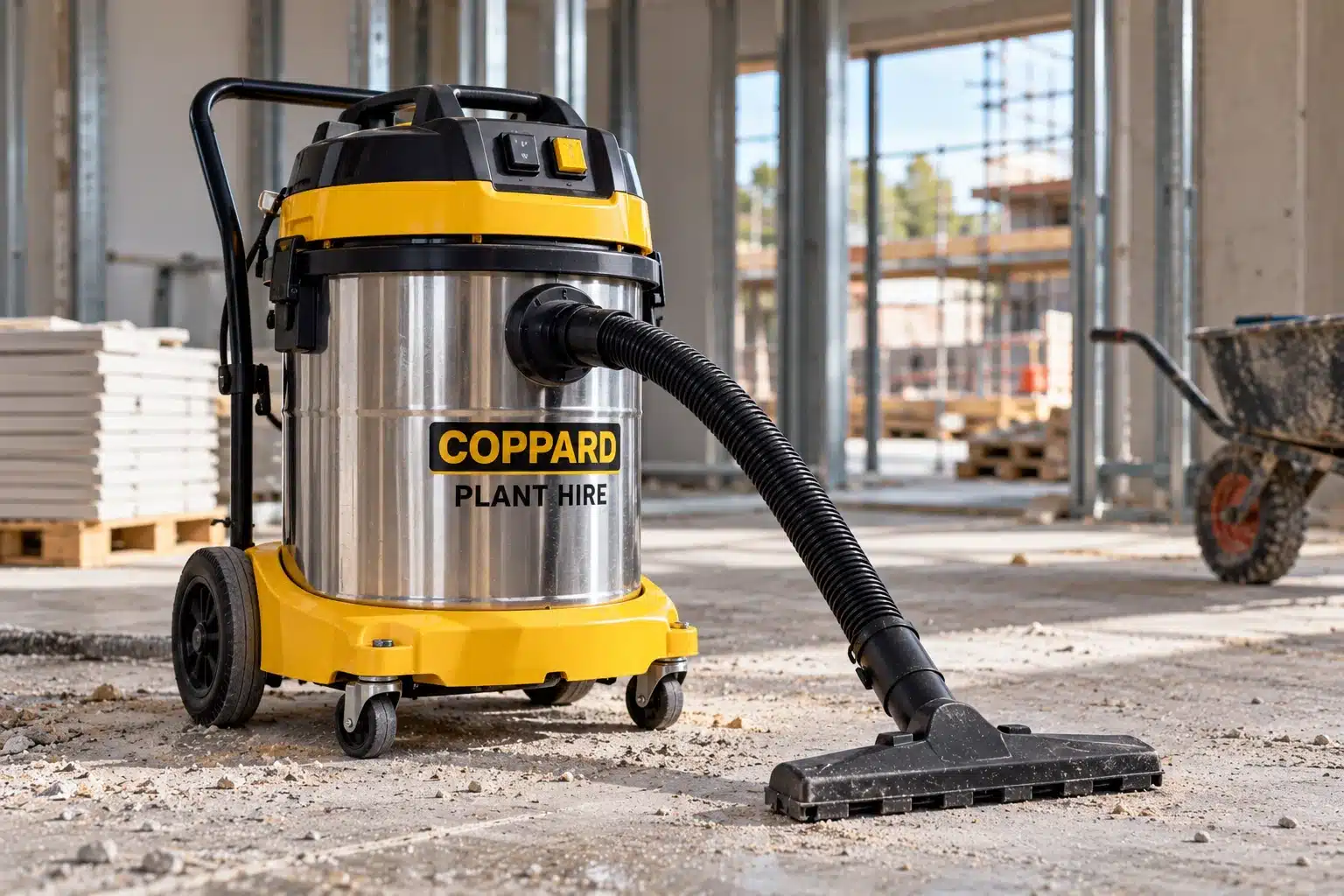
The Coppard wet and dry vacuum is a commercial wet and dry machine. Filtration matters because fine construction dust is not just a cleanliness issue; the control method has to suit the material being generated and the process creating it. Confirm the machine’s filtration classification against your dust source rather than assuming every commercial vacuum offers the same control.
If the job involves direct extraction from a grinder, saw or drill, check whether the vacuum can connect to the tool and whether its class is appropriate for that use. For simple post-build housekeeping the requirement may be less specialised. Keeping those applications separate keeps expectations accurate about what the machine will and will not do.
Plan Slurry and Contaminated Water Around the Disposal Route
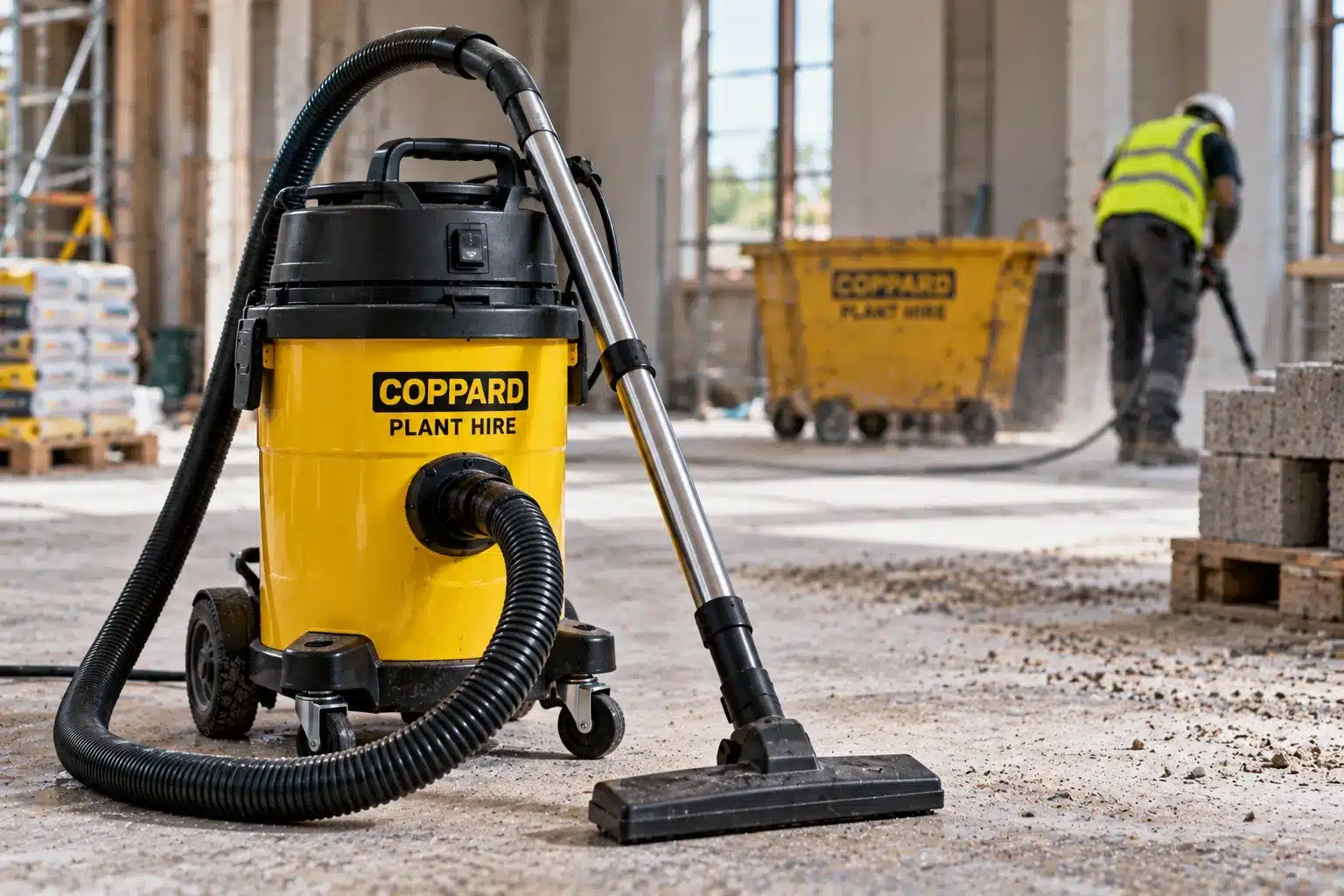
Wet pick-up is very effective for water or slurry, but the vacuum does not make the collected liquid harmless. Concrete residues, oils, detergents and other site contaminants may need controlled disposal rather than discharge to the nearest surface-water drain. Before starting, work out what the liquid contains and where the tank can be emptied.
This planning matters most when the clean-up follows cutting, drilling or washing, because the liquid may carry fine solids that settle quickly. A clear disposal point avoids dragging a full vacuum across the site or stopping work while an improvised emptying route is found. The depot confirms the machine; the site team decides how the waste is managed.





Book the Vacuum Around Material, Power Supply and Site Layout
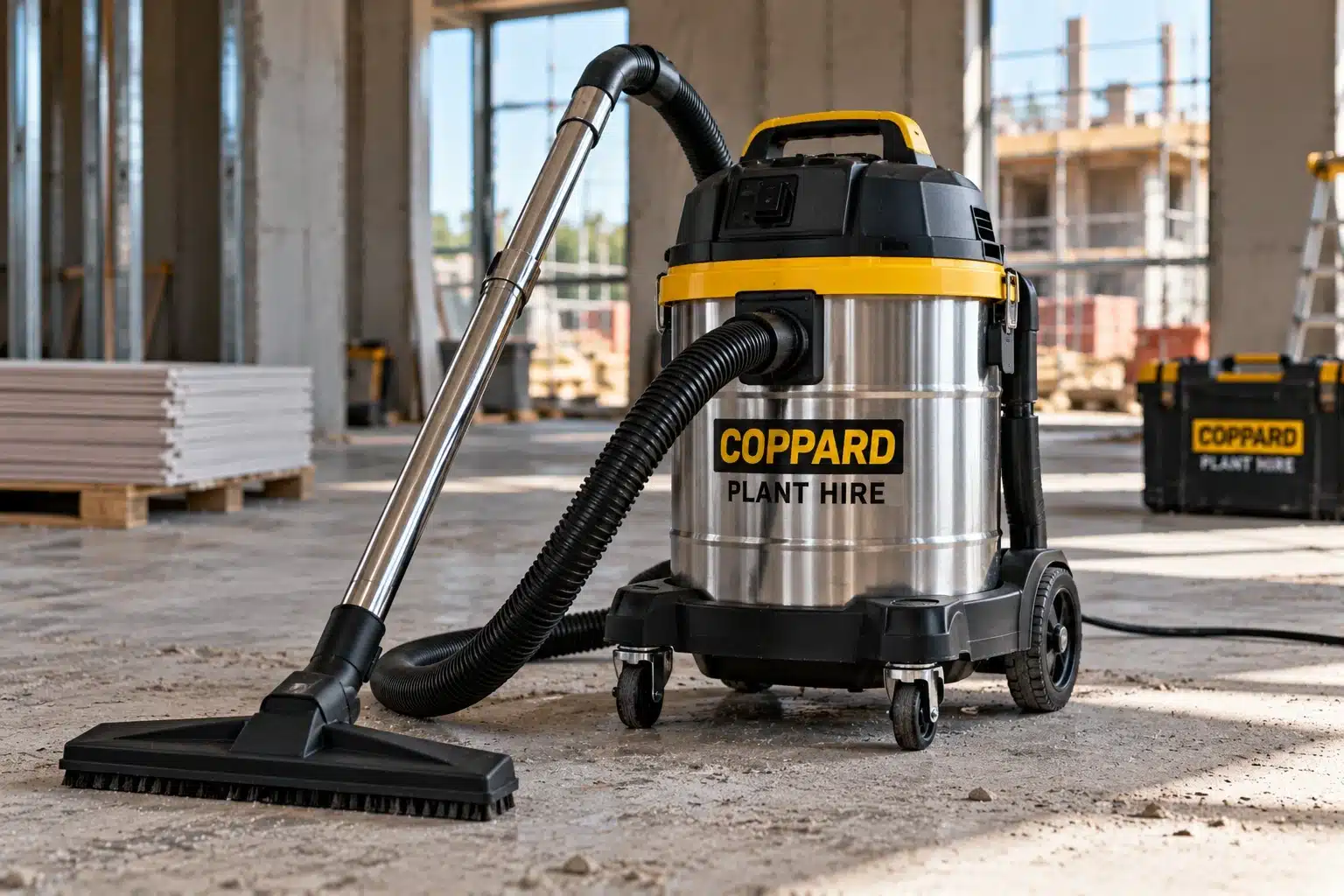
When arranging hire, give three practical details: what will be collected, how much is likely to accumulate and where the vacuum will be used. The Crowborough Tool Rental Service supports cleaning work across East Sussex and can confirm the current machine, its accessories and availability.
Mention stairs, long hose runs, wet pick-up or any need to connect directly to another tool, because those affect whether the listed vacuum is a sensible fit. Call 01892 662777 before collection if the job involves fine dust or unusual liquids, so the requirement is checked against the actual unit rather than a general ‘industrial vacuum’ idea.
Frequently Asked Questions - Vacuum Cleaner Hire in Crowborough, East Sussex
Can the same vacuum handle both wet and dry clean-up?
A wet and dry machine is designed for both, but the set-up and emptying method differ between them. Follow the product instructions when changing modes and think about what is being collected. Wet pick-up needs a suitable disposal route for the liquid, while dry work can raise filtration questions depending on the type of dust. Treat the two modes as related but distinct tasks, not a single all-purpose setting you can leave the machine on.
What filtration do I need for construction dust?
It depends on the dust. Fine construction dust, especially silica-bearing dust from cutting or grinding, is a health issue, not just a cleanliness one, so the filtration class and connection method have to suit the material and the process. A general commercial vacuum is fine for post-build housekeeping but may not be right for point-of-source extraction from a power tool. Confirm the exact machine’s classification with the depot before relying on it for a demanding dust source.
Can a wet vacuum be used for concrete slurry?
A suitable wet vacuum can collect liquid and slurry, but the material still has to be managed after collection. Consider the solids content, the tank capacity, the route to the disposal point and whether the liquid is contaminated. Concrete washings or slurry should not automatically be emptied to a surface-water drain just because a vacuum has recovered them; plan a proper disposal point before you start the wet pick-up.
What should I tell the depot when hiring a vacuum?
Give what will be collected, roughly how much will accumulate and where the vacuum will be used, plus the power supply. Mention stairs, long hose runs, wet pick-up or any need to connect directly to a power tool, because those decide whether the listed machine suits the job. If fine dust or unusual liquids are involved, flag it before collection so the requirement is checked against the actual unit rather than a generic industrial-vacuum description.
What UK rules cover exposure to hazardous construction dust?
The Control of Substances Hazardous to Health Regulations 2002, known as COSHH, require employers to assess hazardous substances and prevent or adequately control exposure. You can read the official regulations at Control of Substances Hazardous to Health Regulations 2002 on legislation.gov.uk. Where a vacuum is used to control fine dust, its filtration class and connection to the tool are part of that control, so match the machine to the dust source rather than assuming any commercial vacuum is sufficient.
Need vacuum cleaner hire in Crowborough?
Tell us whether the job involves water, slurry, general debris or dry dust, plus the power supply available. Call Coppard on 01892 662777.