Monitor, Detector and Locator Hire in Crowborough, East Sussex
Monitor, detector and locator hire in Crowborough for tracing buried services, site surveys and monitoring during intrusive work. Coppard supplies CAT cable locators, Genny signal generators and related detection equipment across East Sussex. Call 01892 662777 with the survey task, the work area and the planned excavation method.
Before breaking ground, crews need a clearer picture of what may be hidden below the surface. Detection is most useful as part of planning, not a last-minute scan before the digger starts. Review the drawings and visible service evidence, define the area to survey, and decide where hand digging or trial holes may be needed before mechanical excavation begins.
Build the Detection Plan Before Excavation Starts
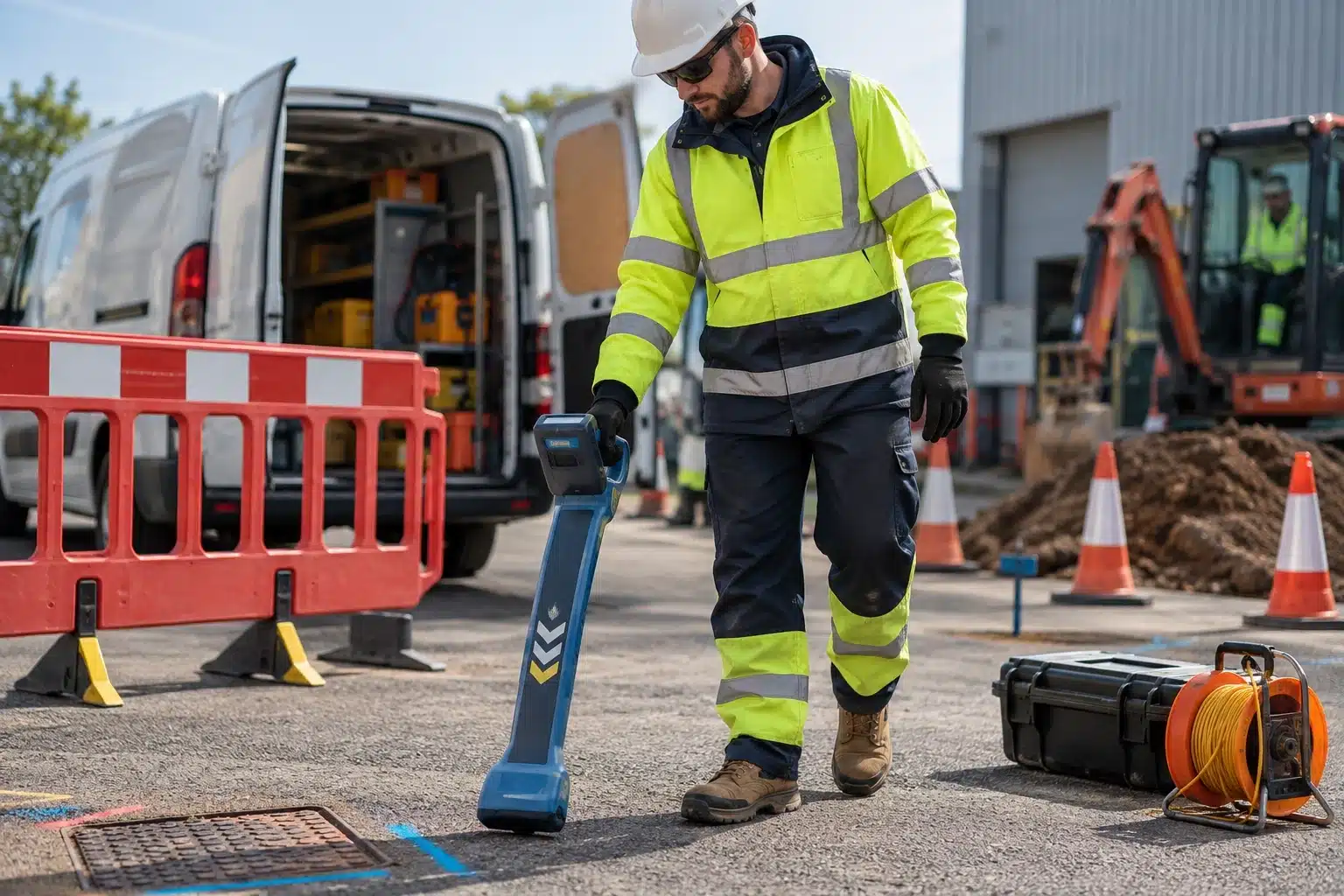
Underground service detection works best treated as part of planning rather than a last-minute scan. Start by reviewing available utility drawings, visible service entries, chambers, meter positions and previous site information. Then define the area to survey, including access routes and any zones where plant will slew, track or place outriggers.
Mark a locator reading clearly on the ground and compare it with the rest of the evidence. If the route looks uncertain, widen the search rather than assuming the line is exact. This helps the team decide where hand digging, trial holes or another cautious method is needed before mechanical excavation begins, rather than trusting a single scan.
Use CAT and Genny for Complementary Tracing
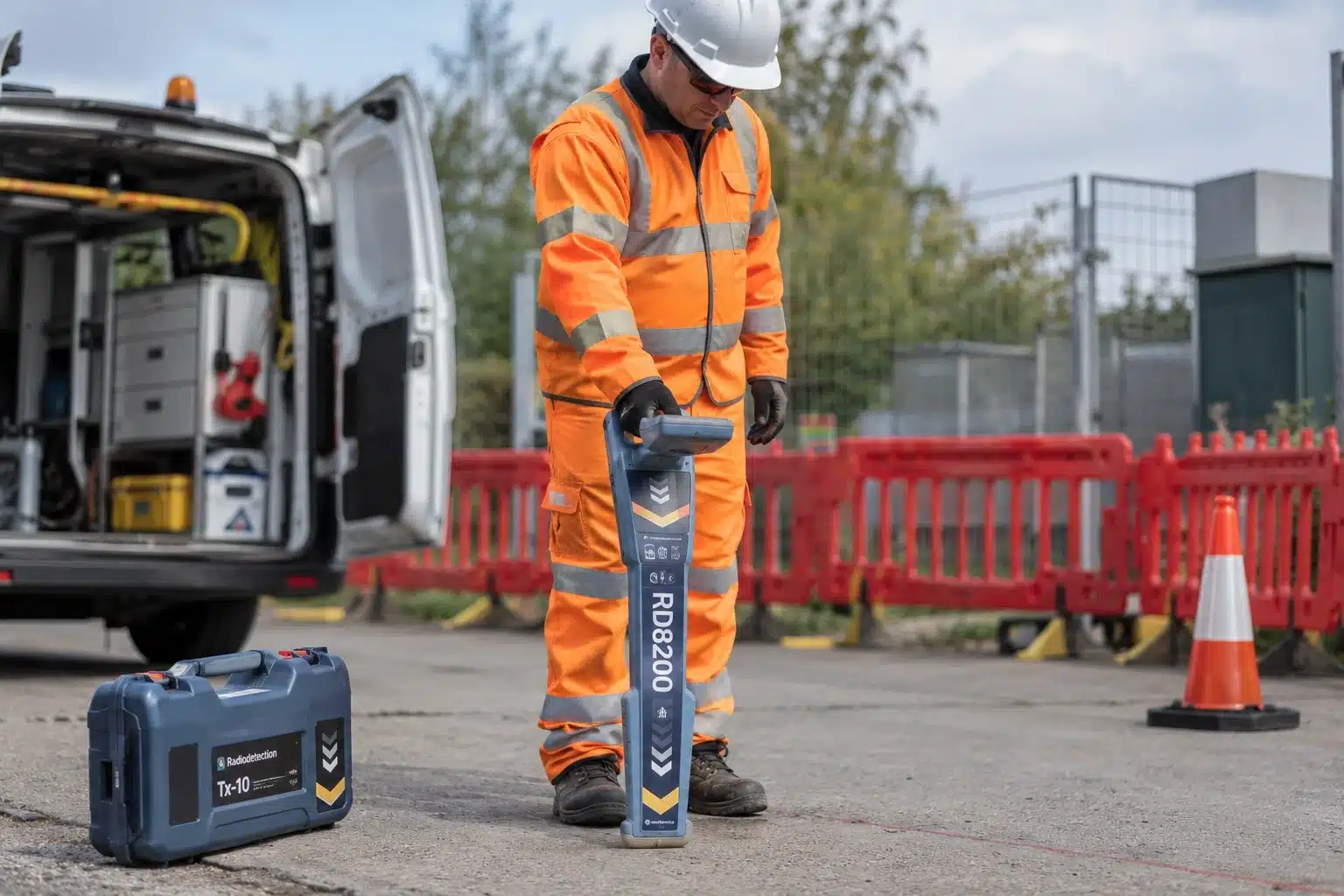
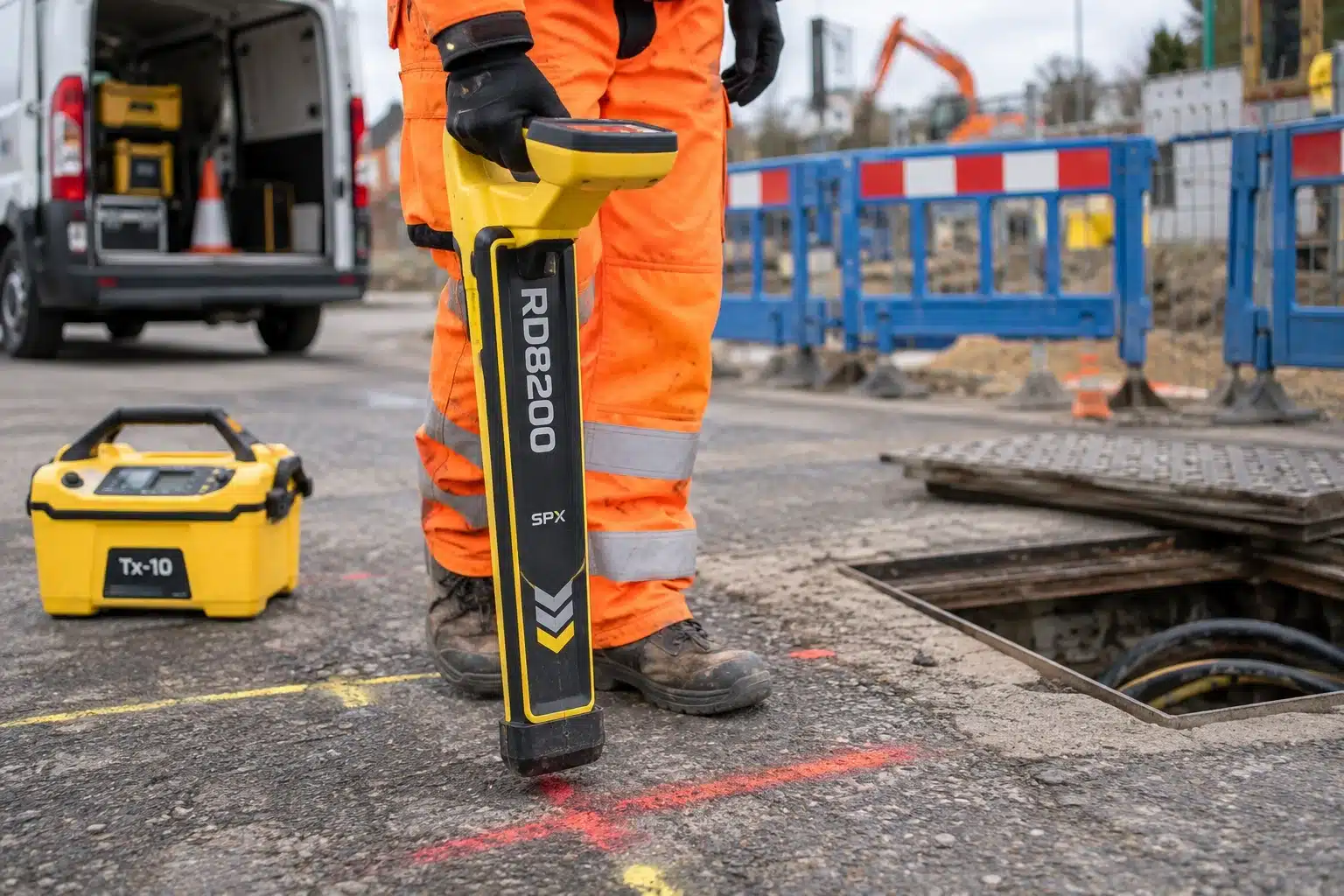
A CAT and Genny solve related but different parts of tracing. The Coppard CAT cable locator receives electromagnetic signals from buried conductive services, while the Genny applies or induces a traceable signal onto a service. Used together, they help follow a route that is hard to identify in passive mode alone.
The operator should understand which mode is in use and why, because the equipment cannot prove an area contains no services. Signal strength, depth, adjacent utilities and inaccessible connection points all affect the result. Where a route is critical, record the findings and compare them with drawings, surface features and controlled investigation before excavation proceeds.
Match the Locator to the Question You Need Answered
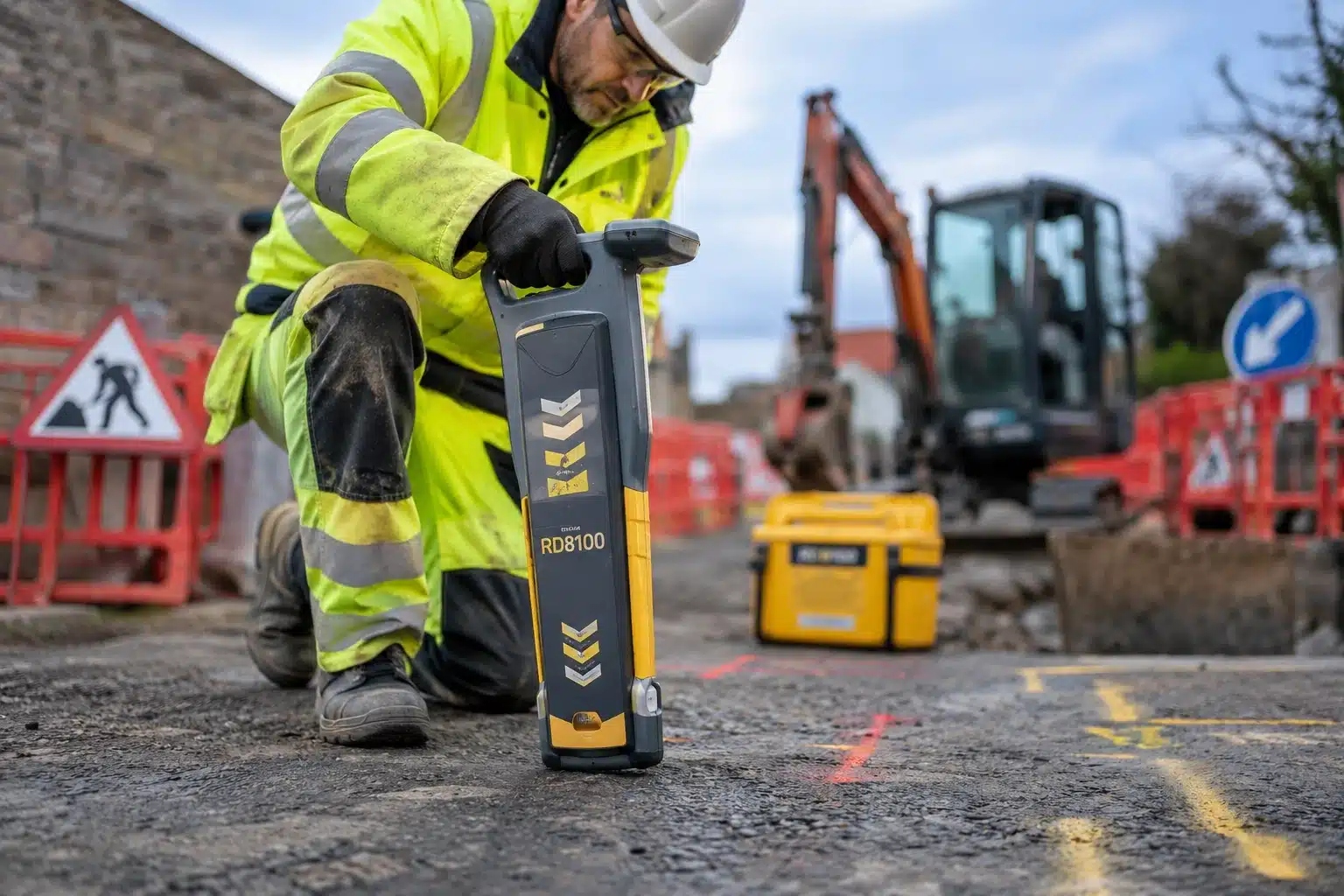
The other locators answer narrower site questions. A mouse locator traces a compatible sonde or transmitter through a pipe or drain, while a metal-cover detector finds concealed covers rather than mapping buried cables. That distinction matters, because the wrong detector can give a confident-looking result that does not address the actual risk.
Ground-penetrating radar can add another layer of survey information on some sites, but it is a separate capability to confirm rather than assume. Choose the detector that answers the specific question, whether that is a live cable here, the run of this drain, or the position of a buried cover, rather than reaching for whatever is nearest.
Keep Environmental Monitoring in the Same Enquiry
Noise, vibration and dust monitoring often sit alongside detection during intrusive work, so it makes sense to raise both in one enquiry. The requirement is different from utility locating: the site may need a record of exposure, boundary conditions or environmental performance over a defined period.
Before hiring, establish what needs to be measured, where the monitor must sit, how long the recording period lasts and whether downloaded data or a formal report is required. The depot can then confirm whether the necessary monitoring instrument is currently available, so the measurement side of the job is planned rather than improvised once work is under way.





Turn Survey Findings into an Excavation Method
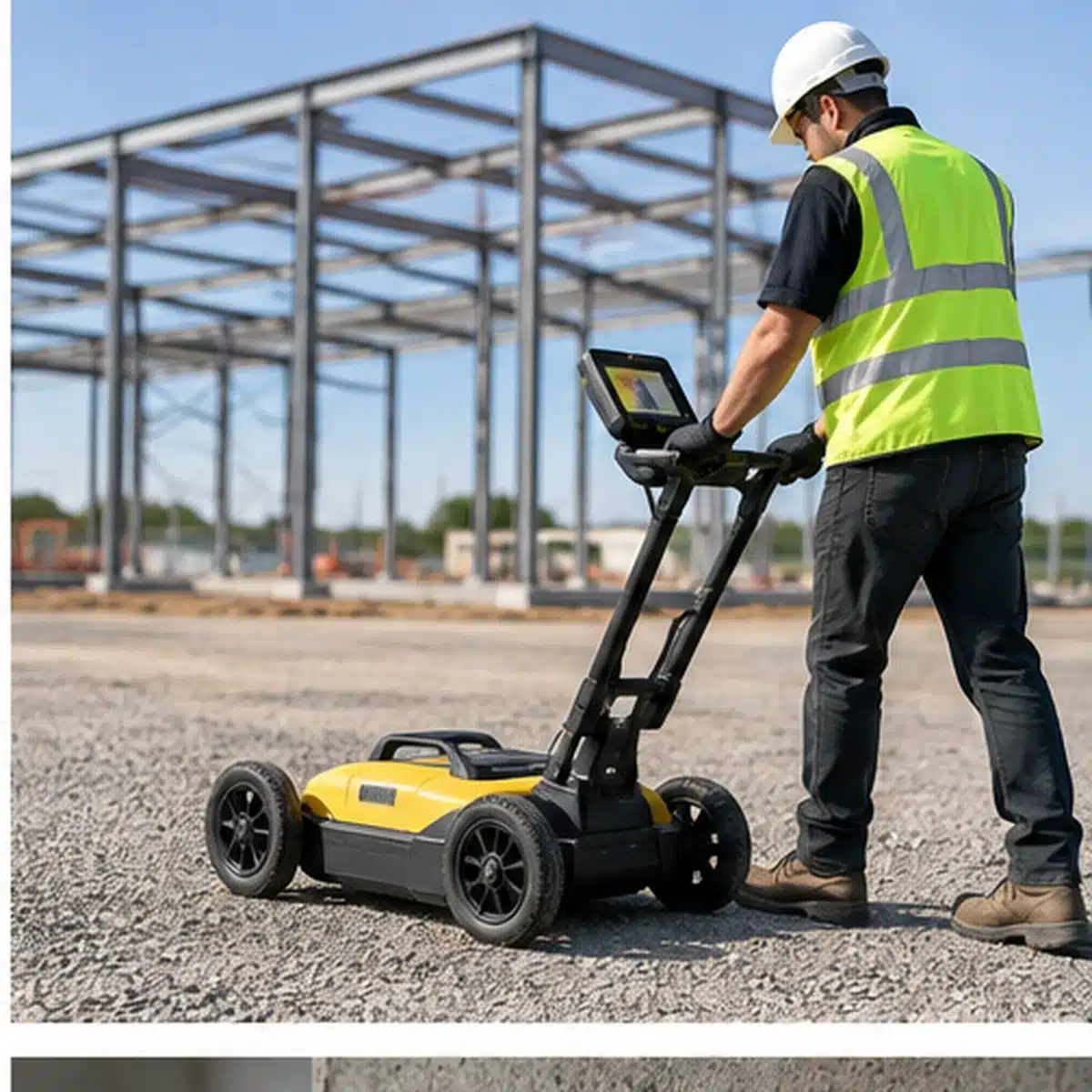
Detection results only become useful when they shape the excavation plan. Mark suspected routes clearly, brief the people doing the work, and keep the relevant drawings or survey records where the site procedure requires them. If signals conflict, disappear or suggest several services crossing the work area, stop and investigate rather than forcing a single interpretation.
Mechanical digging may need to be set back while trial holes or another controlled method confirm what is present. For projects through the Crowborough Tool Rental Service, give the type of service you are tracing, the size of the survey area and the planned work, so the hire discussion starts with the real site problem. Call 01892 662777 to confirm current equipment.
Frequently Asked Questions - Monitor, Detector and Locator Hire in Crowborough, East Sussex
What is the practical difference between a CAT and a Genny?
A CAT receives electromagnetic signals from buried conductive services. A Genny actively applies or induces a traceable signal onto a suitable service, which can make a route easier to follow than passive detection alone. The pair is most useful when the operator understands the selected mode, checks the result against plans and surface evidence, and never treats one signal as proof of the exact service position before excavation.
Does a clear CAT scan mean it is safe to dig immediately?
No. Locator equipment has limits and cannot prove an excavation area contains no buried services. Non-conductive utilities, weak signals, congested ground and inaccessible connection points all complicate detection. Combine the results with available drawings, visual inspection, site markings and an excavation method that reflects the remaining uncertainty. Where the route is doubtful, controlled investigation or trial holes may be needed before any mechanical digging begins.
Which locator do I need for my job?
It depends on the question. A CAT and Genny trace buried conductive cables and services; a mouse locator follows a compatible sonde through a pipe or drain; a metal-cover detector finds concealed covers rather than mapping cables. Ground-penetrating radar adds survey detail on some sites but is a separate capability to confirm. Tell the depot what you are trying to find, and the right detector can be matched to it rather than a general ‘locator’ sent out.
Can I hire noise, vibration or dust monitoring here too?
Yes, raise it in the same enquiry, since monitoring often runs alongside detection during intrusive work. It is a different requirement, though: the site may need a record of exposure or environmental performance over a defined period, sometimes with downloaded data or a report. Say what must be measured, where the monitor sits and for how long, so the depot can confirm whether the relevant monitoring instrument is currently available for your dates.
What UK construction rules apply before excavating near buried services?
The Construction (Design and Management) Regulations 2015 place duties on those planning and managing construction work, including considering the risks from underground services. You can read the official regulations at Construction (Design and Management) Regulations 2015 on legislation.gov.uk. Locator equipment supports that planning, but it should be used with drawings, competent assessment and an excavation method suited to the remaining risk, not relied on as proof the ground is clear.
Need monitor, detector or locator hire in Crowborough?
Explain the service or condition you need to identify, the survey area and the work that follows. Call Coppard on 01892 662777.