Kelly Concrete Block Hire in Crowborough, East Sussex
Kelly concrete block hire in Crowborough for material bays, barriers, retaining arrangements and changing site layouts. Coppard supplies interlocking concrete blocks in three sizes across East Sussex. Because every unit needs mechanical handling, delivery and repositioning should be planned from the start. Call 01892 662777 with the run length, the wall or bay height, the intended use and the handling access.
Interlocking concrete blocks give substantial separation or storage without committing to a permanently cast wall. The advantage is that the layout can change as the site changes, but that flexibility still needs planning: the footprint, the returns, the openings and the handling access all have to be worked out before delivery, because every block requires plant to move it.
Use Modular Blocks Where the Site Layout May Change
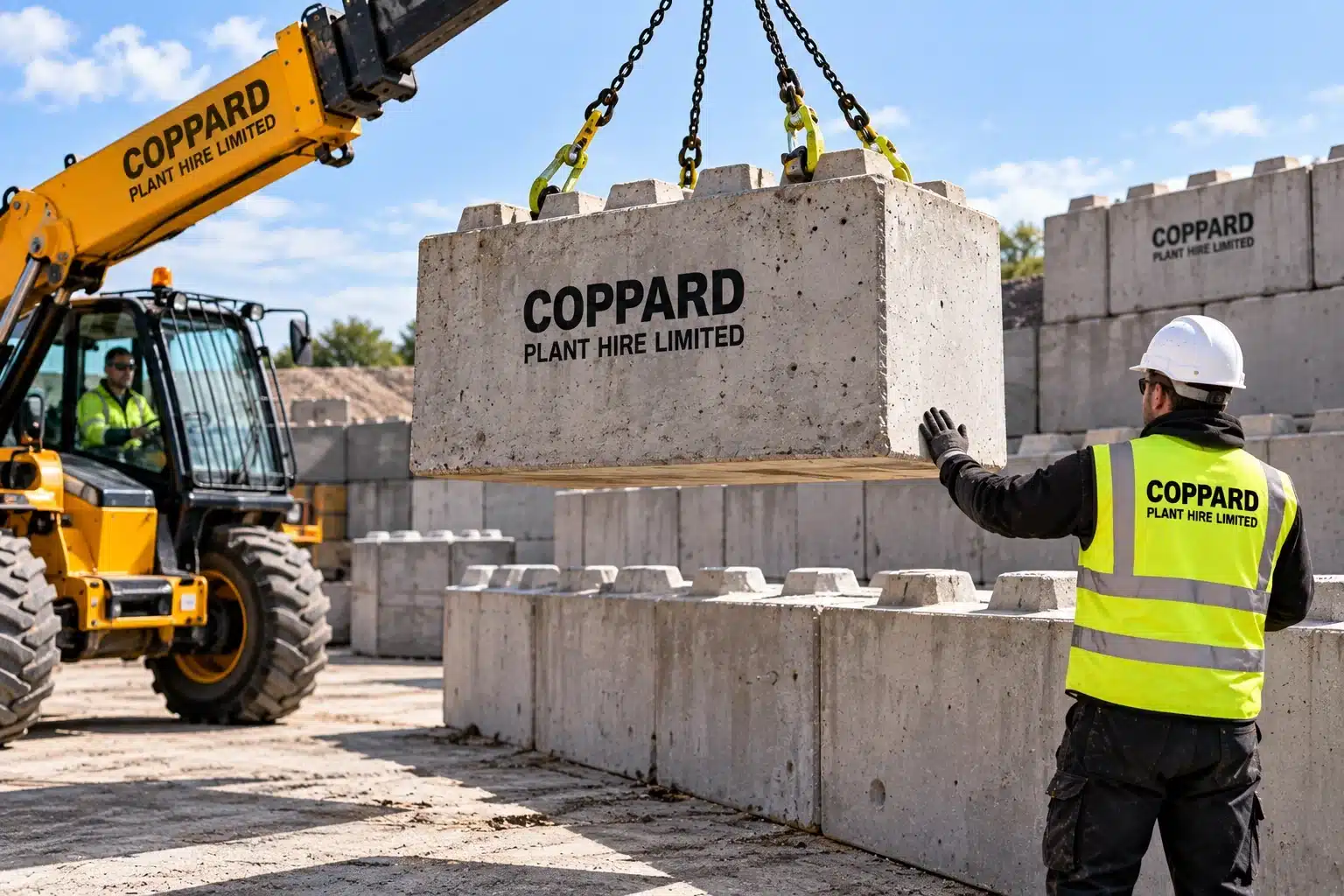
The main advantage of Kelly blocks is that a layout can be altered as the site develops. Material bays may need to expand, storage areas can move and a temporary barrier may be needed for only one phase. Interlocking blocks provide mass and modularity without the curing time and demolition of a cast wall.
That flexibility still demands advance planning. Work out the footprint, the returns, the openings and any future changes before delivery, so the initial quantity is sensible. If the blocks will separate vehicles, stockpiles or work areas, consider how traffic and loading interact with the arrangement rather than treating the wall as an isolated line on a drawing.
Build the Quantity from the Three Current Block Sizes
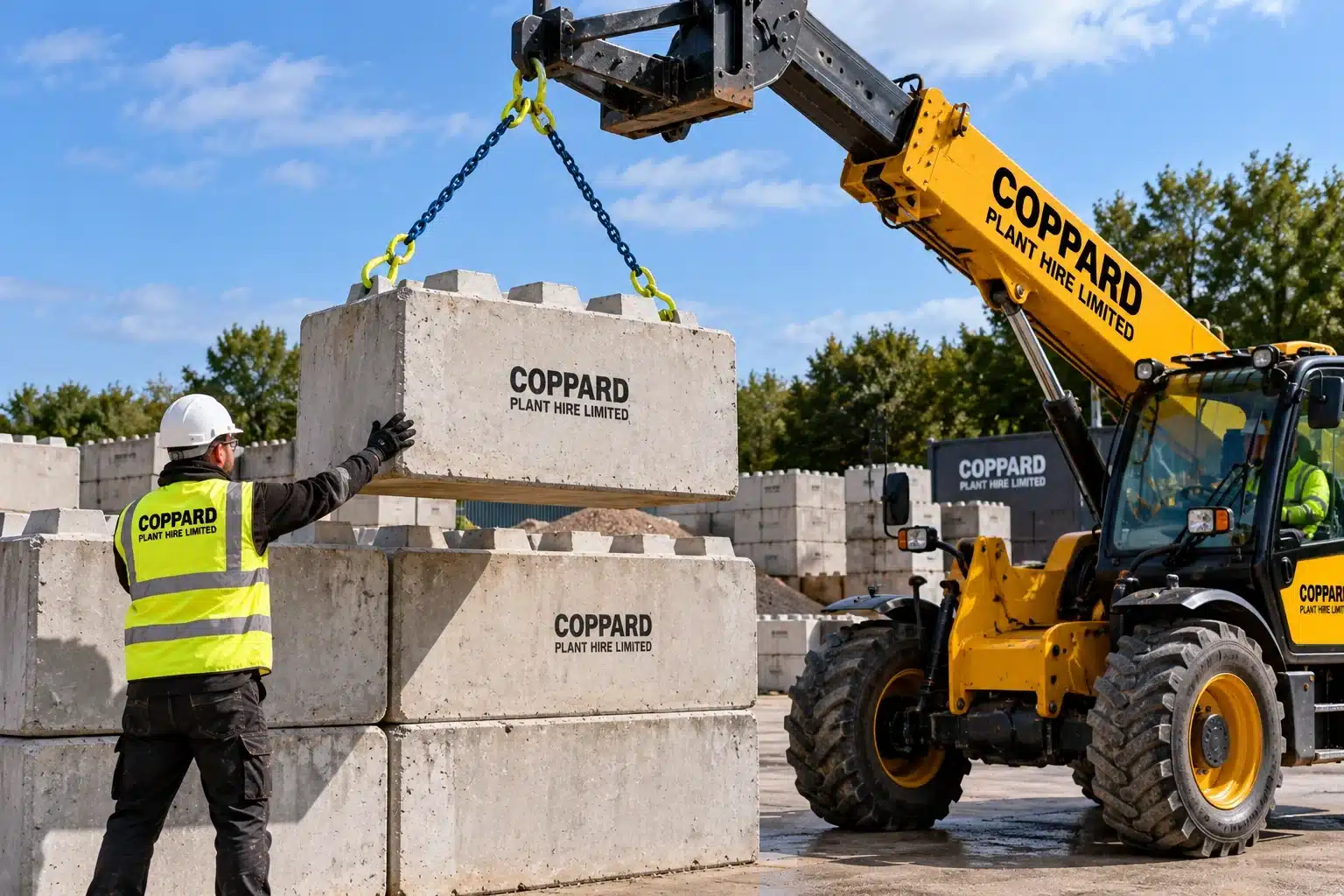
The Coppard Kelly concrete block range lists three hire sizes sharing a common 720mm height and width: a 720mm-long block at 750kg, a 1,440mm-long block at 1,500kg and a 2,160mm-long block at 2,250kg. Those dimensions let different run lengths be assembled without changing the common block height and width.
Work out quantities from the geometry of the finished bay or barrier rather than an approximate block count, because corners, returns and door or vehicle openings materially change the number needed. The listings also show a minimum four-week hire on the barrier blocks, so check the hire duration when planning temporary works or short construction phases.
Treat Retaining Walls as a Load-Bearing Arrangement
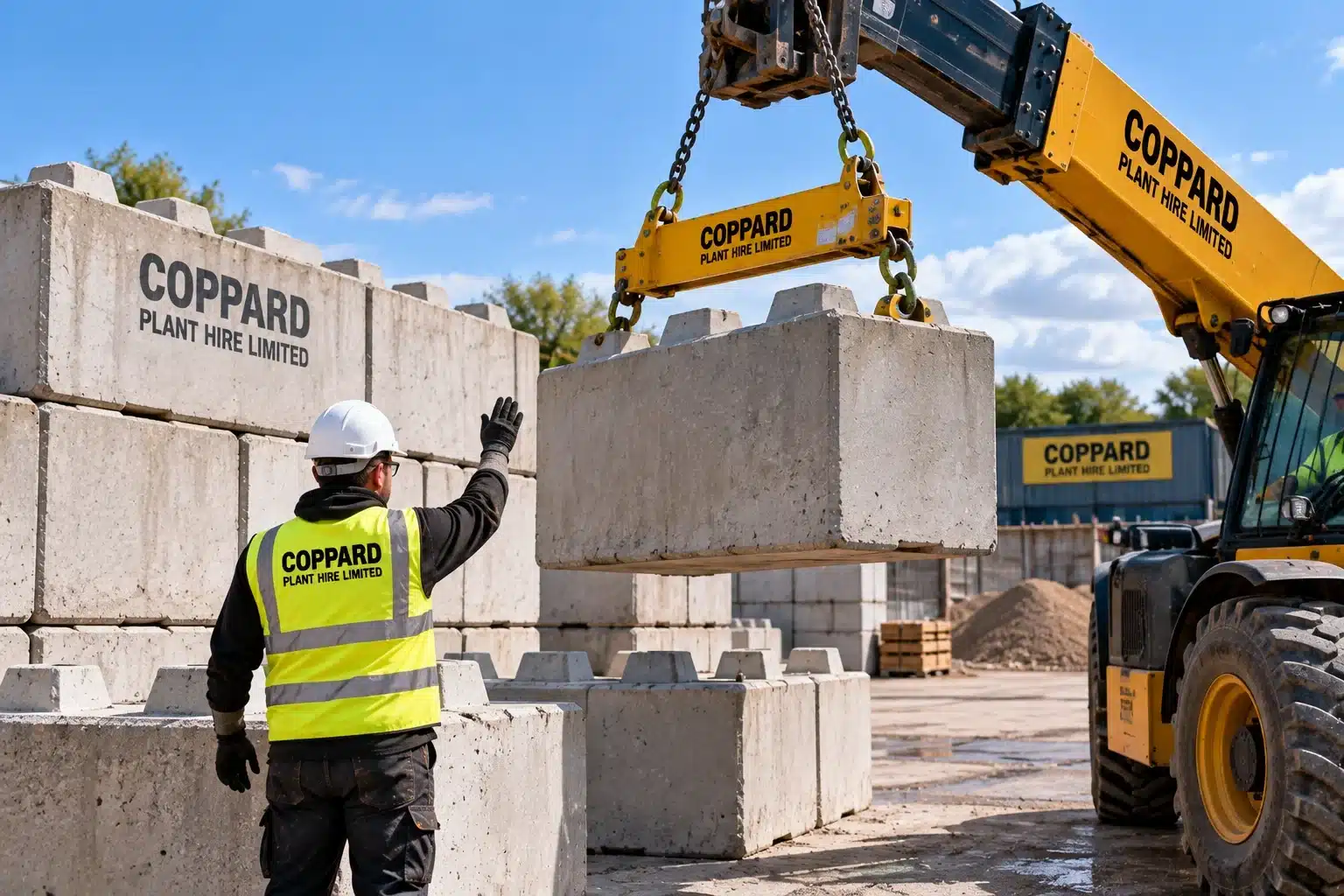
Retaining soil, aggregate or other bulk material creates forces that are not present in a simple freestanding divider. The wall height, the density of the retained material, drainage, ground bearing conditions and surcharge from plant or stockpiles all affect stability. A retaining arrangement should not be designed by stacking blocks until the required height is reached.
Define what the wall will hold back and what loads may act near the top or behind it. Higher walls, heavily loaded bays or unusual ground may need engineering input before installation. That advice matters most where a failure could affect workers, vehicles, neighbouring property or public areas rather than only spilling material within a controlled site.
Plan Mechanical Handling Before the Delivery Vehicle Arrives
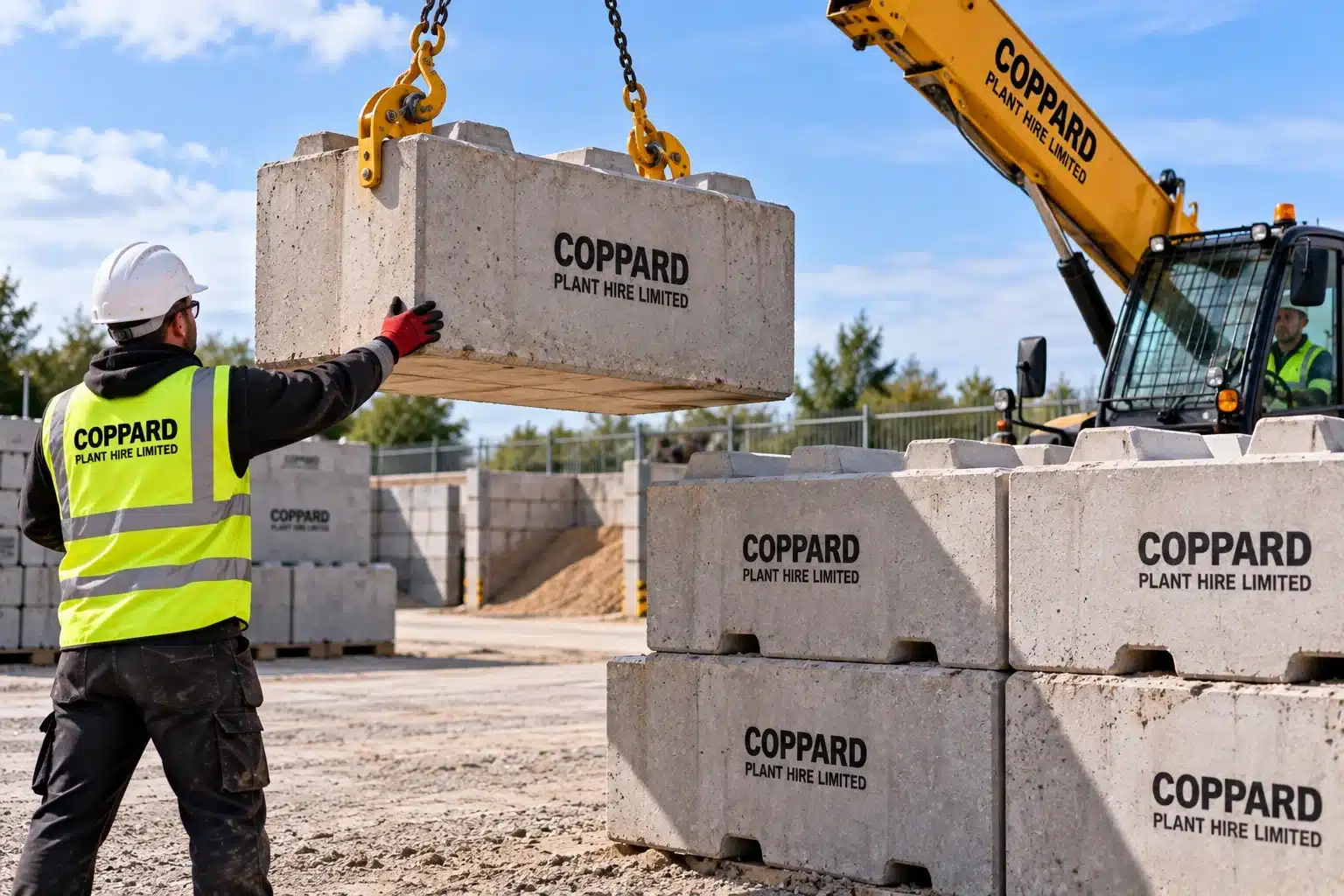
Even the smallest current block weighs 750kg, so unloading and repositioning depend on suitable mechanical handling. The largest listed unit is 2,250kg and includes an integral lifting hook, but the plant, lifting accessories, working radius and ground conditions still have to suit the operation.
Plan where the delivery vehicle stands, how far each block must be moved and whether access remains available after the first part of the wall is built, because tight corners or soft ground can change an apparently simple installation. For projects arranged through the Crowborough Tool Rental Service, cover the handling method during the booking conversation about quantity, so delivery is not separated from the practical installation plan.




Keep Unusual Uses Separate from Standard Applications
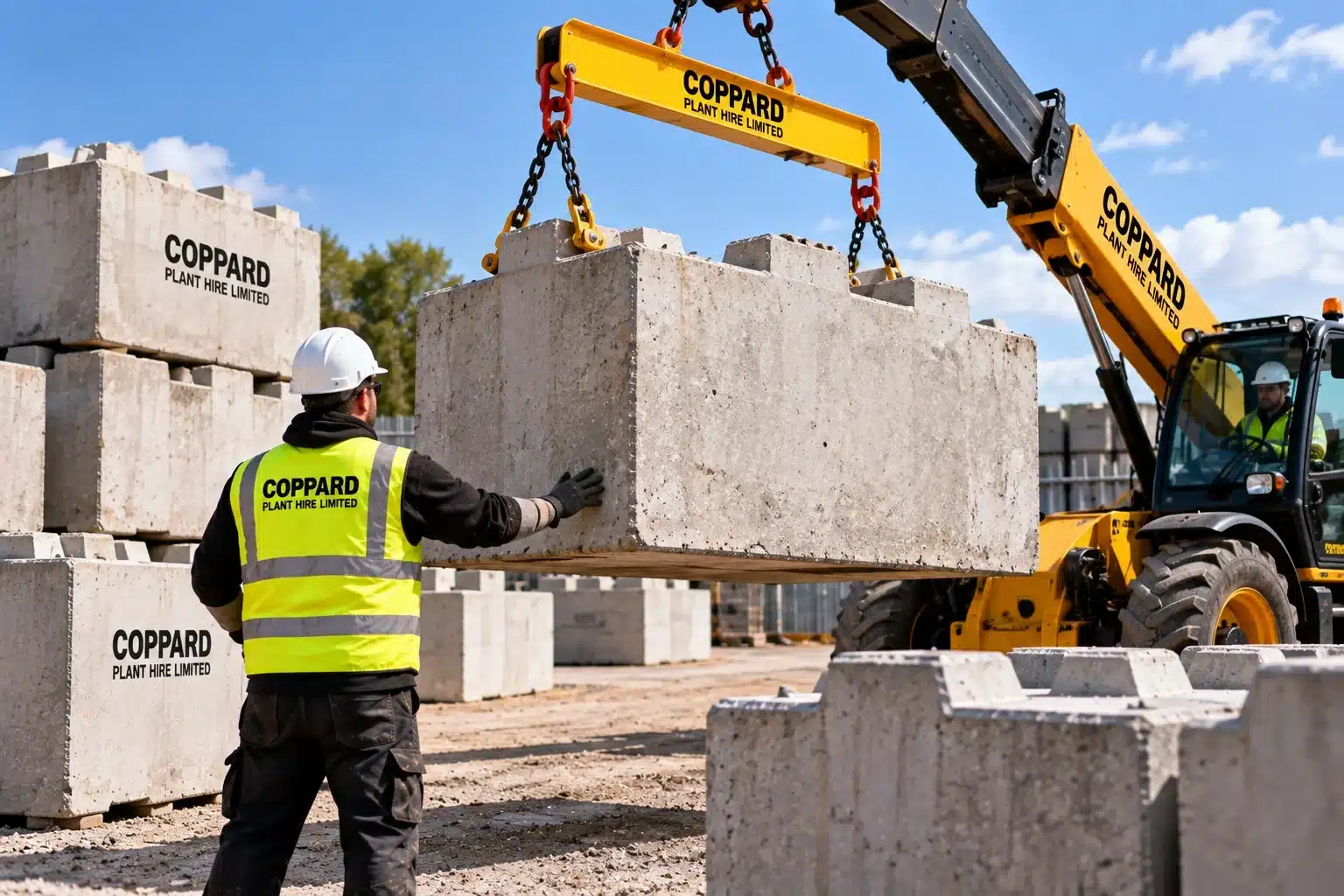
The verified applications are barriers, material bays, retaining walls and variable storage layouts. Uses such as blast barriers, security perimeters or counterweight applications are a different question and should not be assumed simply because a heavy block could in theory serve another purpose.
For an unusual application, get depot and technical confirmation first, and consider whether a designed system is required. When booking, give the intended use, the overall dimensions, the planned height, the site surface and the lifting plant available, so the discussion focuses on a workable arrangement rather than only on how many blocks can be delivered. Call 01892 662777 to confirm sizes and availability.
Frequently Asked Questions - Kelly Concrete Block Hire in Crowborough, East Sussex
What are Kelly blocks most commonly used for?
The standard applications are barriers, material bays, retaining walls and storage layouts that may need to change over time. Their interlocking form suits a substantial modular arrangement without casting a permanent wall. Security, blast or counterweight applications are a different matter and should not be treated as standard unless the depot and a relevant technical adviser confirm the proposed use is appropriate for the blocks and the situation.
Can Kelly blocks be stacked to retain soil or aggregate?
They can form retaining arrangements, but stability depends on far more than block weight. The wall height, the retained material, drainage, the ground bearing conditions and surcharge from vehicles or stockpiles all influence the forces on the structure. Higher walls or heavily loaded bays may need engineering input before installation, so plan a retaining wall around the actual material and site conditions rather than stacking blocks until the desired height is reached.
How are Kelly blocks unloaded and repositioned?
Every current size needs mechanical handling, from 750kg up to 2,250kg. The largest units include an integral lifting hook, but suitable plant, lifting accessories, working radius and ground conditions still have to be considered. Plan the delivery vehicle position and the route each block will take before unloading starts. Repositioning later also needs plant access, so avoid a layout that traps the handling machine outside the working area once the wall is part-built.
What sizes of Kelly block are available?
Three hire sizes share a common 720mm width and height: a 720mm-long block at 750kg, a 1,440mm-long block at 1,500kg and a 2,160mm-long block at 2,250kg. The common height and width let different run lengths be assembled from a mix of sizes. Work out the quantity from the finished layout, including corners, returns and any vehicle or door openings, rather than estimating a block count from the run length alone.
Could planning permission be relevant to a Kelly block wall or barrier?
Possibly. Whether permission is required depends on the location, the height, the purpose and the wider development context. You can read the Planning Portal guidance on fences, gates and garden walls at Planning Portal guidance on fences, gates and garden walls on planningportal.co.uk, though commercial retaining walls or substantial site barriers may need different consideration. Where the arrangement is permanent, prominent or close to a highway or neighbouring property, check the position with the local planning authority before installation.
Need Kelly concrete block hire in Crowborough?
Give us the layout dimensions, the planned height, the use and the handling access. Call Coppard on 01892 662777 to confirm sizes and availability.