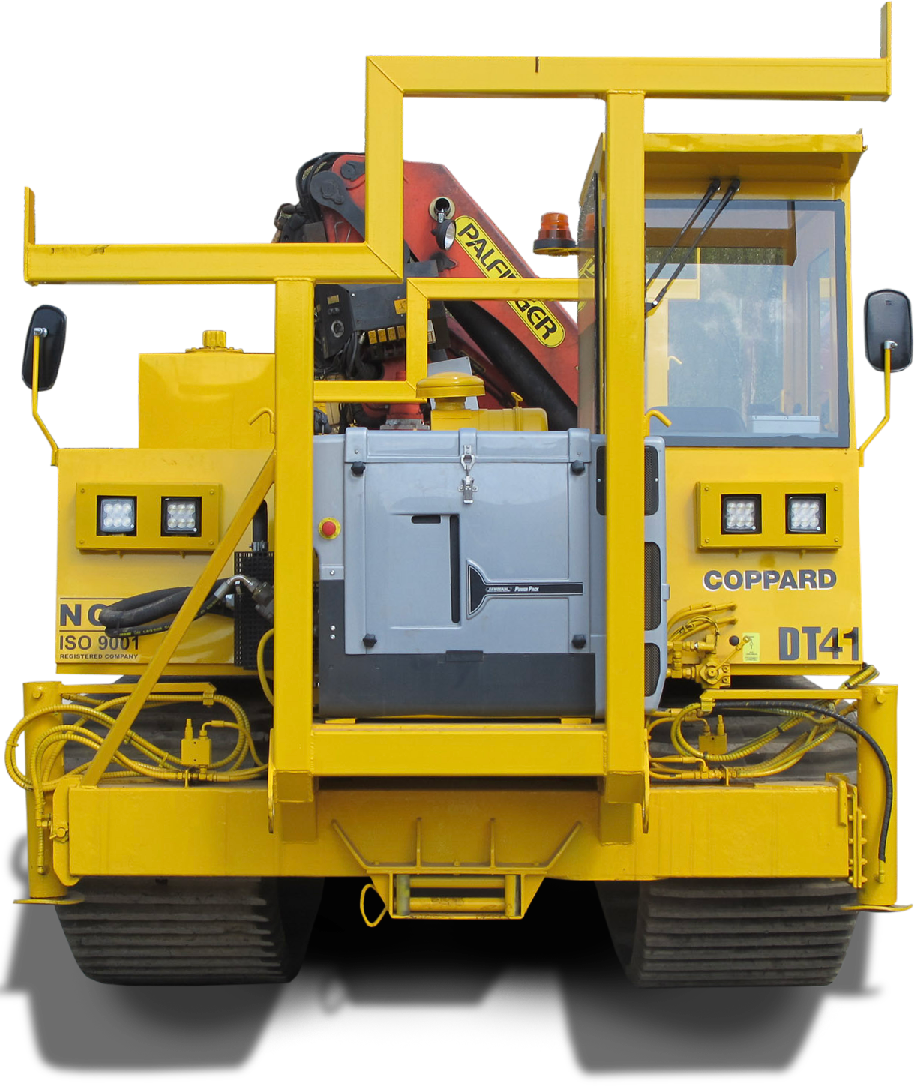
Dehumidifier Hire in Crowborough, East Sussex
Dehumidifier hire in Crowborough for drying buildings after flooding, water ingress, plastering or screed work. Coppard supplies portable drying equipment for homes and construction projects across East Sussex. Call 01892 662777 with the cause of the moisture and the area affected, and the team can confirm the current machine and availability.
Dehumidifier hire in Crowborough works best when the drying is planned around the building, not just the machine. What caused the moisture, how far it has spread and what happens to the space next all shape how drying should be organised and how long it needs. Sort the source first, then treat the drying as a measured process rather than a fixed number of days.
Stop the Source Before Trying to Dry the Building
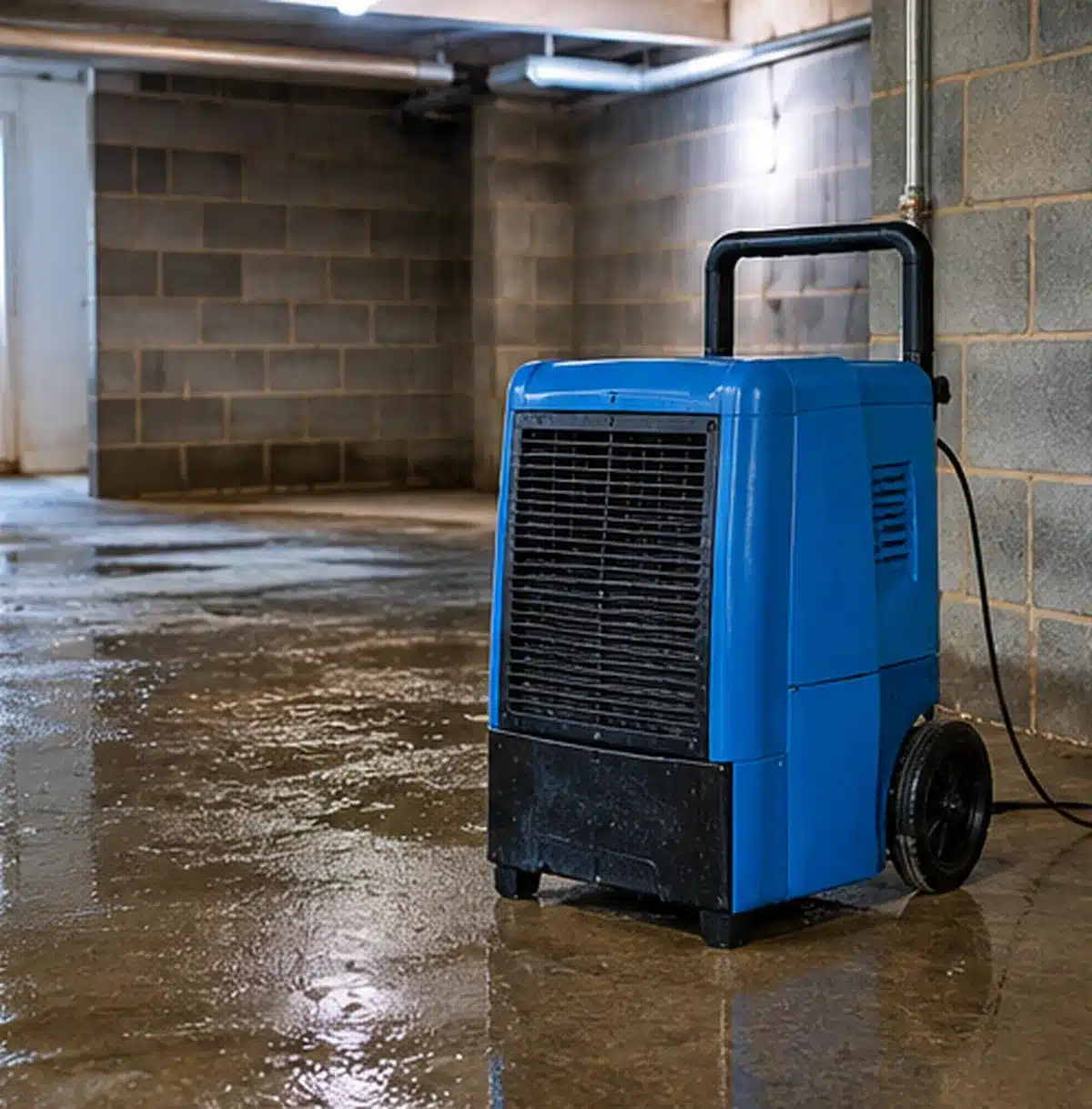
Drying should start with the source of the moisture, not the dehumidifier. If water is still entering through a leak, a failed pipe, a roof defect or a continuing flood, the machine can only treat part of the problem. Standing water should be removed by the right method before you rely on dehumidification. Once the source is controlled, the Crowborough Tool Rental Service can help with equipment for the drying stage across East Sussex.
Then think about how far the moisture has spread, whether walls or floors are affected, and whether rooms can be closed off from open doors and windows. A dehumidifier works within the space around it, so stabilising that space first gives the drying a real chance of measurable progress rather than fighting new moisture coming in.
Closed-Space Drying Needs a Planned Airflow
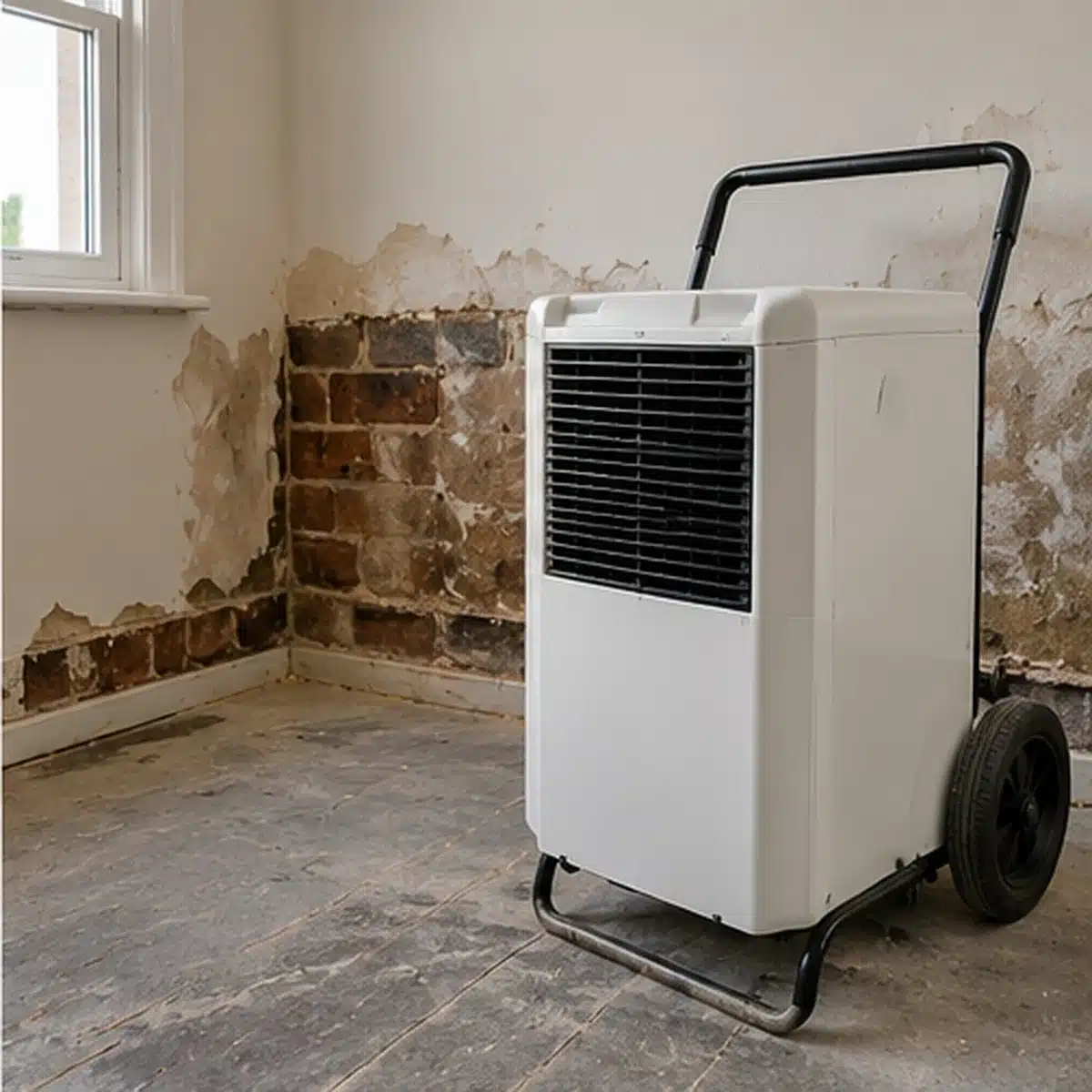
The air path through the building affects how well moisture is removed. The Coppard dehumidifier range includes a portable unit rated to remove a set amount of moisture per day, but that figure is a machine capability, not a guaranteed daily result in every room. Temperature, humidity, room volume, moisture held in materials and the amount of air movement all change the outcome. Stand the unit where air can circulate around it, not trapped behind stored materials or in a closed corner.
In larger or divided properties, organise drying by zone so damp air can reach the equipment. Where fans or temporary heating are part of the same programme, position them to support circulation through the affected area, rather than blowing air into an unrelated space.
Building Drying Is Measured by Progress, Not Run Time
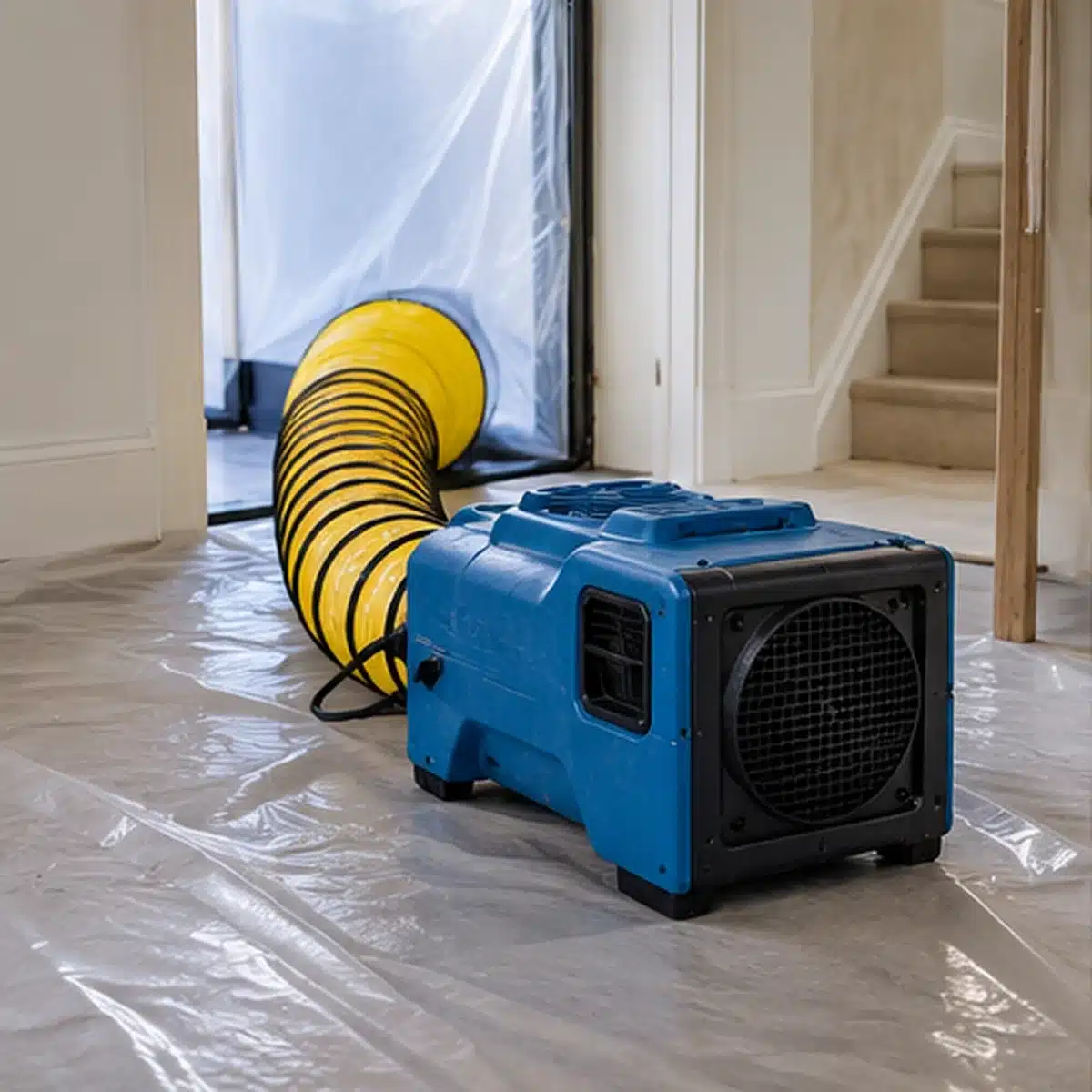
A fixed hire period does not tell you whether a building is dry enough for the next stage. A room can feel comfortable while moisture stays in screed, timber, plaster or concealed construction. For reinstatement work, the useful question is whether moisture levels are moving the right way, and whether the material that will take the next finish has reached an acceptable condition.
Record the starting situation where you can, and compare progress during the drying period rather than counting days. This matters most before laying flooring, applying coatings or closing up construction that could trap moisture. A dehumidifier is part of a process, not a timer, and the decision to stop should rest on the condition of the building and the needs of what happens next.
Plaster, Screed and Flood Recovery Need Different Strategies
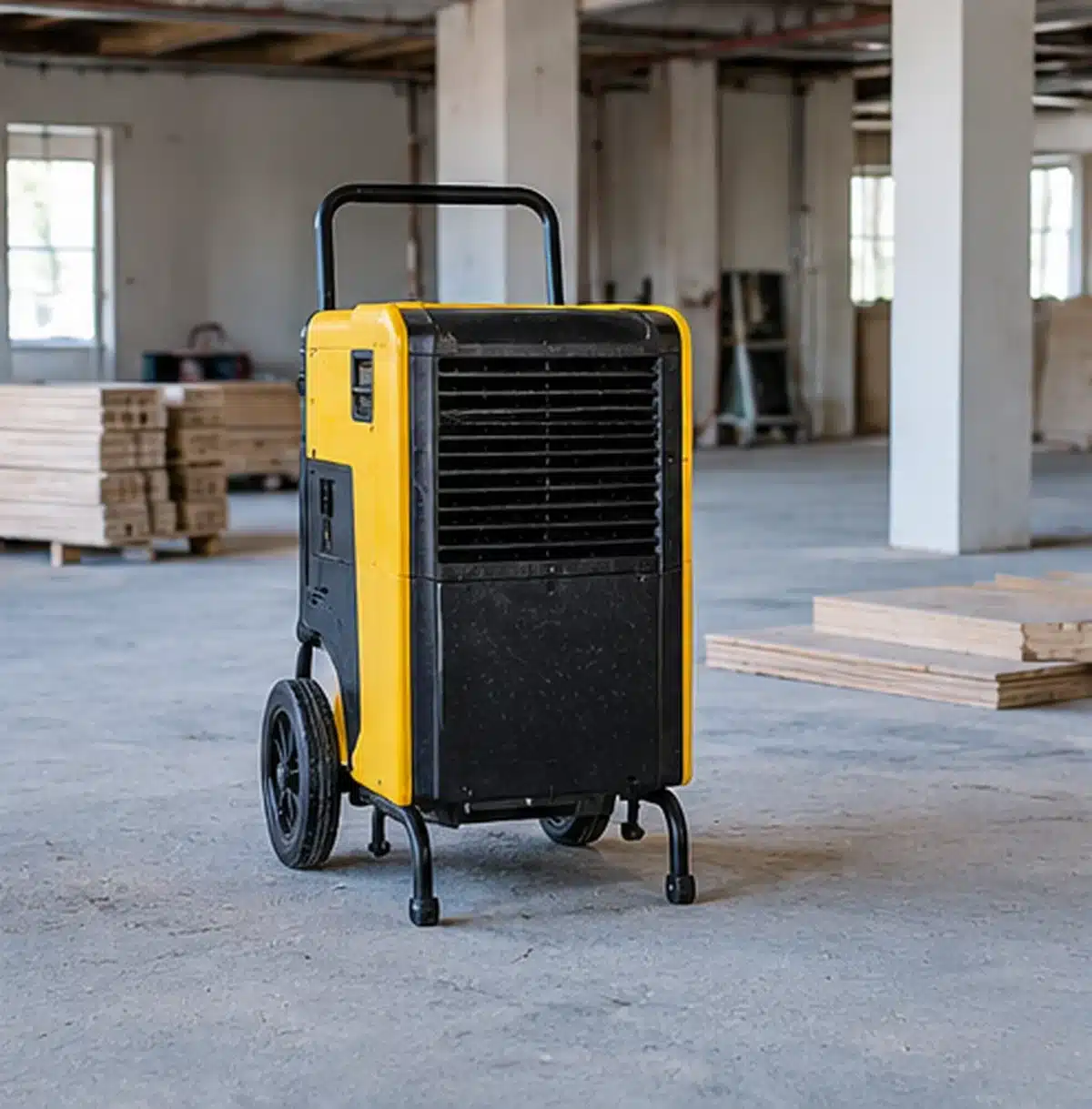
Flood recovery, fresh plaster, newly laid screed and a localised leak can all raise humidity, but they are not the same drying job. Floodwater may affect several materials and hidden voids. New plaster or screed holds construction moisture that usually needs a more controlled release. A leak may be concentrated around one room or floor build-up and may need investigation before the drying area is even defined.
Describe the cause, the rough area affected and the stage of the work when arranging hire. That helps separate a simple room-drying job from a broader recovery programme, and lets the team match the equipment and the hire period to the situation rather than to floor area alone.






Hire Drying Equipment from the Crowborough Depot
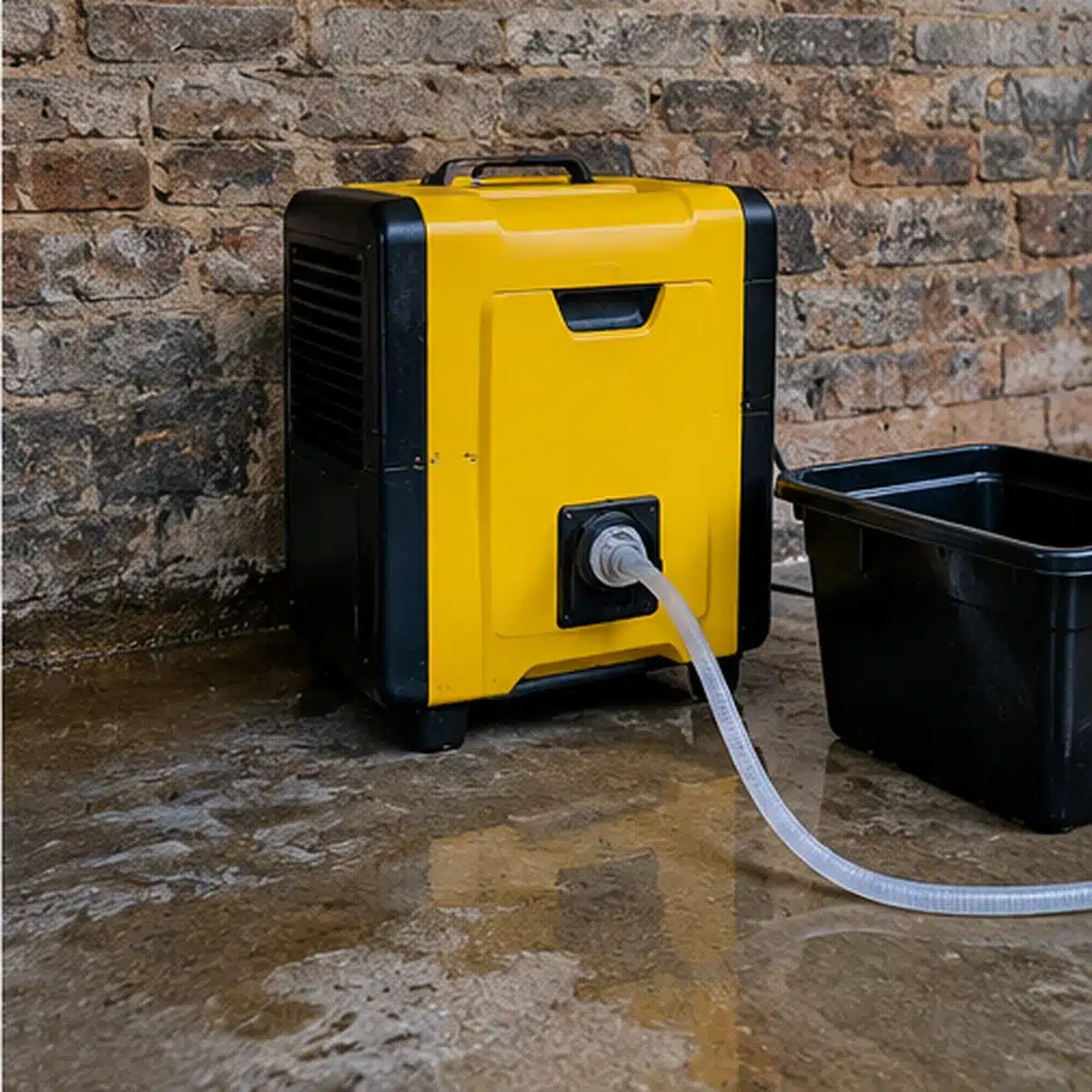
For dehumidifier hire across Crowborough and East Sussex, give the team a concise picture of the building: what caused the moisture, when the source stopped, which rooms or materials are affected, and whether heating or air movement is already available. That is far more useful than sizing the machine from floor area alone. The depot can confirm the current dehumidifier specification, the power needs and suitable availability for the drying period.
Call 01892 662777 if the job follows flooding, water ingress, plastering, screeding or another moisture event, and explain what work is due once the space is dry. Planning around the next stage helps avoid ending the hire too early, or keeping the equipment running after the useful drying is done.
Frequently Asked Questions - Dehumidifier Hire in Crowborough, East Sussex
What should I tell the depot to get the right drying equipment?
Give a short picture of the building rather than just the floor area. Say what caused the moisture, when the source stopped, which rooms or materials are affected, and whether heating or air movement is already in place. Flooding, fresh plaster, new screed and a localised leak are different drying jobs, so the cause matters. With that, the depot can confirm a suitable machine, its power needs and the availability for the drying period.
Can a dehumidifier remove floodwater from a building?
No. A dehumidifier removes moisture from the air; it does not remove standing water. Deal with the source and pump or extract any standing water first, then use the dehumidifier to help dry the building once the environment is stable. Used on its own while water is still entering or lying in the building, it can only ever treat part of the problem.
How long should I run a dehumidifier?
There is no reliable fixed period for every building. Drying time depends on the moisture load, the temperature, the humidity, the airflow, the building materials and the size of the affected area. Judge it by progress, not elapsed days: a room can feel comfortable while moisture remains in screed, timber or plaster. Where you can, record the starting condition and track the change, especially before laying flooring or closing up construction that could trap moisture.
Does the machine matter as much as how it is set up?
Both matter. Position the unit where air can circulate around it, not trapped behind stored materials or in a closed corner, and isolate the affected rooms from open doors and windows where you can. In larger or divided properties, drying may need to be organised by zone so damp air can reach the equipment. Any fans or temporary heating used alongside it should support circulation through the affected area, not just move air into an unrelated space.
Does UK government guidance support using dehumidifiers after flooding?
Yes. GOV.UK flood-recovery guidance says dehumidifiers can be used once floodwater has receded, to collect moisture from the air and help dry the property. You can read the official guidance at GOV.UK guidance on recovering from flooding on gov.uk. It is one part of a wider drying process that starts with stopping the source and removing standing water.
Need dehumidifier hire in Crowborough?
Tell us the cause of the moisture, the rough area affected and the stage the building is at. Call Coppard on 01892 662777.