Plate Compactor Hire in Crowborough, East Sussex
Need plate compactor hire in Crowborough? Coppard supplies forward-moving and reversible plate compactors from our Crowborough depot for sub-bases, paving, driveways, trench backfill and larger groundworks. Call 01892 662 777 and tell us what you’re compacting and we’ll help match the right machine to the job.
A plate compactor is essential when granular material needs to be compacted into a stable base before paving, tarmac, concrete or another finished surface is installed. Coppard stocks compact and heavy-duty plate compactors at our Crowborough depot for domestic, commercial and groundworks projects. Tell us the material, layer depth, size of the working area and whether access is restricted and our team will help identify a suitable machine.
Plate Compactor Hire Fleet – Sizes, Types and Rates
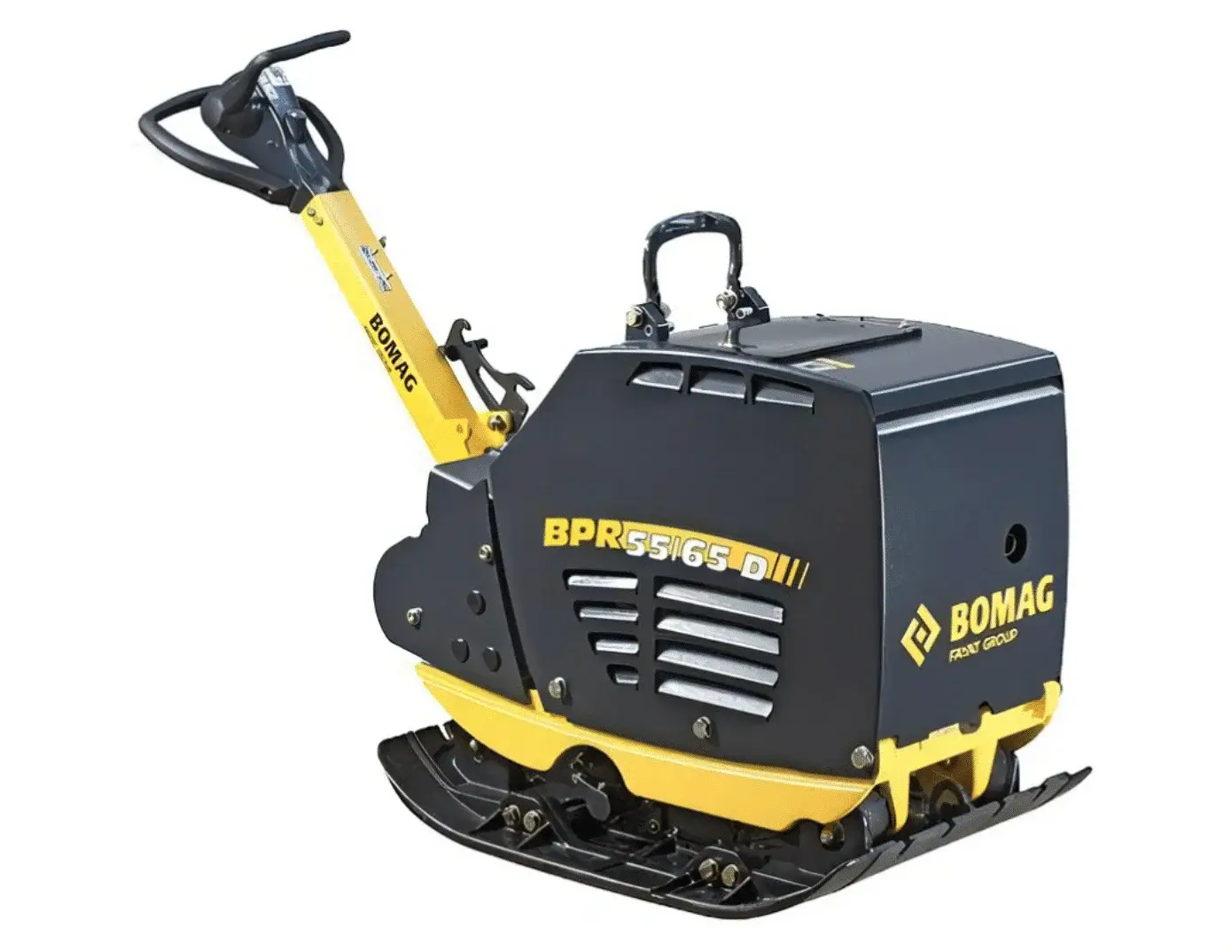
Our Crowborough depot stocks plate compactors for work ranging from paths, patios and driveways through to trench backfill and larger commercial sub-bases. Forward-moving plates are a practical choice for straightforward open areas, while reversible machines travel both forwards and backwards without being turned, making them particularly useful in trenches, confined working areas and larger compaction jobs.
Heavier reversible plates provide greater compaction performance for deeper granular layers and more demanding groundworks, while rubber protection mats are available where appropriate for block paving and other finished surfaces.
All machines are maintained and checked between hires. Prices exclude VAT and non-account customers add 10%. Call Crowborough on 01892 662 777 to confirm current availability, rates and the most suitable machine for your specification.
Choosing the Right Plate Compactor
Choosing the right plate compactor depends on the material being compacted, the depth of each layer, the size of the working area, access restrictions and the level of compaction required.
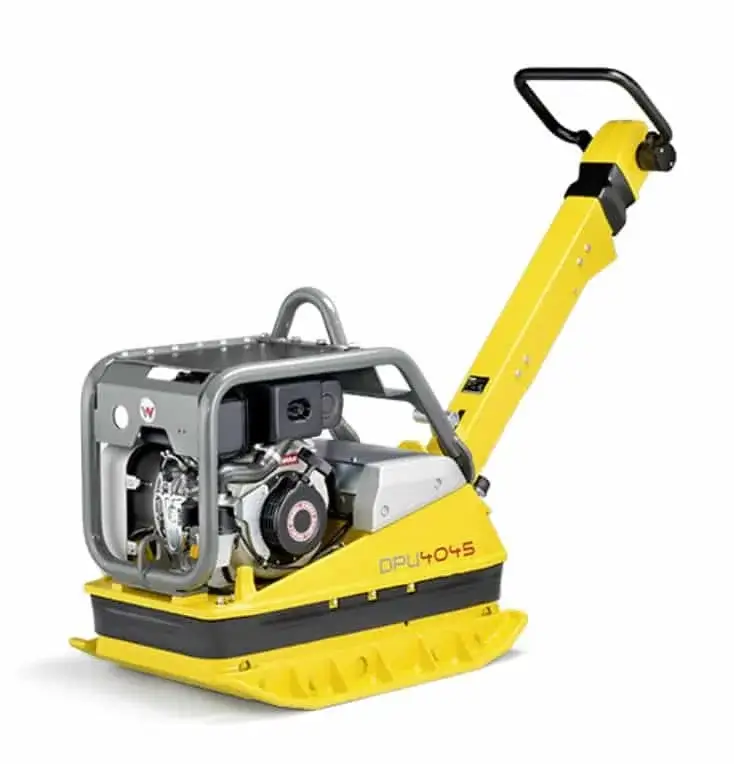
A lighter forward-moving plate is normally suitable for paths, patios, paving preparation and smaller areas of granular sub-base. Reversible plates provide greater flexibility and compaction performance for deeper layers, trench backfill and larger groundworks where repeated forward and backward passes are required.
Plate compactors perform best on granular materials such as MOT Type 1, crushed concrete, gravel and sharp sand. If the material is cohesive, such as heavy clay, tell our Crowborough team before hiring because different compaction equipment may be more appropriate.
For full specifications and pricing, browse our complete plate compactor range.
Plate Compactor Hire for Groundworks and Driveways in East Sussex
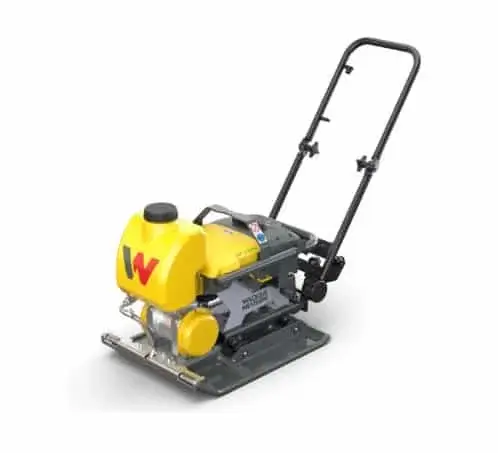
Driveways, paths, patios and other hard-standing areas depend on a properly prepared and compacted sub-base. Type 1 and other granular materials should normally be placed and compacted in controlled layers rather than trying to compact the full depth in one pass. The correct plate size and weight will depend on the material, layer depth and area being covered.
Ground conditions around Crowborough and the High Weald can add another consideration. Weald Clay can hold water and move seasonally, making good sub-base preparation particularly important before a finished surface is installed. For restricted areas and edges, a smaller forward plate may be suitable, while larger reversible machines are more efficient over substantial driveway and commercial areas.
Plate compactors are also regularly used for drainage and utility trench backfill, where proper layer-by-layer compaction helps reduce subsequent settlement.
From our Crowborough depot we regularly support projects in surrounding areas including Tunbridge Wells, Uckfield, Heathfield, Wadhurst and Forest Row, as well as the wider East Sussex area.
Plate Compactor Hire for Builders and Groundworks Contractors in Crowborough and East Sussex
Builders, groundworkers, landscapers and surfacing contractors often need different compaction equipment from one project to the next. Hiring allows you to select the machine that suits the material, access and specification without owning and maintaining several different plate compactors.
Our Crowborough depot stocks forward-moving and reversible machines for driveway construction, paving, trench backfill, foundations and larger commercial groundworks. Rubber protection mats are also available for suitable machines where finished block paving needs final compaction without damaging the surface.
If your specification requires a particular machine weight, plate width or level of compaction performance, give the details to our Crowborough team before booking. We’ll help identify the appropriate machine and confirm current availability.
Call 01892 662 777 to discuss your requirements.






Why Hire a Plate Compactor from Coppard?
Coppard has supplied compaction equipment to builders, groundworkers, landscapers and civil engineering contractors since 1972. Our Crowborough depot stocks plate compactors ranging from straightforward forward-moving machines for paths, paving and smaller sub-bases to heavy reversible plates for more demanding groundworks.
Machines are maintained and checked between hires, including the engine, base plate and vibration operation. Call 01892 662 777 and tell our Crowborough team what material you are compacting, the layer depth, size of the working area and any access restrictions and we’ll help identify a suitable machine.
For the full range of Plant & Machinery Hire available from our Crowborough depot, visit our Plant & Machinery Hire page.
Browse the full Plate Compactor Hire catalogue for specifications, models and current availability.
Frequently Asked Questions – Plate Compactor Hire in Crowborough
What is the difference between a forward-only and a reversible plate compactor?
A forward-only plate compactor travels in one direction — forward. To compact a different area, you lift and reposition the machine. A reversible plate can travel both forward and backward at the push of a lever, allowing you to compact in passes without turning the machine. Reversible plates are essential in trenches and corners where turning is not possible, and more efficient on long straight runs because you can work back without repositioning.
How deep can a plate compactor compact in one pass?
A standard forward plate is effective on granular material in layers up to 75mm compacted depth. A heavy reversible plate (Bomag BPR or Wacker DPU 4045Ye) can compact layers up to 150mm in granular material. The Wacker DPU 100 is rated for deeper lifts in heavy-duty applications. Always compact in layers rather than trying to compact deep fills in a single pass — deep single-pass compaction leaves inadequately compacted material in the middle of the lift.
Can I use a plate compactor on clay?
Plate compactors are most effective on granular material (Type 1, gravel, crushed concrete, sharp sand). Clay is cohesive — it tends to shear under vibratory compaction rather than densify in the way granular material does. For clay subgrades, a smooth drum roller or sheepsfoot roller is more effective. If you need to compact cohesive backfill in a trench, the Wacker DPU 100 gives the best result available from a plate compactor, but manage expectations on the compaction density achievable in heavy clay.
What type of plate compactor is best for my project?
A lighter forward-moving plate is generally suitable for patios, paths, paving and smaller areas of granular sub-base, while a heavier reversible plate is usually more effective for deeper layers and larger groundwork projects. The right machine will depend on the material, compacted layer depth, working area and access available. Skills England identifies compactor plates as standard equipment used by groundworkers when constructing roads, pathways and hard-landscaping areas, with more information available through its groundworker occupational guide. Tell Coppard’s Crowborough team what you are building, the material being compacted and the size of the area, and they can recommend a plate capable of producing a firm, even base without leaving you with an underpowered machine.
Can a plate compactor be used next to a wall or foundation?
Yes, but with care. Vibratory compaction within close proximity of existing walls, foundations, retaining structures or buried services creates a risk of damage or settlement. Industry guidance (BRE and CIRIA) specifies minimum distances from structures at which vibratory equipment can be used, based on the machine’s centrifugal force and the structural sensitivity. If you are compacting within 1 to 2 metres of a structure, check the guidance or consult your engineer before using any vibratory equipment.
How many passes are needed for sub-base compaction?
Need Plate Compactor Hire in Crowborough?
Call 01892 662 777 and speak directly to our Crowborough team. Same-day collection and fast delivery are available on many plate compactors, subject to availability, for projects across Crowborough and East Sussex.