Scabbler Hire in Crowborough, East Sussex
Scabbler hire in Crowborough gets concrete floors, walls and soffits ready for new work. Coppard has single, triple and pole scabblers across East Sussex, for light surface work or deeper removal. Tell us the surface and the depth, and we will suggest the right head.
Scabbler hire is used to take off the top layer of hard concrete. A scabbler strikes the surface with hard heads, and more heads mean a faster, deeper cut. Start by deciding how much needs to come off.
Measure How Much Concrete Must Come Off
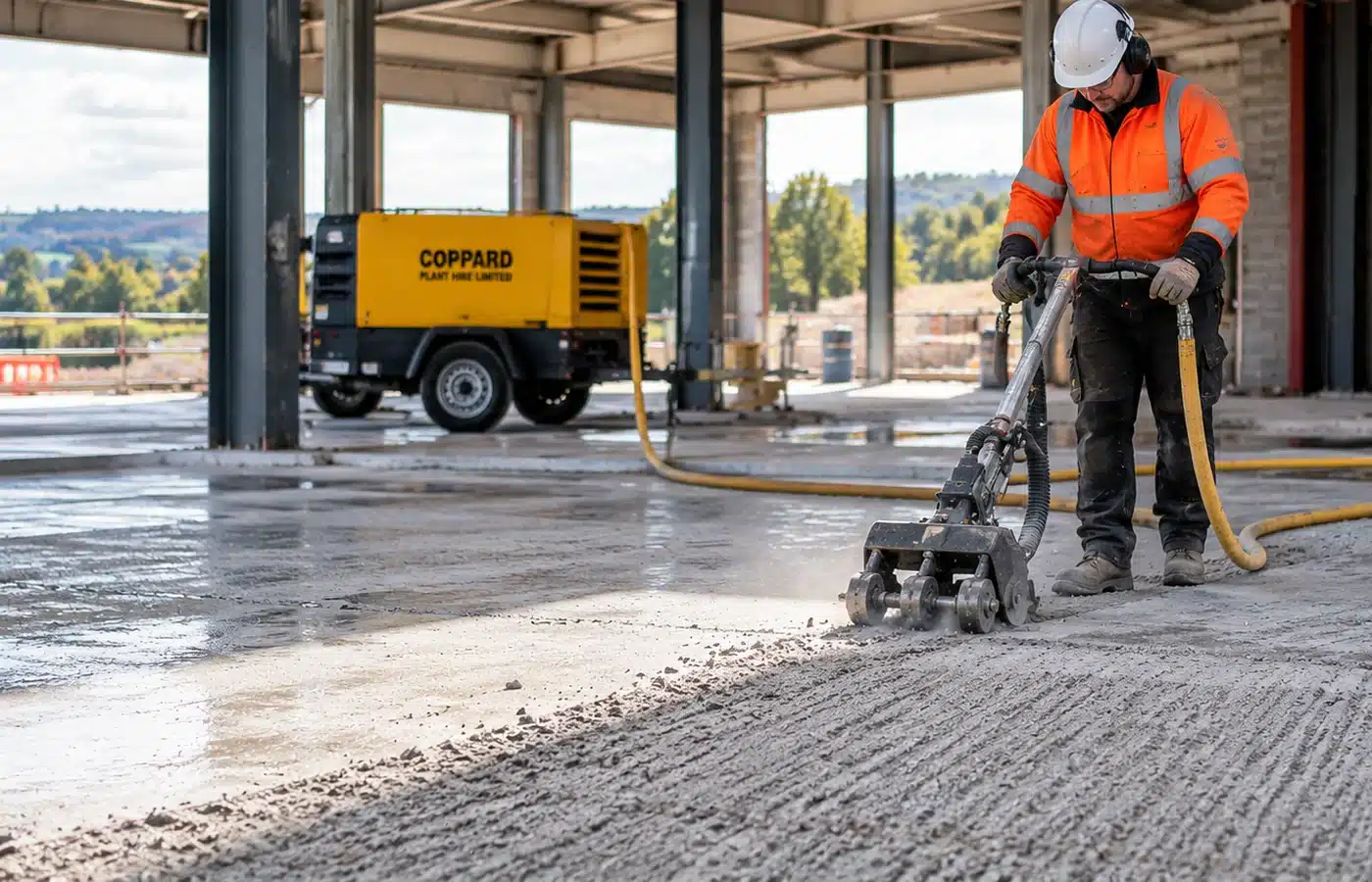
A scabbler is used when concrete needs a rough, clean surface. Common reasons are taking off a weak top layer, keying a floor before a new coating, removing an old coating, or showing the stone inside a wall. Each job needs a different depth of cut, and guessing the depth wrong usually means a second pass later.
Measure the area and decide the depth. Light keying takes off only a thin skin, maybe a few millimetres. Removing old damaged concrete or a thick coating takes far more. The depth and area set which head suits the job and how long the hire will run, so measure before you call rather than after.
Pick the Single, Triple or Pole Scabbler
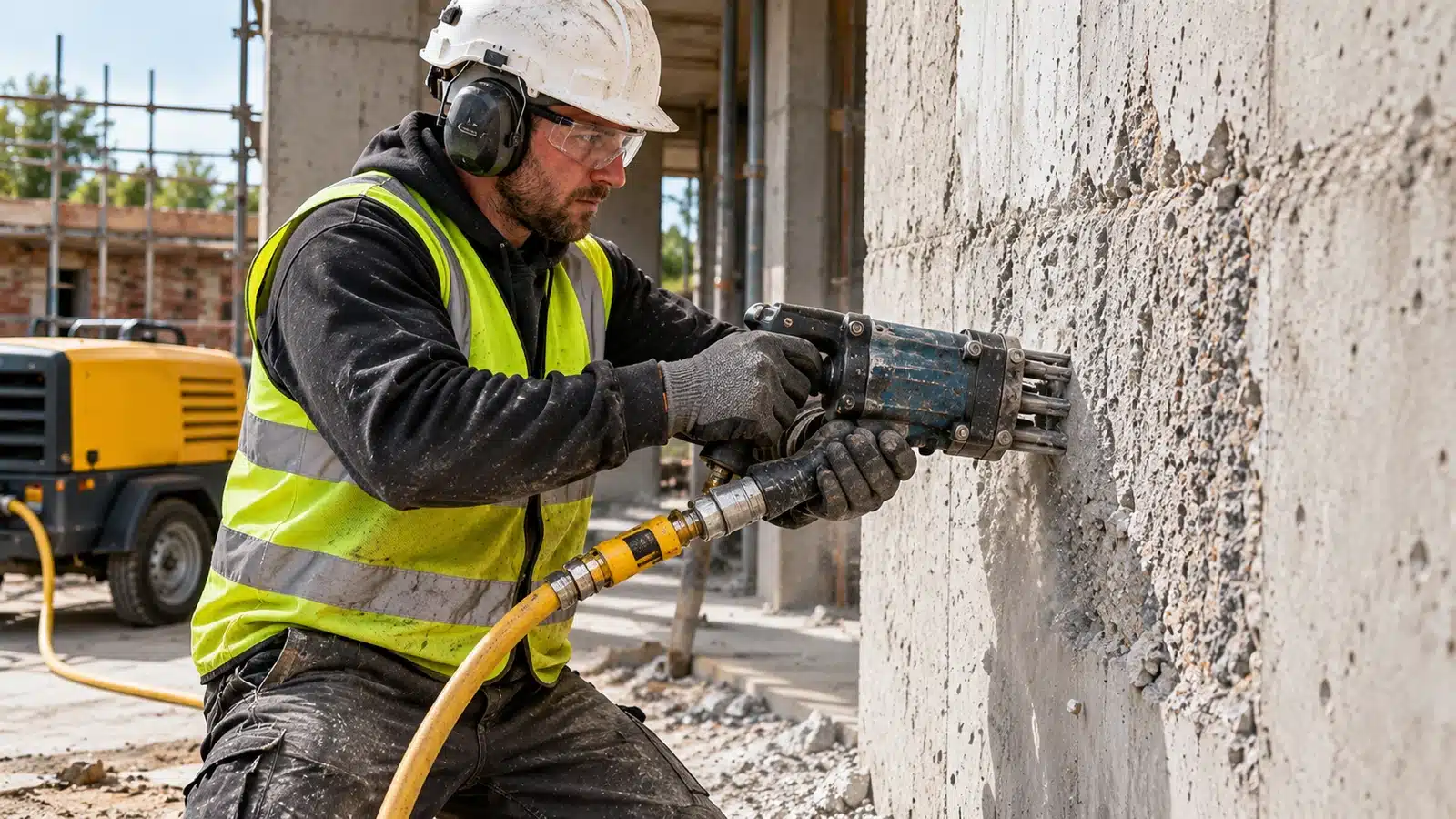
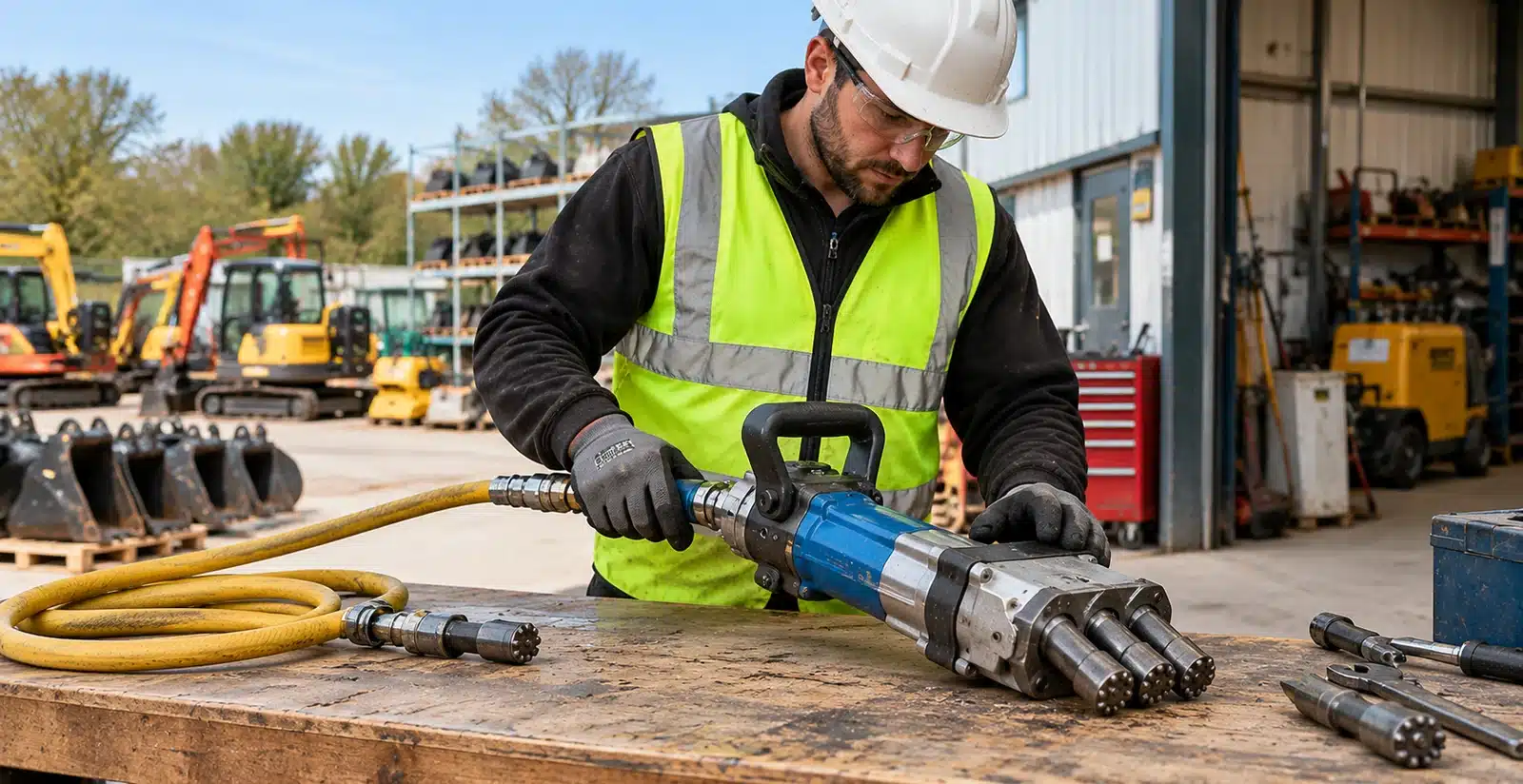
Coppard has a single-head, a triple-head and a pole scabbler, each one explained with full specs in our Compressor Equipment collection. See our other Air Compressor Supplier services, including compressor hire, on our Crowborough Air Compressor Supplier page.
A single-head is the lighter choice for small areas and fine work, such as keying a doorway or a small patch repair. A triple-head covers ground faster on big floors, where three heads working together finish a large room far quicker than one. A pole scabbler has a long handle, so you can work standing up and reach tight spots without kneeling. Call 01892 662777 to talk through which head fits the job and the size of your area.
Think About the Working Position for Floors, Walls and Soffits
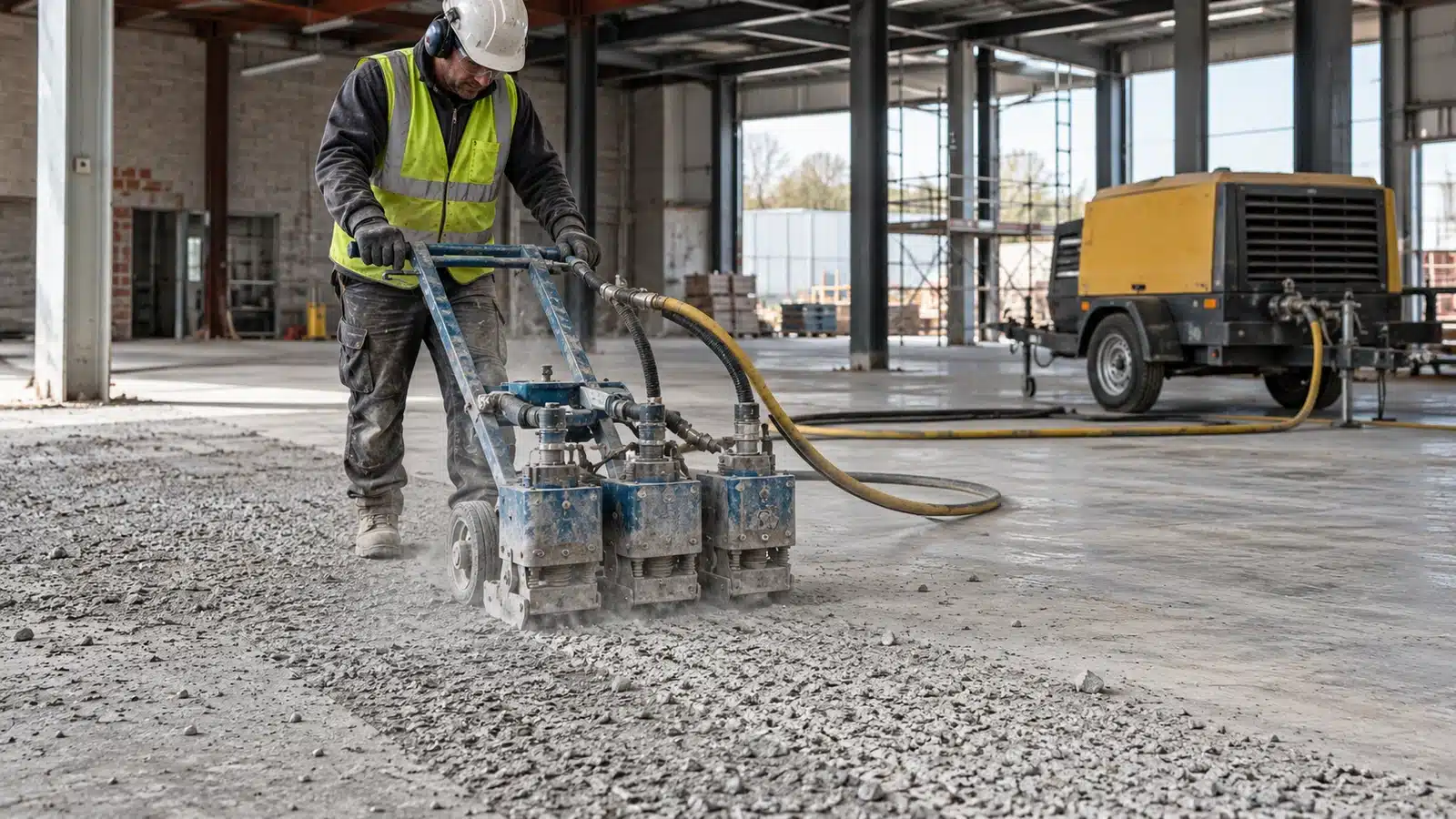
Where the surface is changes how hard the job feels. On a floor, your weight helps the tool work, pressing the head into the concrete without much effort from you. On a wall, you hold it at chest height for the whole job. Overhead on a soffit, your arms and shoulders carry all the weight, which tires you out far faster than either of the other two.
A pole scabbler eases the strain on a floor or wall, but overhead work stays tiring whichever tool you use. Plan short shifts, swap workers often, and keep the compressor within hose reach of every spot you need to cover, so nobody has to stop and move it halfway through a section.
Sort Dust Control Before Scabbling Starts
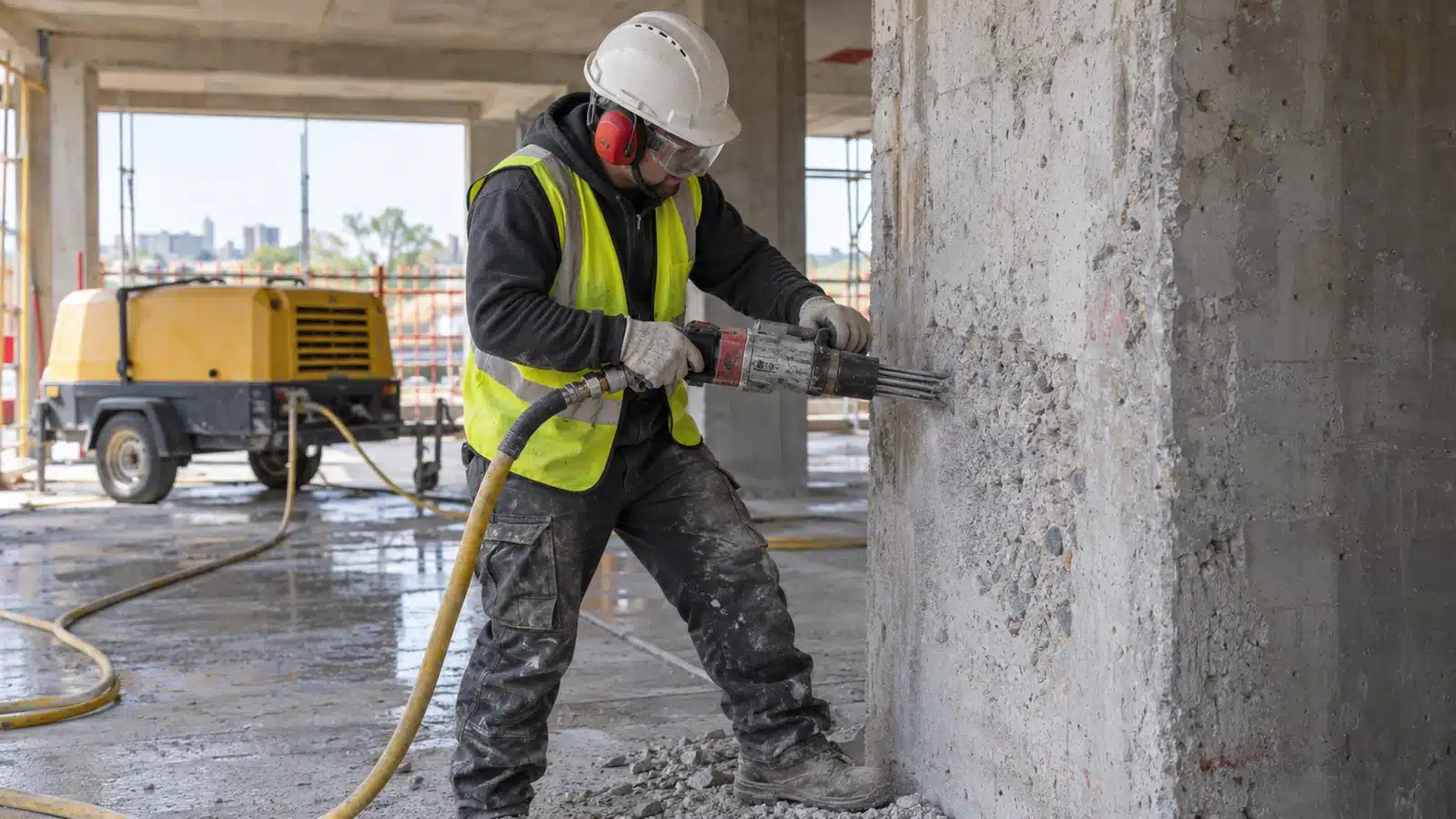
Scabbling throws up fine dust that can hold silica, which can badly harm the lungs if it builds up over many jobs. Official guidance for concrete scabbling sets out the controls, including dust extraction fitted at the head and wetting the surface before work starts. A hood on the tool catches most of the dust right where it is made, which beats clearing it from the air afterwards. Call 01892 662777 if you want to talk through what you need.
Scabbling is also loud and it shakes the whole arm. Wear ear defenders, goggles, gloves and a mask, and send anyone not working on the tool to a safe distance away. Wetting the surface first cuts down the dust a lot, and short, regular breaks stop the shaking from building up over a long shift.




Give the Depot the Surface, the Depth and Your Compressor
Describe the surface: floor, wall or soffit, its area, the depth to remove and how long you need the kit. Name your compressor and its output, since the scabbler must not need more air than it gives. Call 01892 662777 with these details, so the depot can confirm the right head for your job and have it ready to collect or deliver.
Scabblers go out from Crowborough to sites near Heathfield and Tonbridge. Scabbling is often one step in a bigger job, so mention what comes next, such as a new coating or a floor screed, since this can change how rough a cut you need. A finer finish usually calls for a single head going over the area twice, rather than one heavy pass with a triple head.
Frequently Asked Questions
What is the difference between a single-head and a triple-head scabbler?
A single-head scabbler has one striking head, and it suits small areas and detail work. A triple-head has three heads, so it covers a bigger area at once and works faster on large floors. The size of your area decides which is better value, since the triple-head takes longer to set up but less time to finish a big floor. For a small patch of keying, the single-head is often the simpler and quicker choice.
Can a scabbler be used on walls and ceilings as well as floors?
Yes, especially a pole scabbler, which lets you work standing up on walls and soffits. Overhead work is tiring, so plan short shifts and share the job between workers. Check the tool’s weight with us before you book, especially for a long spell overhead on a soffit or high wall. For a quick keying job on a small area, the single-head model is usually all you need.
What air supply does a scabbler need?
A scabbler runs on compressed air. The compressor feeding it must give more air than the head uses, not less. The scabbler’s handbook states its air use, and Coppard can confirm it for you. If the same compressor feeds other tools too, add their air use together first. This way, your chosen compressor is big enough for everything running at once, with nothing left starved of air.
Do scabbler heads need to be replaced during a hire?
The heads wear down with use, and this depends on how hard the concrete is and how many hours you work. Check what is included in the hire, and whether worn heads are charged for, before you start. A quick chat before the hire starts can save a dispute over the heads when they come back for checking. Ask the depot for a spare set if your job is a long one, so a worn head never stops the work.
What UK guidance covers dust when scabbling concrete?
Official guidance sheet for concrete scabbling sets out good practice, using breathing protection together with dust extraction or wetting the surface. It says to follow every point in the sheet, or use measures that work just as well. Silica dust is a serious risk to health if breathed in often, so these steps matter on every job, however short or small. The underlying rules sit on legislation.gov.uk: Control of Substances Hazardous to Health Regulations 2002.
Looking for Scabbler Hire near me?
Call Coppard at 01892 662777 to discuss the surface, how much needs removing and which scabbler head suits it.