Scabbler Hire in Brighton, Sussex
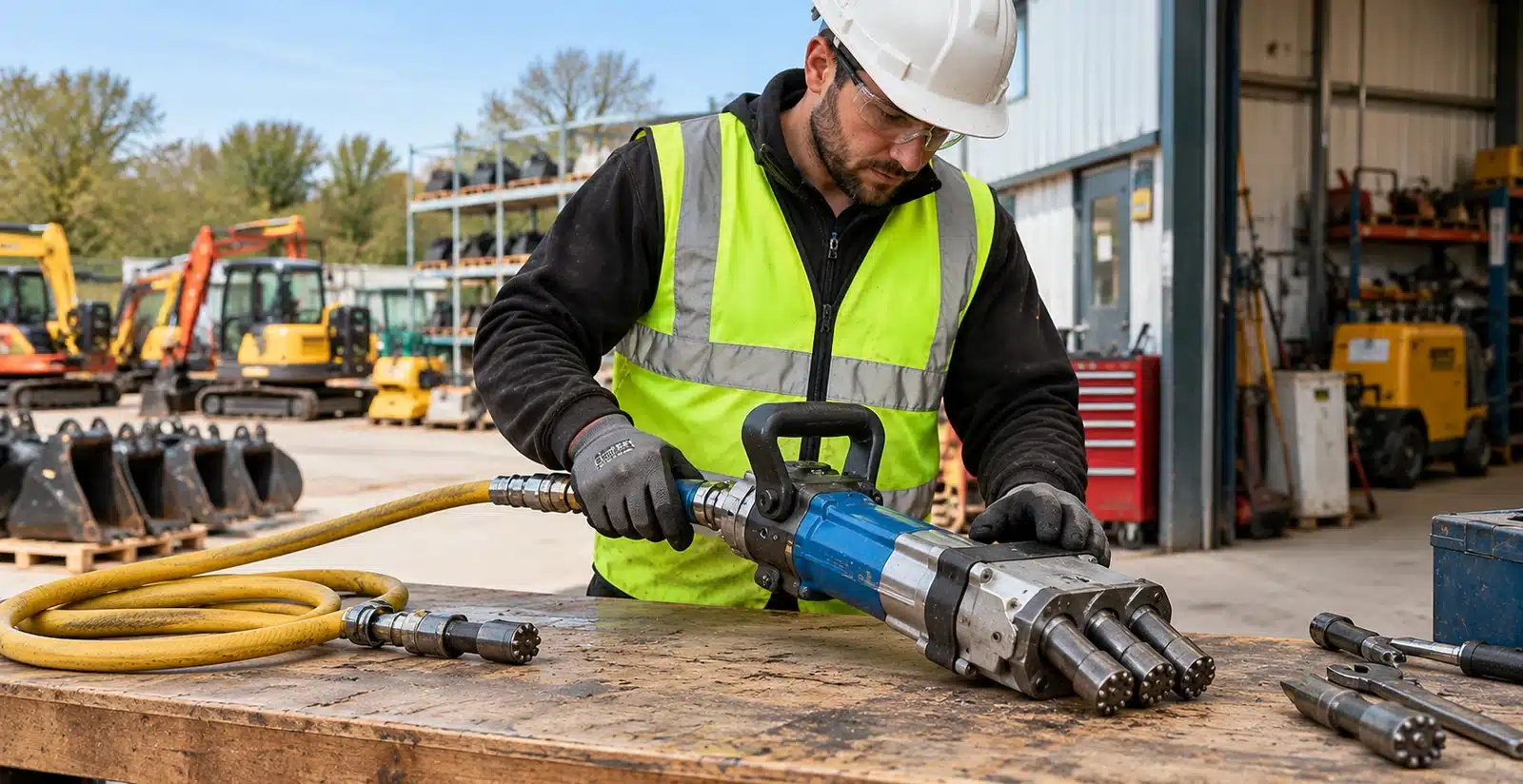
Scabbler hire in Brighton covers single, triple and multi-head tools for preparing concrete surfaces before a coating, screed or repair goes down. Coppard supplies the right head and compressor, delivered across the city.
Scabbler hire roughens or strips a concrete surface, so whatever comes next really bonds to it well. The right head depends on area, access and what goes down afterwards. Our Brighton depot carries the full range, plus a matching compressor.
Basement and Lower-Ground Jobs Are Common Around Here
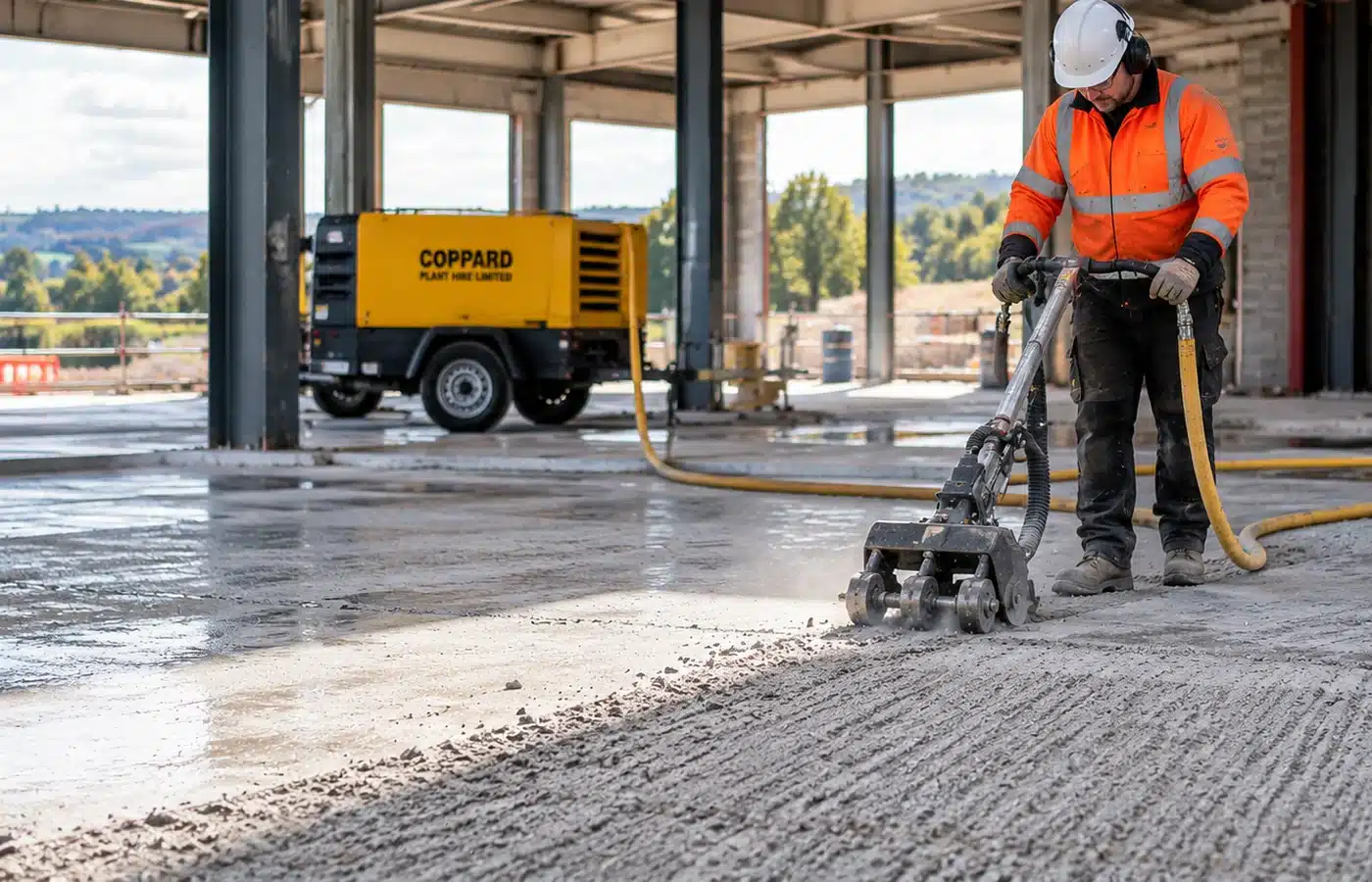
Brighton and Hove’s Regency and Victorian terraces have produced a steady stream of basement conversions over the years. Most of them involve preparing an existing concrete or screed floor before a new build-up goes down on top. These spaces are often cramped, with low ceilings and awkward access down a narrow staircase. That rules out the bulkier end of the range before anything else gets considered.
Measure the access route down to the work area, not just the room itself, before booking. A machine that fits the floor space can still be impossible to really carry down there once the stairs and any turns are taken into account. A tape measure and a quick walk of the route, taken before booking, is usually enough to settle this without any guesswork.
What Goes Down Next Decides How Aggressive to Go
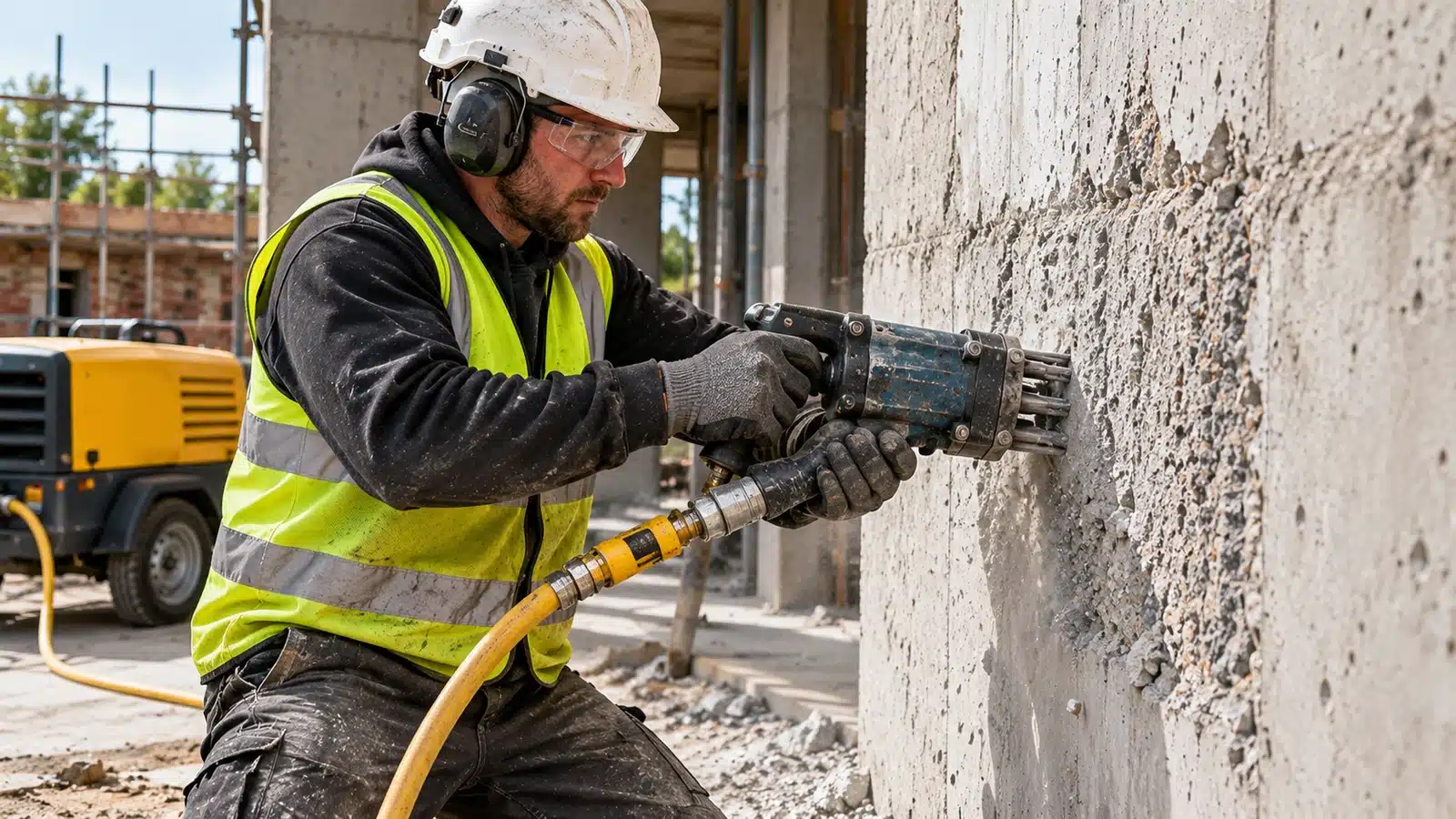
See our other Air Compressor Supplier services within the Brighton Air Compressor Supplier page. Our scabbling range, paired against suitable compressor output, sits in the Compressor Equipment collection. A thin resin or epoxy coating often wants a shallow, even key cut across the whole area. A new screed laid over existing concrete often wants a clearly deeper bite, for a proper grip to form.
Phone 01273 596979 and say plainly what’s being applied afterwards, not just what’s coming off the surface now. Getting this backwards means either a coating that peels within months, or sound concrete cut away for no good reason. If you are unsure which applies to your job, describe the floor build-up over the phone and the depot will suggest the right head.
Working Position Changes the Whole Job
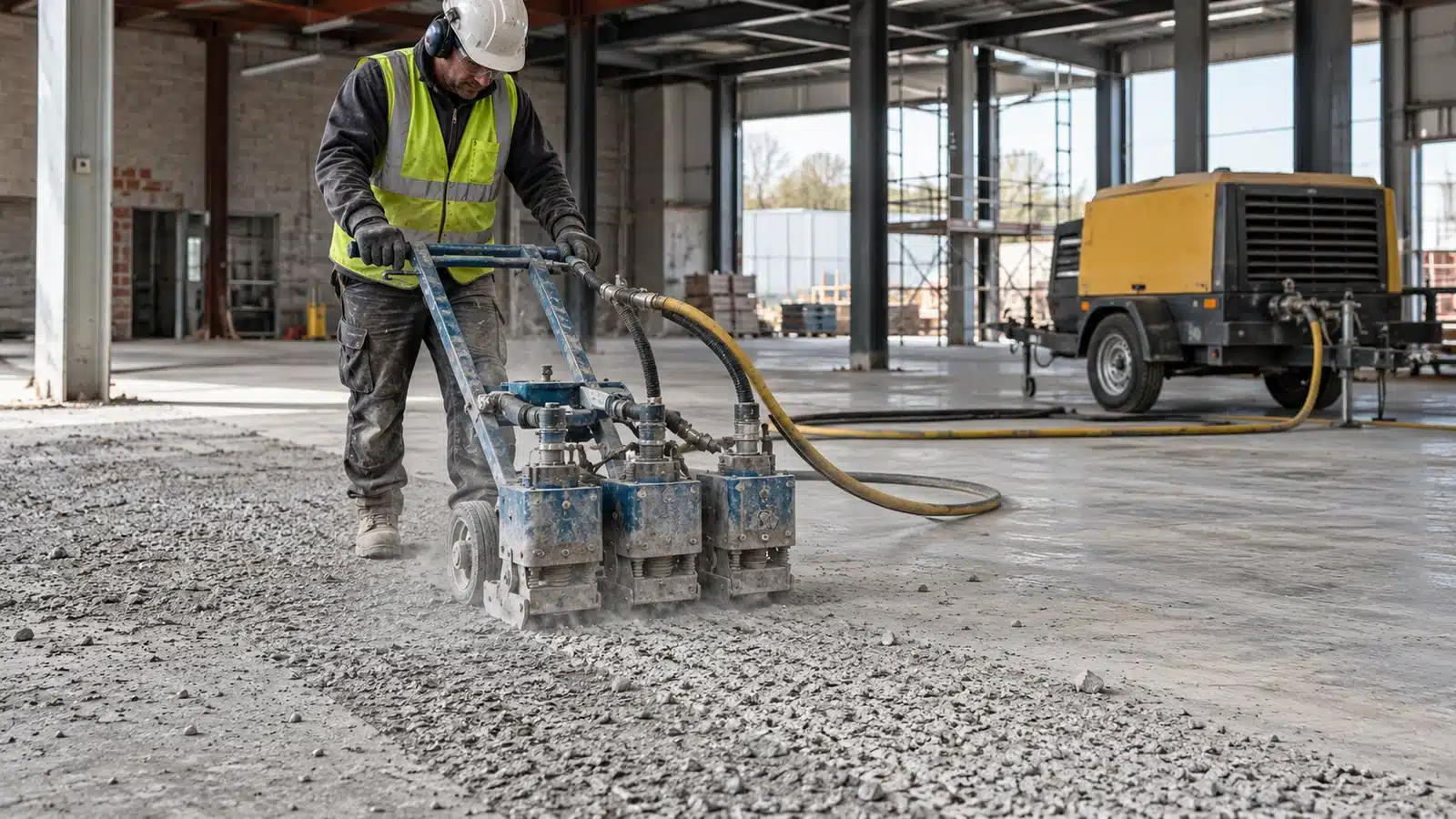
Preparing a floor lets gravity and your own bodyweight share the load. That keeps fatigue manageable even across a long shift. A vertical wall face is a different job fully. The operator supports the machine’s full weight through their arms, not letting it rest on the surface below.
Overhead work against a ceiling or soffit is harder again. It really isn’t something to push through on a single long stint without a proper break. Budget shorter sessions with more frequent operator swaps for anything vertical or overhead than you would for a floor job. Swapping who holds the tool every so often also keeps the whole job moving at a steadier, more even pace.
Dust Control Matters More in a Confined Space
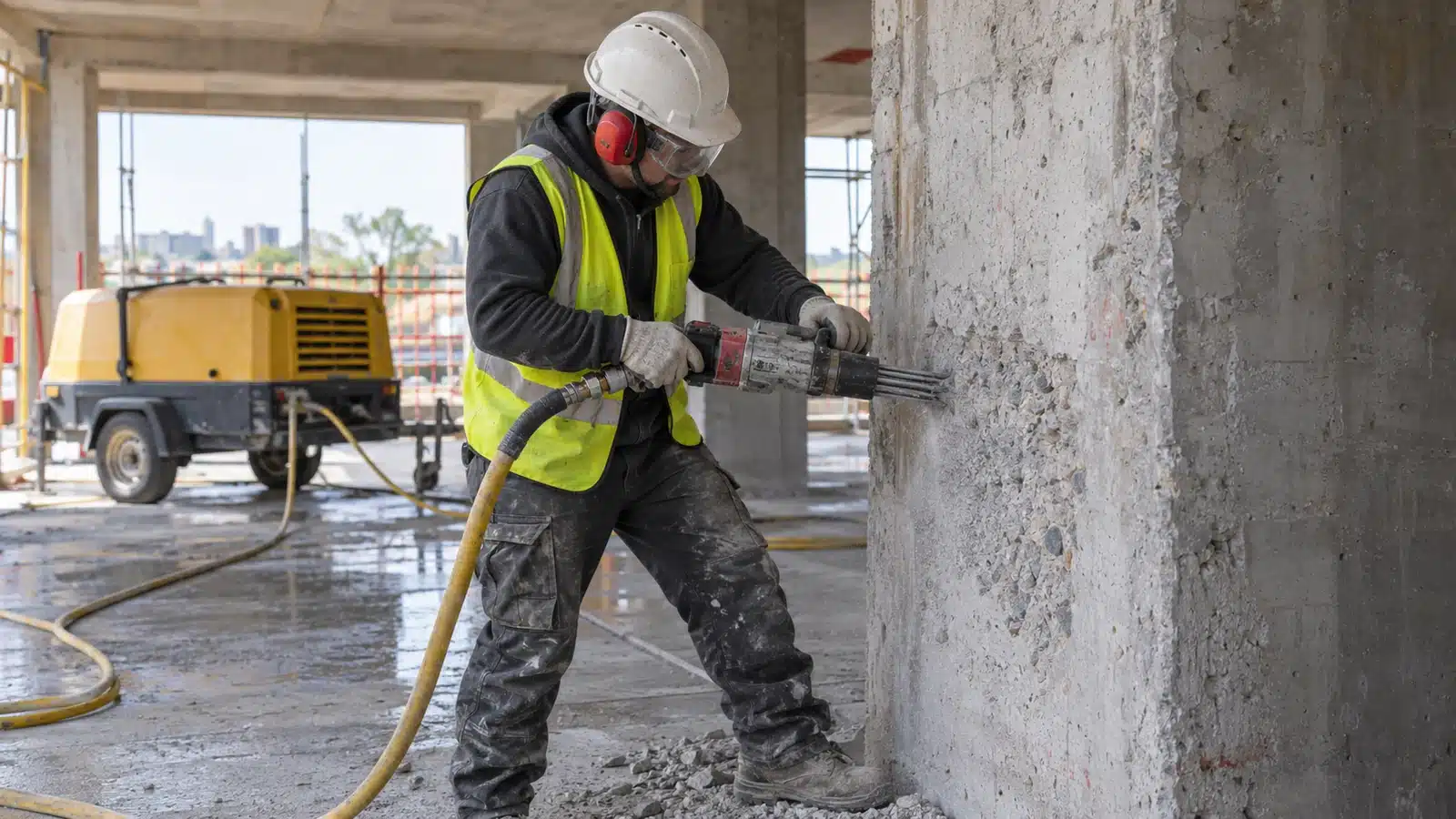
Breaking up a concrete surface releases fine dust that can carry silica. This is really harmful if it builds up in the lungs over repeated jobs across a career. It matters even more in a low-ceilinged basement with limited airflow than it does on an open site. Running the machine with a shroud connected straight to an extractor catches the bulk of it right at the point it’s made.
Call 01273 596979 ahead of a tight-space job . Ventilation and extraction really need more thought below ground than they do in open air, and we can talk this through before the machine ever arrives. A simple barrier or sign at the top of the stairs also helps keep anyone not involved in the work well clear of the dust.




Book Around the Trade Waiting to Start Behind You
Surface preparation almost always sits squeezed between demolition and the next trade. A flooring, screeding or tanking crew is often waiting for the moment the scabbling finishes up. Phone 01273 596979 with both your own start date and the date the next trade is due in. This shapes how the job gets scheduled against everything else running on site.
City-centre conversion programmes often run mainly tight between trades. A few days’ notice, not a same-week call, gives the best chance of having the right machine free just when it’s needed. A short buffer day built into the schedule also helps absorb any small delay without pushing the whole programme back.
Frequently Asked Questions
Can a scabbler fit down a basement staircase?
Many units can, though a smaller single-head machine is often the only practical option where a staircase is narrow or has a tight turn partway down. Measure the access route down to the work area, not just the room itself, before booking anything. We can confirm a specific machine’s dimensions against your actual access over the phone if you’re unsure how it will fit. The depot can also suggest the best route down if there is more than one staircase to choose from.
How do I know how aggressive a key my surface needs?
Work backwards from what’s going down next on top of the prepared surface. A thin coating wants a light, even key across the whole area. A new screed or heavier build-up often wants a clearly deeper bite, for the fresh material to grip well. Describe both the existing surface and what’s being applied afterwards, and we’ll suggest a setup that matches not guesses at it.
Is ventilation a bigger concern in a basement than on an open site?
Yes, really so. Dust and noise both have far less room to disperse below ground than they do out in open air. Extraction fitted directly to the head matters more here than on a standard floor job. Mechanical ventilation may be worth arranging separately for a longer tight-space booking. We can talk through the setup before the machine ever arrives on site. A simple fan or open door can help too on a milder job where full extraction is not available.
Is any licence needed to hire a scabbler?
No formal licence is required. Anyone running the tool should read the safety information supplied with it first, covering vibration, noise and dust well from the start. Where several people share one tool across a shift, rotating operators keeps exposure spread sensibly across the whole crew. Safe handling is talked through the moment the tool is first collected from the depot. Gloves and ear protection are also worth wearing, given the noise and vibration the tool produces during use.
What guidance covers dust control when scabbling concrete?
The Control of Substances Hazardous to Health Regulations 2002 sets out the practical controls likely, principally extraction fitted at the point the dust is made, and damping the surface down before work starts. This matters because fine dust can carry silica, which causes long-term lung damage if breathed in repeatedly across many jobs. Machines can be hired with extraction already fitted, with the right setup confirmed for your particular surface and space.
Looking for Scabbler Hire near me?
Call Coppard at 01273 596979 to discuss which head suits your surface and the access down to it.