Air Lance Hire in Brighton, Sussex
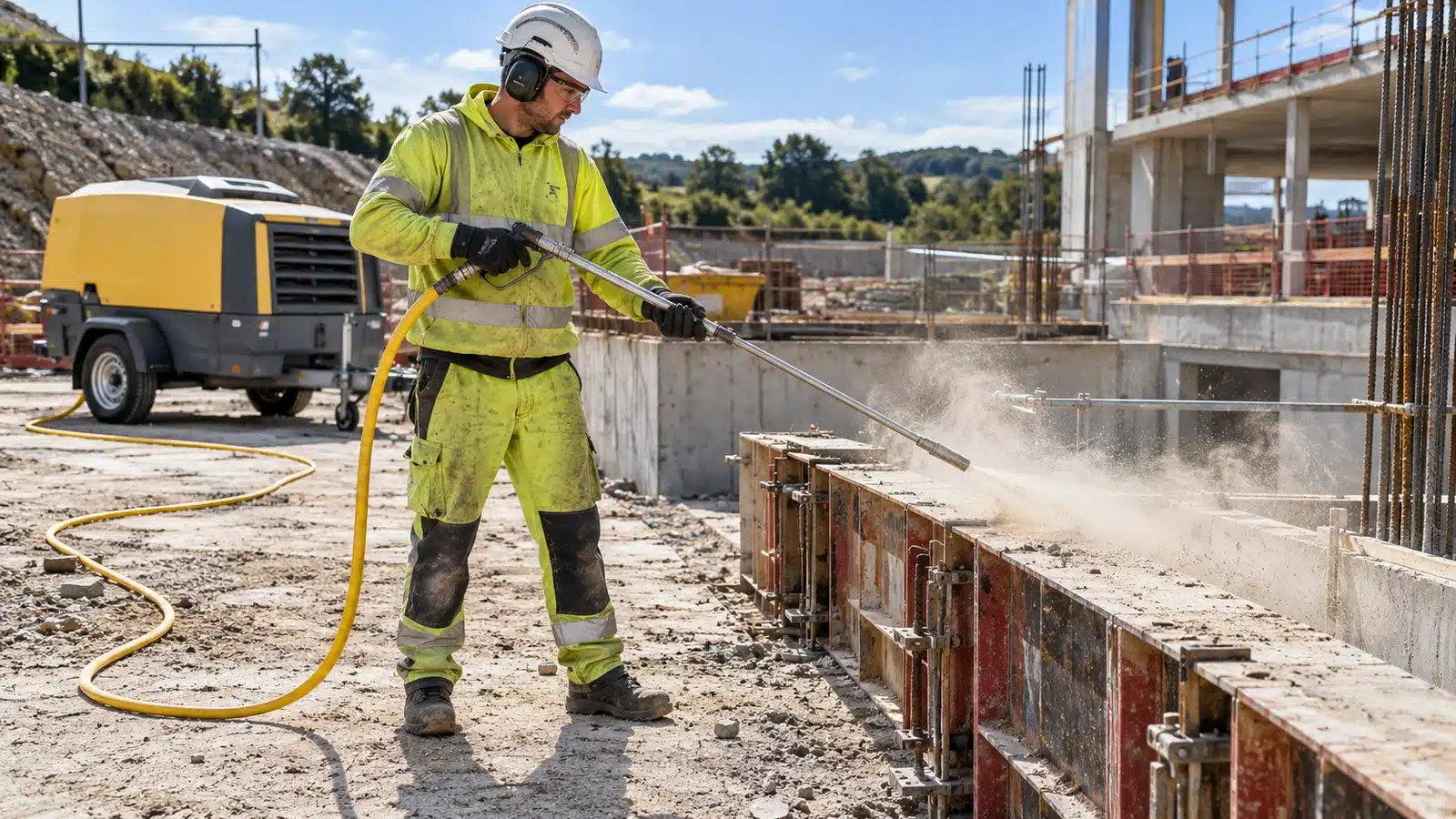
Air lance hire in Brighton clears dust, offcuts and loose debris from holes, frames and cavities before a concrete pour. Our lances have an adjustable nozzle and run from a compressor, delivered across the city.
Air lance hire is the last step before a pour. It clears whatever a brush or vacuum can’t reach. An adjustable nozzle suits narrow holes and open floors alike. Our Brighton depot can supply the lance with a matching compressor.
Basement Conversion Pours Need Particular Care
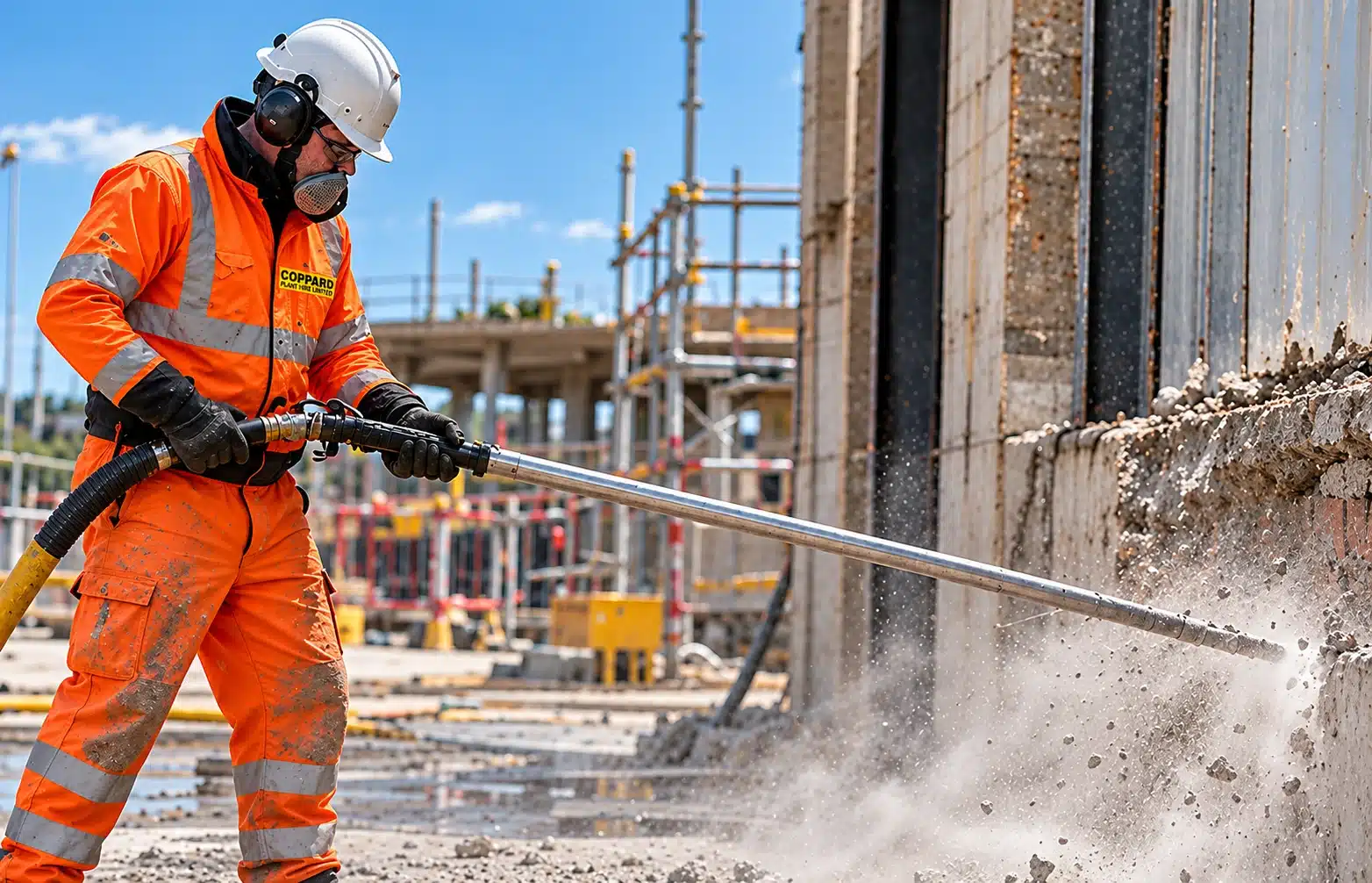
A lower-ground or basement conversion pour sits in one of the more tight spaces a lance gets used in. Reinforcement is often laid tightly against the perimeter walls, with limited room to move around it. Dust, offcuts and grit settle into every gap in a space like this. A brush really struggles to reach the corners where a wall meets the floor.
Walk the full perimeter before the pour itself, not just the open centre of the floor. The edges and corners are just where loose material tends to collect, and just where it’s easiest to miss on a quick visual check. A head torch is also worth having to hand, since basement lighting is often dimmer than it looks on a quick first visit.
Sizing the Compressor for a Lance Alone or Shared
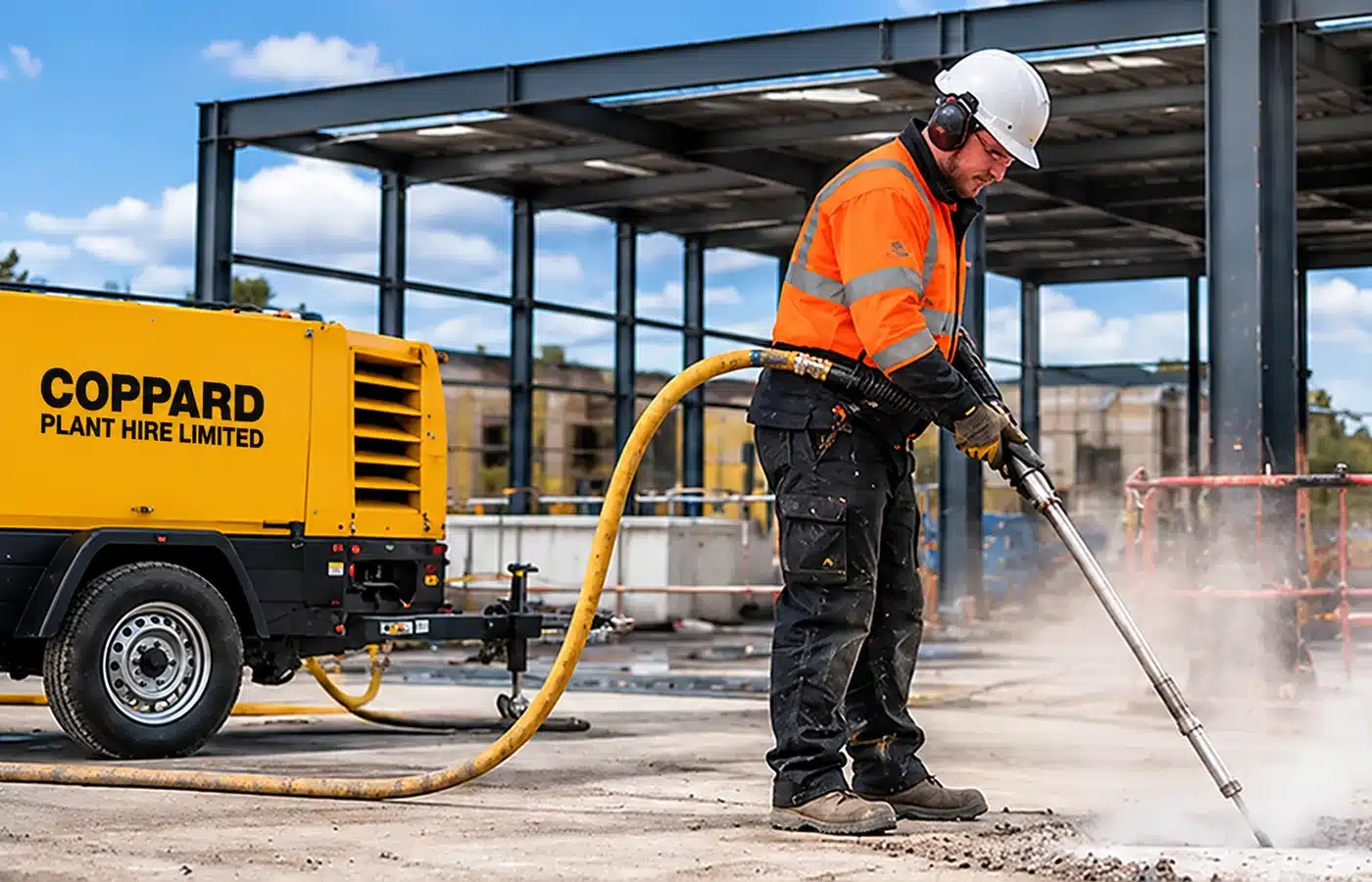
See our other Air Compressor Supplier services under the Brighton Air Compressor Supplier page. The lance itself, with suitable compressor sizes shown alongside it, is listed in the Compressor Equipment collection. On its own, it’s one of the lighter demands on a compressor’s output across the whole range. A modest machine often copes easily by itself.
That changes the moment anything else draws from the same supply at the same time. Phone 01273 596979 and say plainly what else, if anything, will be running alongside it during the pour. Sizing for the lance alone, when a breaker joins an hour later, just means a second call once the first machine starts struggling.
Technique Matters More Than Raw Power Here
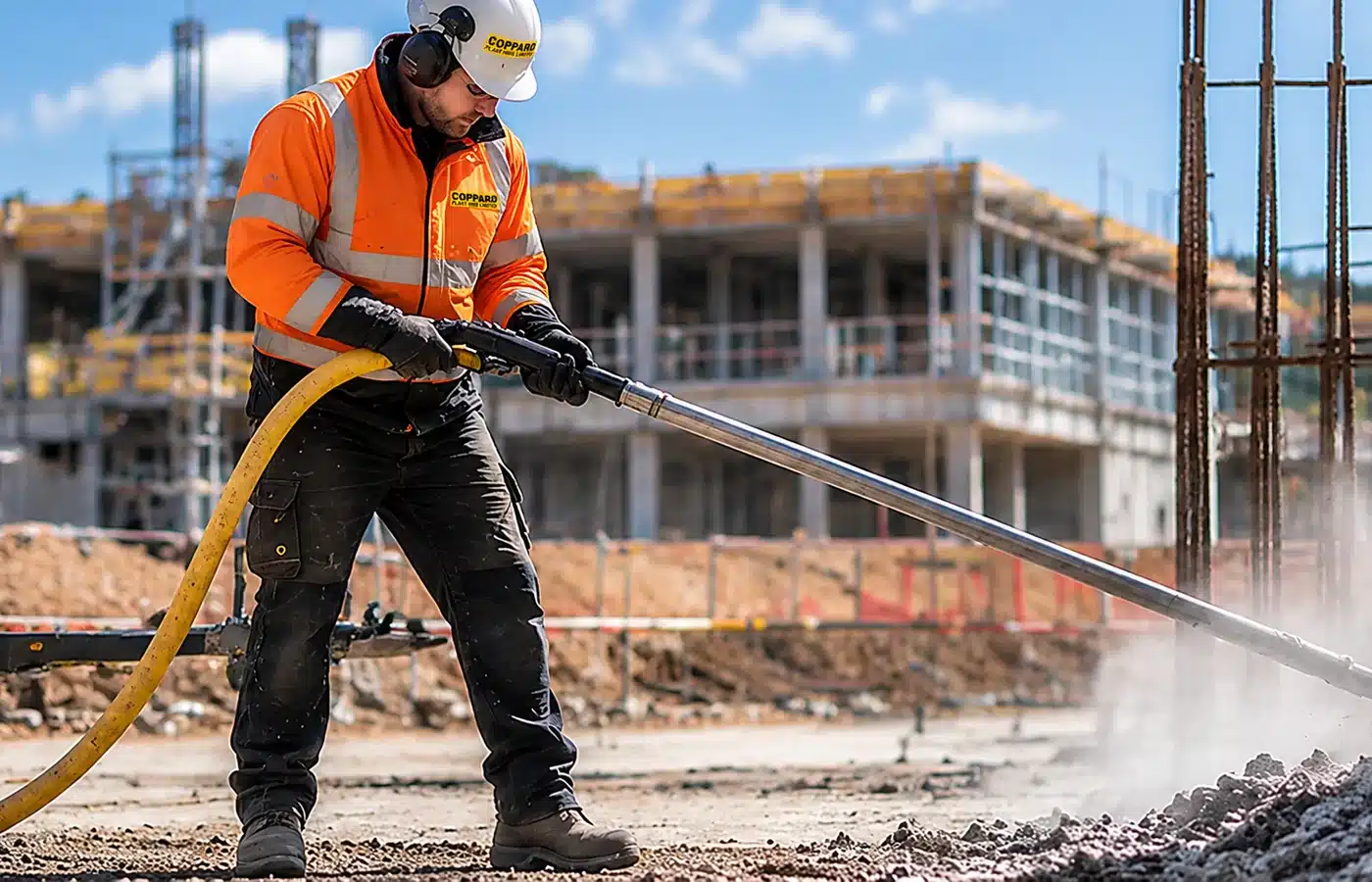
Work the jet steadily towards a point debris can really escape from. Don’t fire it randomly around an enclosed space and watch everything settle straight back down where it started. Clearing higher surfaces before lower ones matters too. Anything dislodged above naturally drops and resettles on whatever sits below it.
A methodical pass really takes less time overall than a quick, scattered one that has to be repeated once dust has resettled. Working a tightly packed corner from two different angles clears pockets that a single straight pass misses completely. Working in short, steady passes rather than one long blast also uses less air and clears the same area just as well.
Give the Depot the Pour Date, Not Just the Area
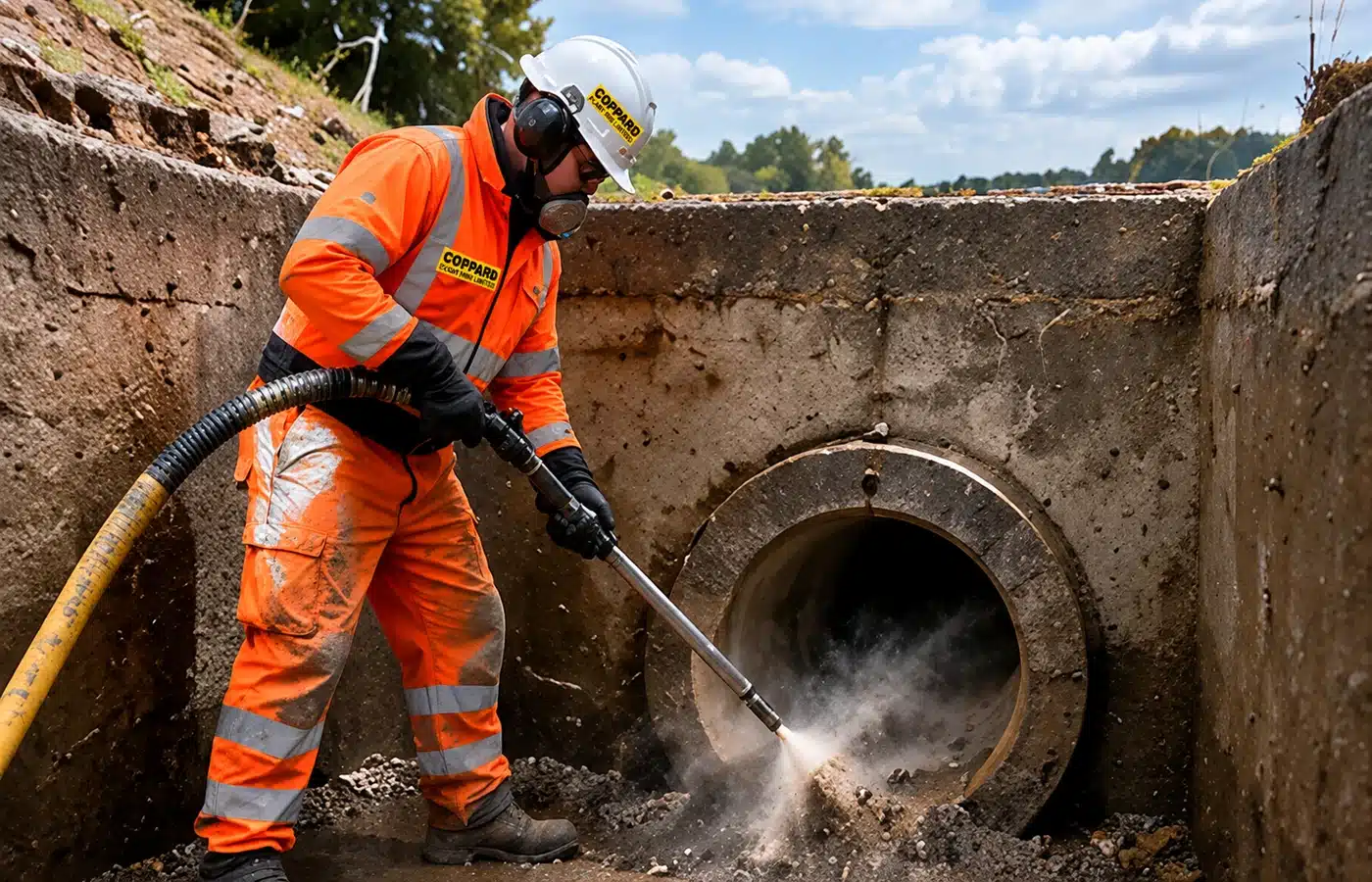
A fixed pour date matters more than the exact square metreage being cleared. The lance work needs to finish with time to spare before the concrete gang really arrives that morning. Call 01273 596979 with that date locked in, plus a rough sense of scale, so a suitable nozzle comes out with it on the day of delivery.
If the area turns out larger once work is well under way, say so as early as possible. Don’t wait until the pour date is imminent. A longer nozzle is far easier to arrange with a day’s notice than an hour’s. A short buffer of an extra half day is also worth building in, since pours do slip earlier than planned more often than people expect.





Collecting from Southwick or Having It Delivered
Picking the lance up from the depot at Grange Industrial Estate suits a job already sending a van that way for something else that day. Having it delivered suits a site with no spare run to spend on a detour. Call 01273 596979 and mention any access quirks, narrow lanes or restricted parking in particular, so the driver isn’t caught out on arrival.
Worthing and Hove both sit easily within the depot’s normal delivery reach. Booking even a day ahead of the pour date is often enough to get it there in good time for the morning start. Either way, the lance arrives with a nozzle already fitted, so it is ready to use the moment it reaches site.
Frequently Asked Questions
Is a lance useful for a basement conversion pour?
Very much so. A tight lower-ground space traps grit and dust in corners and against perimeter walls that a brush really struggles to reach. Working the jet along the walls from two or three angles clears pockets that a single pass would miss fully. This is worth doing a day ahead of the pour, not on the morning itself, so there’s time to catch anything missed before the gang arrives.
Does it work on wet or muddy ground?
Not well at all. The jet mainly shifts dry, loose material. It will mostly push wet mud or standing water around, not really clearing it away. For a damp excavation base, a wash-down or a pump is often the better first step, with the lance used afterwards once the area has dried out. We can talk through which order suits your conditions ahead of booking.
How much lead time should I give before a pour date?
A day or two’s notice is normally enough for a standard booking, though a larger or more complex area benefits from giving a little more. What matters most is giving us the actual pour date as early as you have it. The lance work needs to finish with a sensible margin before the concrete gang arrives. Leaving it until the morning of the pour risks a scheduling clash.
Who should stand clear while the lance is running?
Anyone not directly involved in the clearing work. The jet throws loose material a genuine distance, and debris can travel further than likely in an enclosed basement space mainly. The operator should wear eye protection as standard, given how much dust becomes airborne during a typical pass. Working steadily from one defined section to the next also keeps risk to anyone nearby lower. A simple barrier or a cone placed nearby also helps keep passers-by clear while the lance is actually in use.
What UK guidance covers using compressed air tools safely?
Work equipment rules warn against ever directing a compressed air jet at skin or clothing. Even a fairly low-pressure stream can cause genuine injury at close range. It also covers keeping hoses and couplings well maintained, since a failed connection under pressure can disconnect or whip around without warning. Every hose and coupling is checked before a lance goes out on hire from the depot. See the Provision and Use of Work Equipment Regulations 1998 on legislation.gov.uk.
Looking for Air Lance Hire near me?
Call Coppard at 01273 596979 to discuss the right lance and compressor for your pour date.