Pneumatic Tool Hire in Crowborough, East Sussex
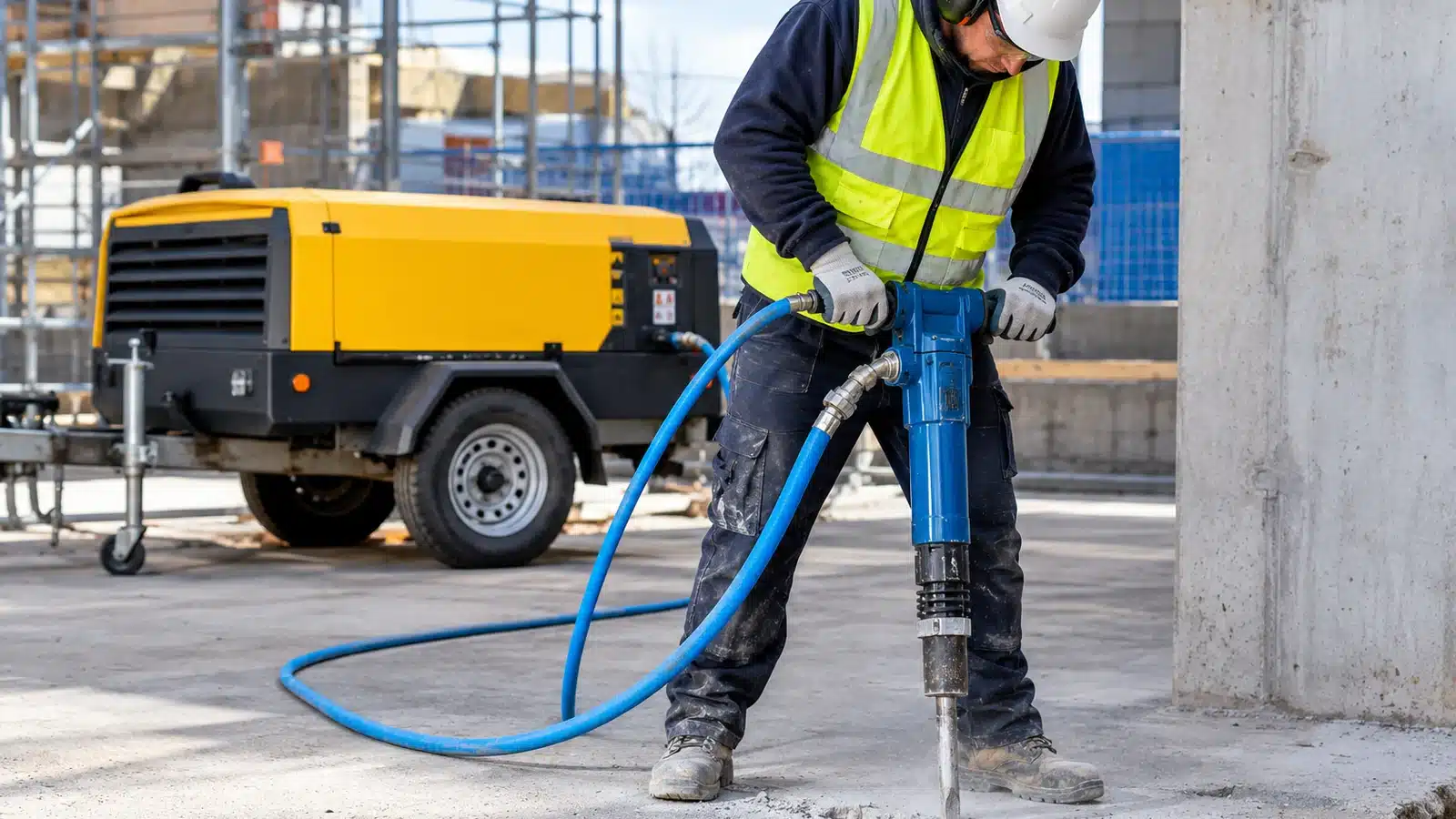
Pneumatic tool hire in Crowborough covers breaking, digging, cleaning and drilling. Coppard hires breakers, drills, spades and scalers across East Sussex, on their own or with a compressor. Tell us the job, and we will match the tool and the air supply to it.
Pneumatic tool hire covers the air-powered tools used to break, dig, drill and clean. Each tool suits one kind of task and one kind of material. So the right choice depends on the job ahead of you. Start by naming the task and the material.
Name the Task and the Material First
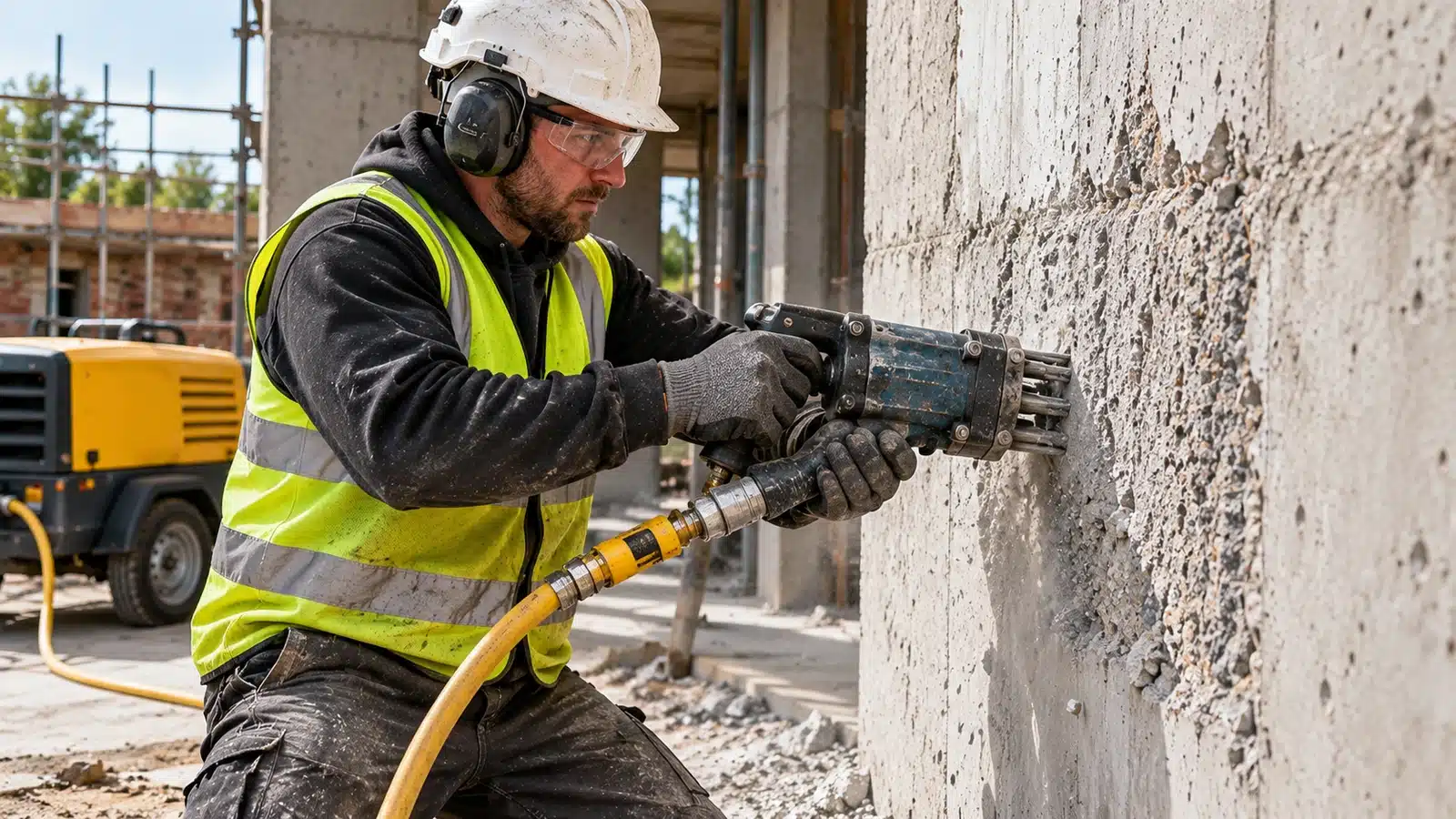
Start with what needs to be removed, dug or cleaned. Concrete and paving are broken with a breaker, and a lighter hammer handles small chipping jobs. A moil point breaks hard ground, a spade digs clay, and a tamper flattens backfill in a trench. A reinforced slab, with steel mesh inside it, needs a heavier breaker than a plain concrete path of the same thickness.
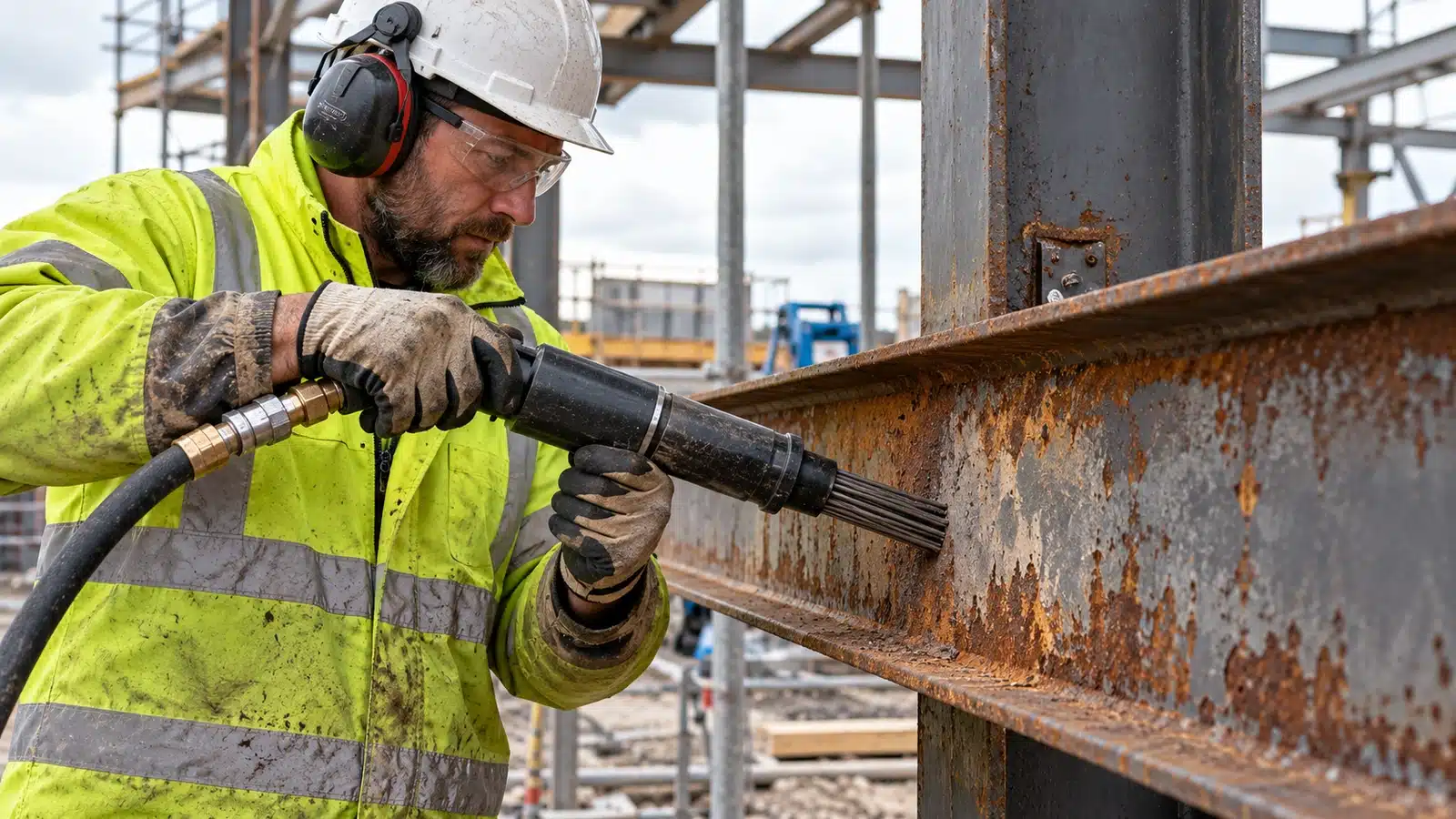
Rust and old paint come off metal with a needle scaler. A rock drill makes holes in stone. Tell the depot the material, how thick it is, and how much there is, since these details set the right size of tool. A quick guess at the area, such as a few paces by a few paces, is enough to start the conversation.
Choose the Tool Alone or with a Compressor
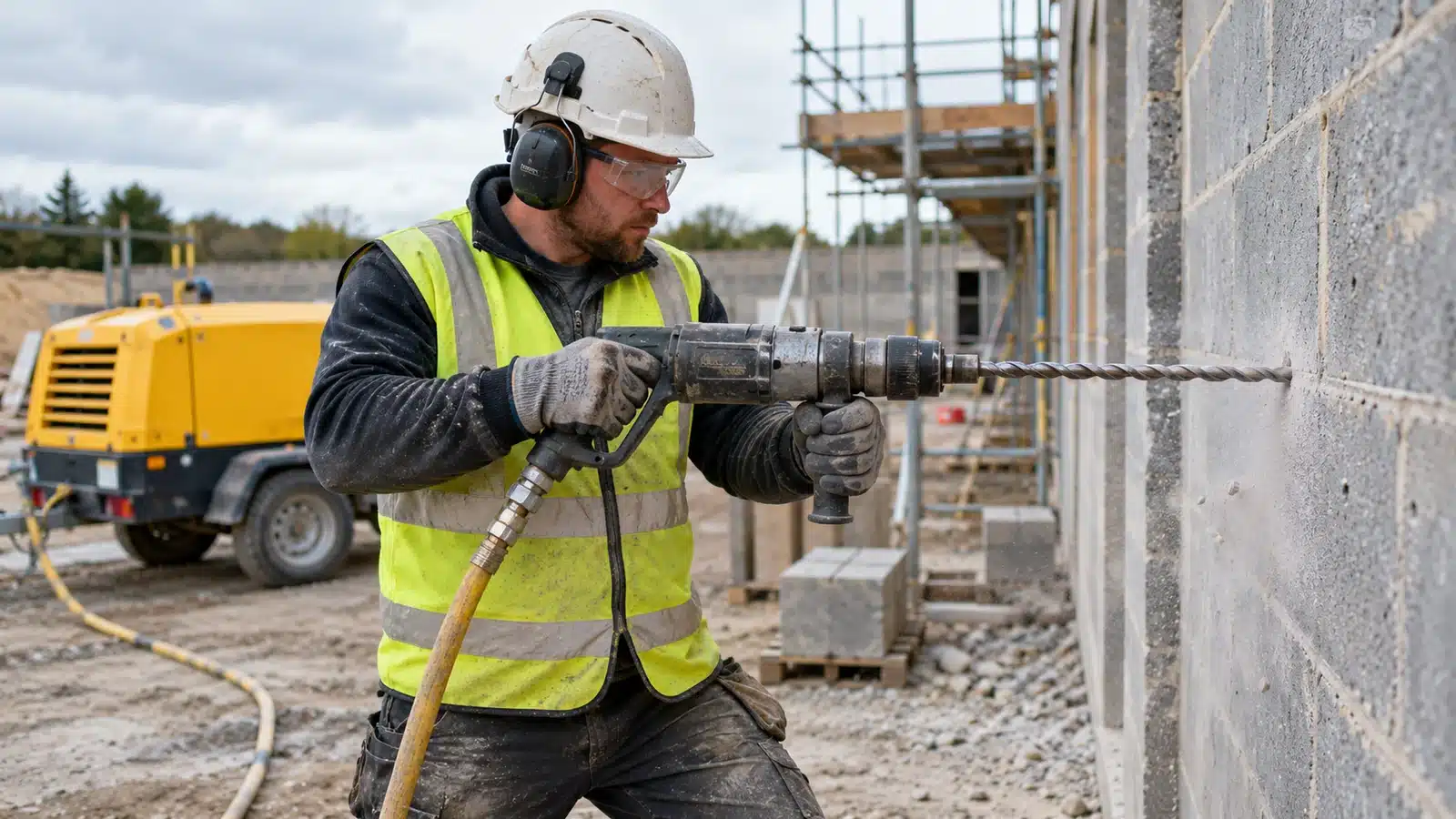
Every pneumatic tool needs a compressor. See our other Air Compressor Supplier services, including compressor hire, on the Crowborough Air Compressor Supplier page. The tools themselves, with full specs, are grouped in our Compressor Equipment collection.
Got a compressor on site already? Hire the tool by itself, but check its air use against your machine’s output first, especially if more than one tool will run from it at once. Nothing on site yet? Hire both together, and we will pair a compressor and tool that work well, so you are not left guessing whether your pairing will actually work on site. To ask about a package, call 01892 662777. Tell the team roughly how many hours a day the tool will run, since this helps them judge whether a smaller or a larger compressor makes more sense for your job.
Pick a Tool That Suits the Task, Not Just the Biggest One
Breakers, hammers, scalers and drills all send shake through the hands and arms. A tool too big for the job adds shake and weight for no reason, and it tires the worker out faster. A tool too small takes longer, which also keeps the worker exposed to the shake for longer. An hour of steady work with the right tool beats two hours of fighting one that is wrong for the job, on every measure that matters.
Share the tool between workers, take breaks, and stop if hands feel numb or tingly. Keep a note of how long each worker uses the tool each day, since this record is useful if exposure to shake is ever questioned later.
Sort the Steels, Hose and Oil Before the Job Starts
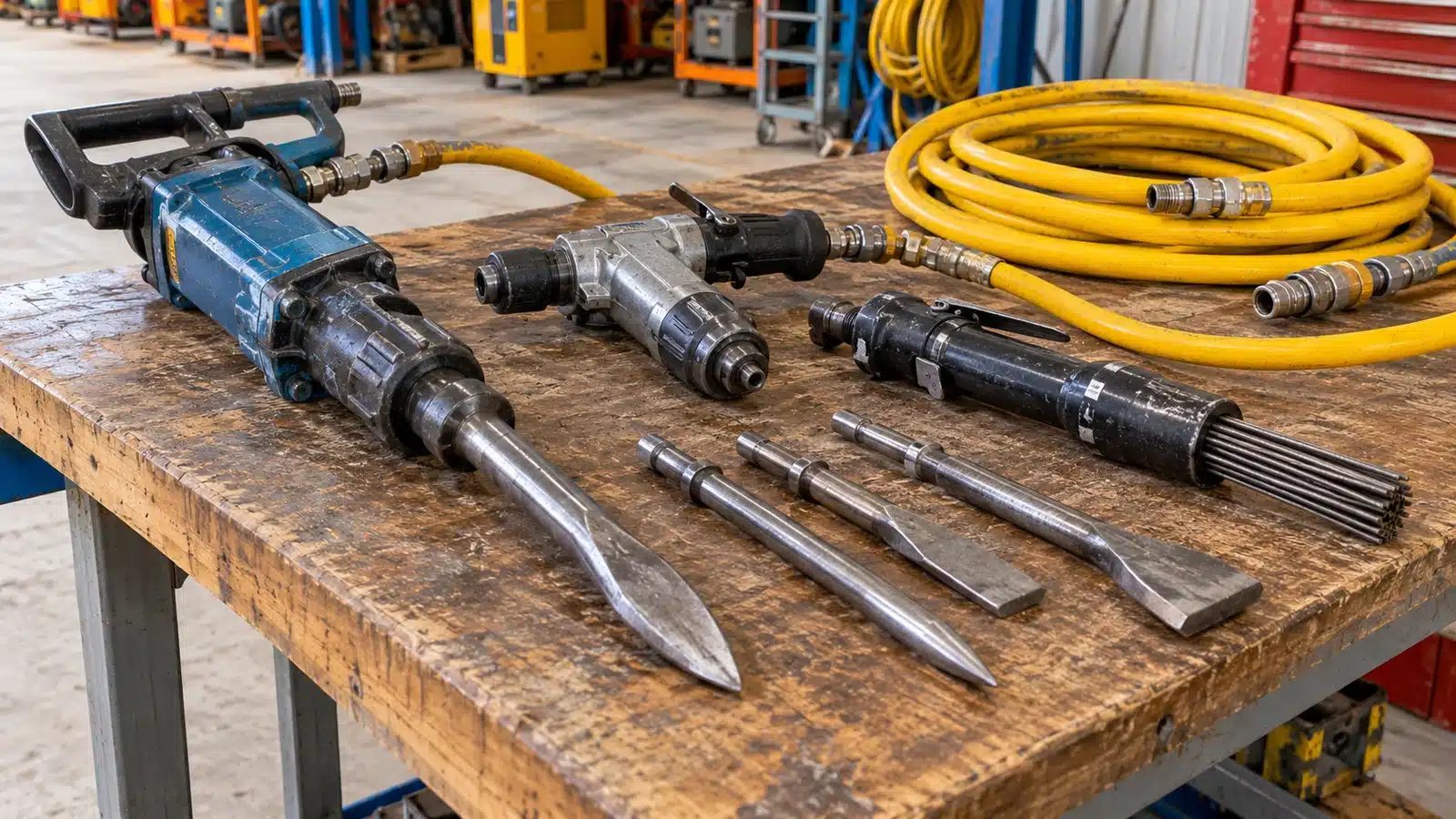
A pneumatic tool only works as well as the steel in it, the hose feeding it and the oil reaching it. Ask us which steel suits your material, and check it is sharp before work starts, since a blunt or worn steel makes any tool feel underpowered. Call 01892 662777 to check which steel fits your tool.
Many tools need a little oil in the air line, and an inline oiler supplies it. We also hire extra hose, so you can place the compressor away from the work. Every extra length of hose lowers the pressure at the tool, so keep it as short as you can, and check the oiler regularly, since a dry tool wears out far sooner than one kept properly lubricated.




Tell the Depot the Task, the Material and Your Hire Dates
Give us the task, the material, its thickness and the length of the hire. Say whether a compressor is on site already and, if so, its make and output. This lets us suggest the right tool and steel first time, rather than swapping equipment once the job has already started, which always costs more time than getting it right at the outset.
The Crowborough depot supplies pneumatic tools to Tonbridge, Heathfield and the villages around. Call 01892 662777 with your details and we will help you choose the tool and the air supply, and flag anything else worth knowing before the job begins, such as whether your chosen steel needs sharpening partway through a long hire.
Frequently Asked Questions
What checks should I make on a hired pneumatic tool before starting?
Check the steel is fully in place and held by its clip. Check the hose and joints too, and make sure none look damaged. Set the compressor to the pressure the tool is rated for, and never go above it. If anything looks worn or broken, tell the depot before you start, rather than trying to work around it once the job is under way. A damaged joint under pressure is a real safety risk, so a two-minute check is always worth it.
How do I stop a hose whipping if a joint comes apart?
Fit safety clips on the joints if the maker provides them, and swap out any cracked or worn hose. Always turn off the air and let the pressure out before you take a hose off. Keep the hose free of kinks and clear of sharp edges, since a kinked hose puts extra strain on the joint. This makes a sudden failure more likely while the tool is running, so a quick check before each shift pays off.
What safety gear do I need to break concrete or drill rock?
Wear ear defenders, eye protection, gloves and safety boots. Breaking and drilling throw up dust, and some of it can harm your lungs, so use dust control and a mask too. Ask the depot what your chosen tool calls for, since the right gear changes by tool and by material. The depot can also point you to anything else you still need before the job starts.
Do I need training to use a breaker or a rock drill?
Yes. Anyone using these tools must be trained for the task, and the employer or site manager must make sure of this. Read the maker’s instructions before the first use. Call the depot if anything is unclear, especially around shake limits and how to hold the tool safely. This matters most for a first go on an unfamiliar model, so ask early rather than guessing on site.
What UK rules cover shake from pneumatic tools?
One set of rules covers this: the Control of Vibration at Work Regulations. They cover hand-arm shake from tools like these. The rules set an action level of 2.5 m/s2 A(8), where employers should start cutting exposure. The limit is 5.0 m/s2 A(8), and this must never be passed. A(8) means the shake averaged over an eight-hour day. Your tool’s handbook gives its own shake figure, so check it before a long day’s work. Read the full regulations on legislation.gov.uk: Hand-arm vibration.
Looking for Pneumatic Tool Hire near me?
Call Coppard at 01892 662777 to discuss the task, the material and whether you need a compressor too.