Air Lance Hire in Crowborough, East Sussex
Air lance hire in Crowborough clears dust and loose bits before a concrete pour. Coppard’s lance has a nozzle you can adjust, for core holes, frames and pits across East Sussex. It runs from a compressor, so tell us what you need to clear and we will match you a machine.
Air lance hire is a simple way to leave a pour area clean. The lance sends out a jet of air, and its nozzle sets how wide or narrow that jet is. Start by deciding what must come out, and from where.
Check What Must Come Out Before the Pour
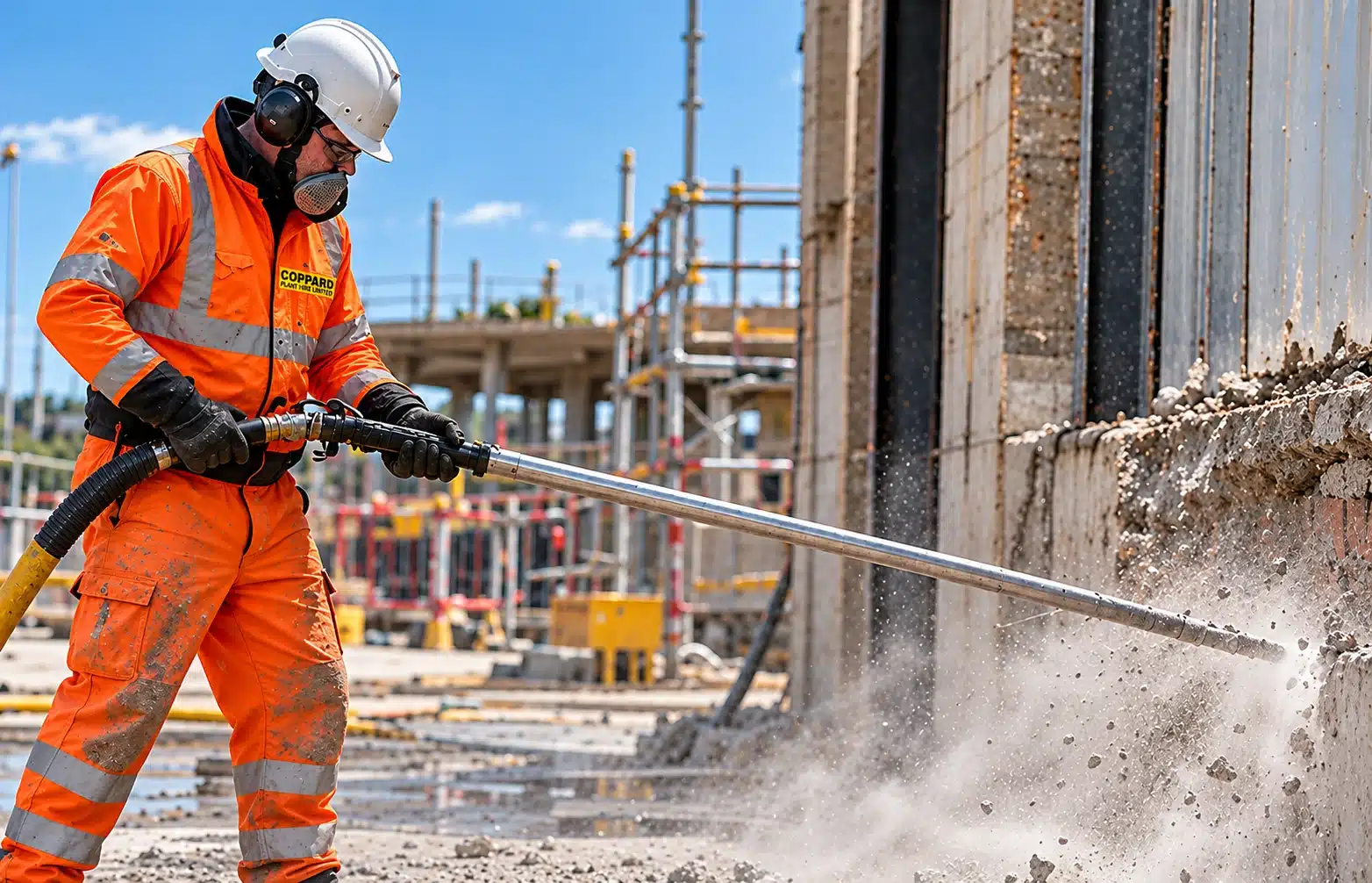
Concrete needs a clean surface to stick to, and loose dirt left behind weakens it. Common spots are dust in a core hole, offcuts in a frame, and soil in a pit or trench. Even a little loose mess can leave a weak spot once the concrete sets, and that weak spot may not show up until months after the job is finished.
Walk the area before the pour and check every corner. Holes drilled in a floor, narrow gaps between frame panels, and the base of a trench are the easiest places to miss, especially as light fades or time runs short. A second pair of eyes checking the same area often catches something the first walk-round missed.
Match the Lance with a Compressor That Gives Enough Air
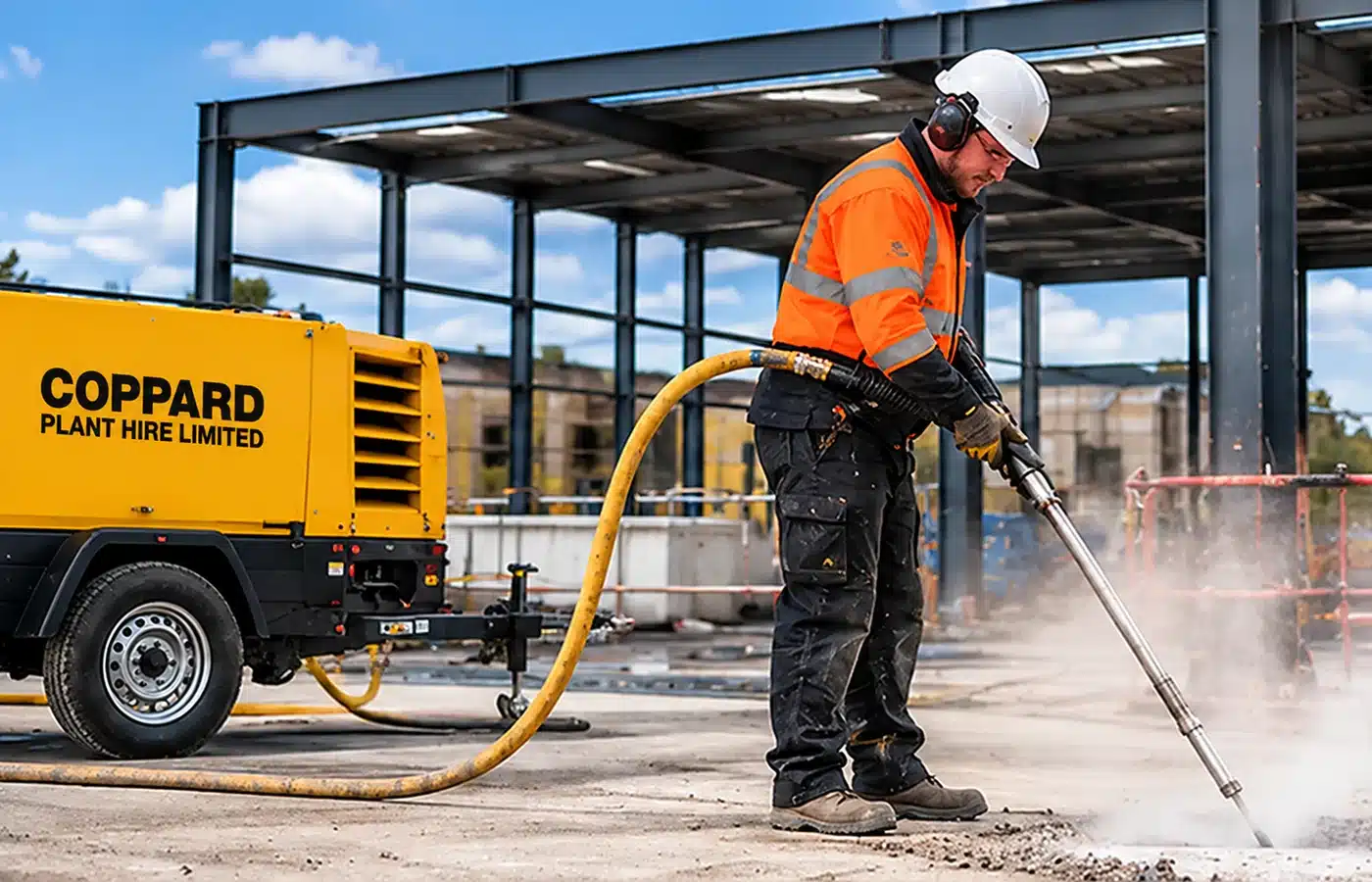
An air lance has no power of its own. It needs a compressor to run. See our other Air Compressor Supplier services, including compressor hire, on the Crowborough Air Compressor Supplier page. The lance itself, with full specs, sits in our Compressor Equipment collection.
A lance uses far less air than a heavy breaker or blasting rig, so a small compressor is often enough on its own, which keeps the job simple if the lance is the only tool you need on site that day. Add any other tool sharing the same machine, and call 01892 662777 to check which of our four compressors suits the total. If another tool is working nearby on the same job, tell the team, since sharing one machine between tools changes the size you need.
Set the Nozzle to Suit Each Spot You Clear
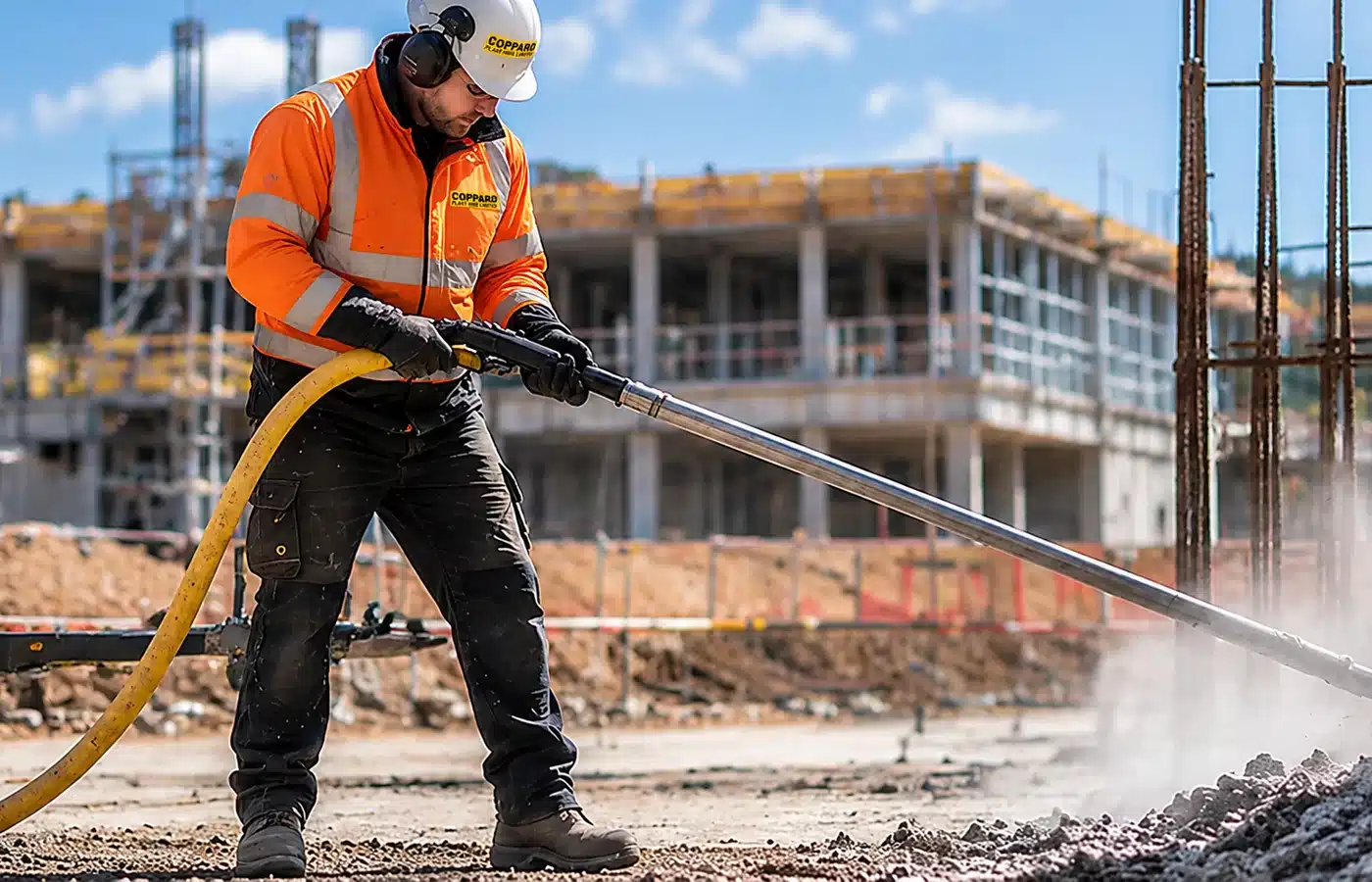
The nozzle adjusts, so one lance suits different jobs. A narrow setting sends a strong jet deep into a core hole, reaching right down to the bottom where a wider jet would just bounce back out. A wider setting sweeps a flat floor or a frame panel, covering more ground with each pass, which saves time on a large area.
Work from the far end towards the exit, so dirt moves away from the parts you have already cleared, rather than back across them. Clear the high spots first and the low spots last, since loose bits fall downward and settle in the lowest point of the area, often a corner or a drilled hole, so leave that spot until last.
Protect Eyes and Keep Other People Clear Before You Start
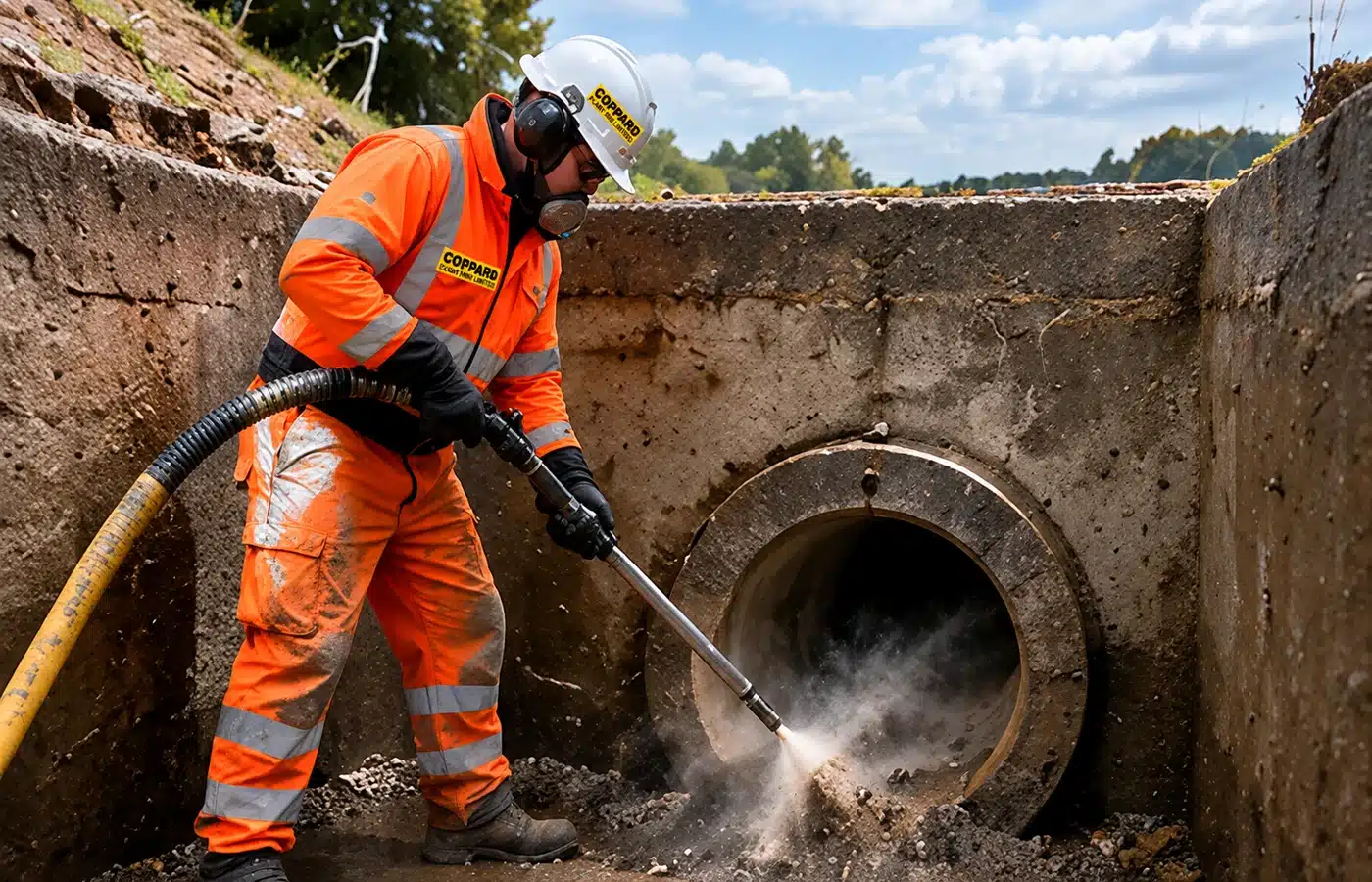
Fast-moving air throws loose bits around, so eye protection matters for you and for anyone nearby. Move other people away, wear safety glasses, and never point the lance at anyone, even as a joke, since a flying chip can cause a real injury in a split second. Call 01892 662777 if you want the depot to run through safe use with your team.
Dust in the air can also harm your lungs, since concrete dust can hold silica. In a tight space, like a deep hole or a pit, ask the depot or your site manager about breathing protection, and think about whether the job can be done with the area better ventilated first.






Tell the Crowborough Depot What You Are Clearing
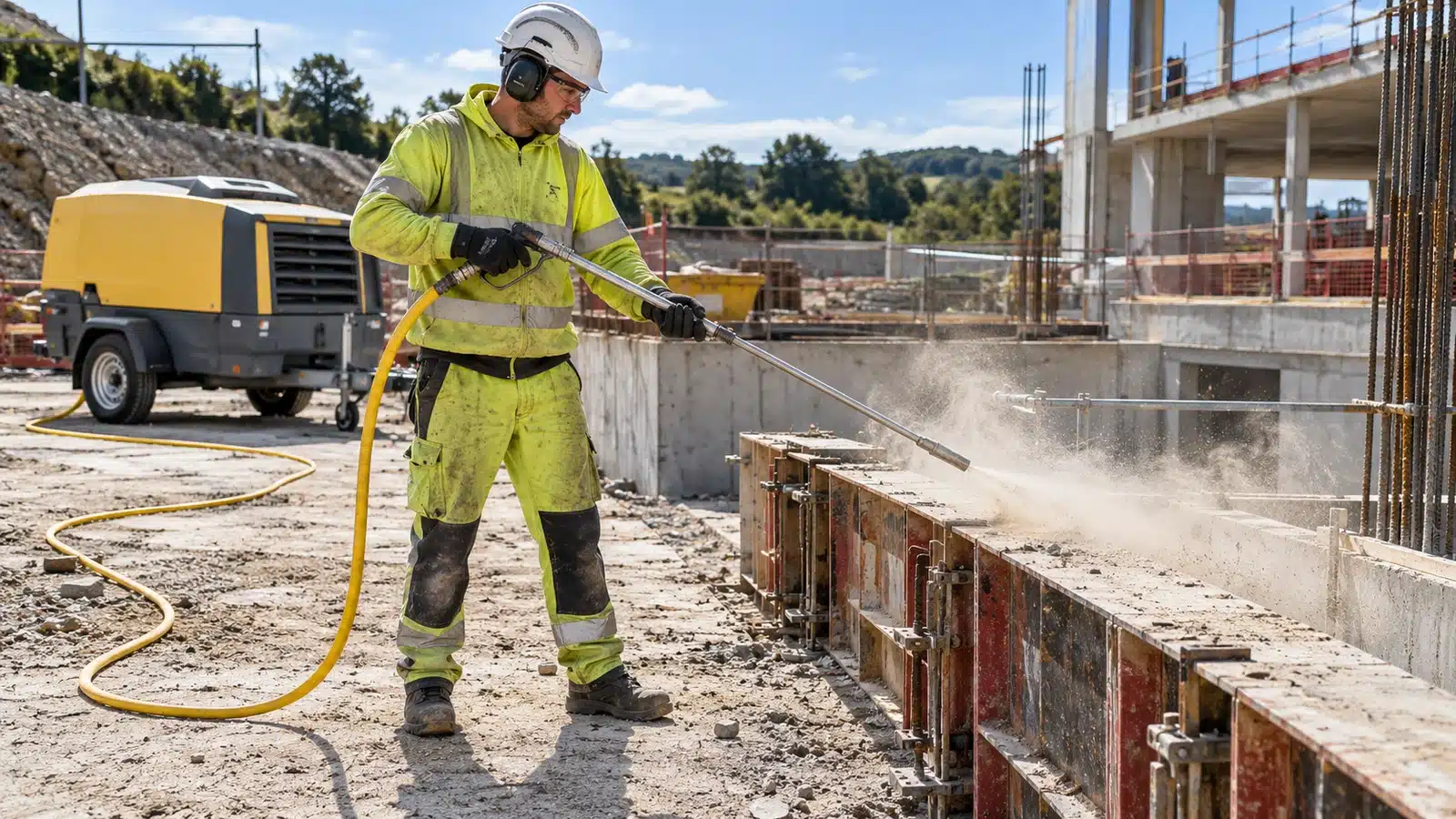
Describe the area you are clearing: a core hole, a frame or a pit, roughly how big it is, and the number of days the job will take. Mention any compressor you already have and its output. Call 01892 662777 so the team can sort the right kit for the job, and swap you a longer lance if your area turns out larger than first thought.
Crowborough supplies air lances to sites around Uckfield and Heathfield. The lance is light, so it is often hired for just a short time around the pour date, collected again as soon as the area is clear and the concrete gang is ready to go.
Frequently Asked Questions
What does an air lance actually do on a construction site?
A jet of air from the lance blows loose dirt out of holes, frames and pits. It clears dust and bits ahead of a pour, so the concrete sticks to a clean surface. It is a quick, cheap way to finish getting a site ready before the concrete turns up, rather than relying on a brush alone, and it reaches gaps a brush cannot easily get into.
Do I need my own compressor to use a hired air lance?
Yes. The lance takes its air from a compressor, so one must be on site. Coppard can supply a compressor with the lance, or you can use your own if it gives enough air for the lance and anything else running with it. Tell the depot if you are not sure your own compressor is big enough, and it can check the numbers with you before you book.
Can an air lance clean out a deep core hole?
Yes, if you use a narrow nozzle and aim the jet into the hole from above. Dirt blows back out towards you, so keep your face clear, wear eye protection, and check what might be thrown up before you start. Working from directly above gives you the most control over where the dirt lands, which matters most when working close to other finished work on the same floor.
Is it safe to use an air lance in a tight space?
Take extra care. Dirt can bounce back off close walls, and dust can build up with nowhere to go. Wear eye and breathing protection, keep the compressor outside the space, and ask your site manager if a vacuum would be safer. This matters most in a space with poor airflow, such as a deep pit or a narrow duct, where dust has no easy way to clear once it is in the air.
What UK safety guidance covers using air to clear debris?
Work equipment rules cover compressed air tools like blow guns and lances. Fast-moving air can throw bits at speed, which is a real risk to the eyes of anyone nearby. A nozzle held close to skin can also cause injury. Read the rules on legislation.gov.uk: Provision and Use of Work Equipment Regulations 1998. Keep the lance pointed away from people at all times, even when it is not switched on.
Looking for Air Lance Hire near me?
Call Coppard at 01892 662777 to discuss what you need to clear and which compressor will run the lance.