Winch Hire in Reading, Berkshire
Winch hire in Reading for controlled pulling, recovery and positioning where muscle, a vehicle or larger plant is not the answer. Coppard supplies cable, manual and 110V electric winches across Berkshire and the Thames Valley. Call 0118 979 2828 with the load, the pull direction, the distance and the anchor you intend to use.
The winch that suits a job is set by the pulling force and the line the load has to follow, not the weight on its own. On sloping riverside plots or tight urban yards around Reading, a change of direction or a bad anchor can matter more than the tonnage. Fix the start point, the end point and the anchorage before choosing the unit.
Work Out the Pulling Force, Then the Direction
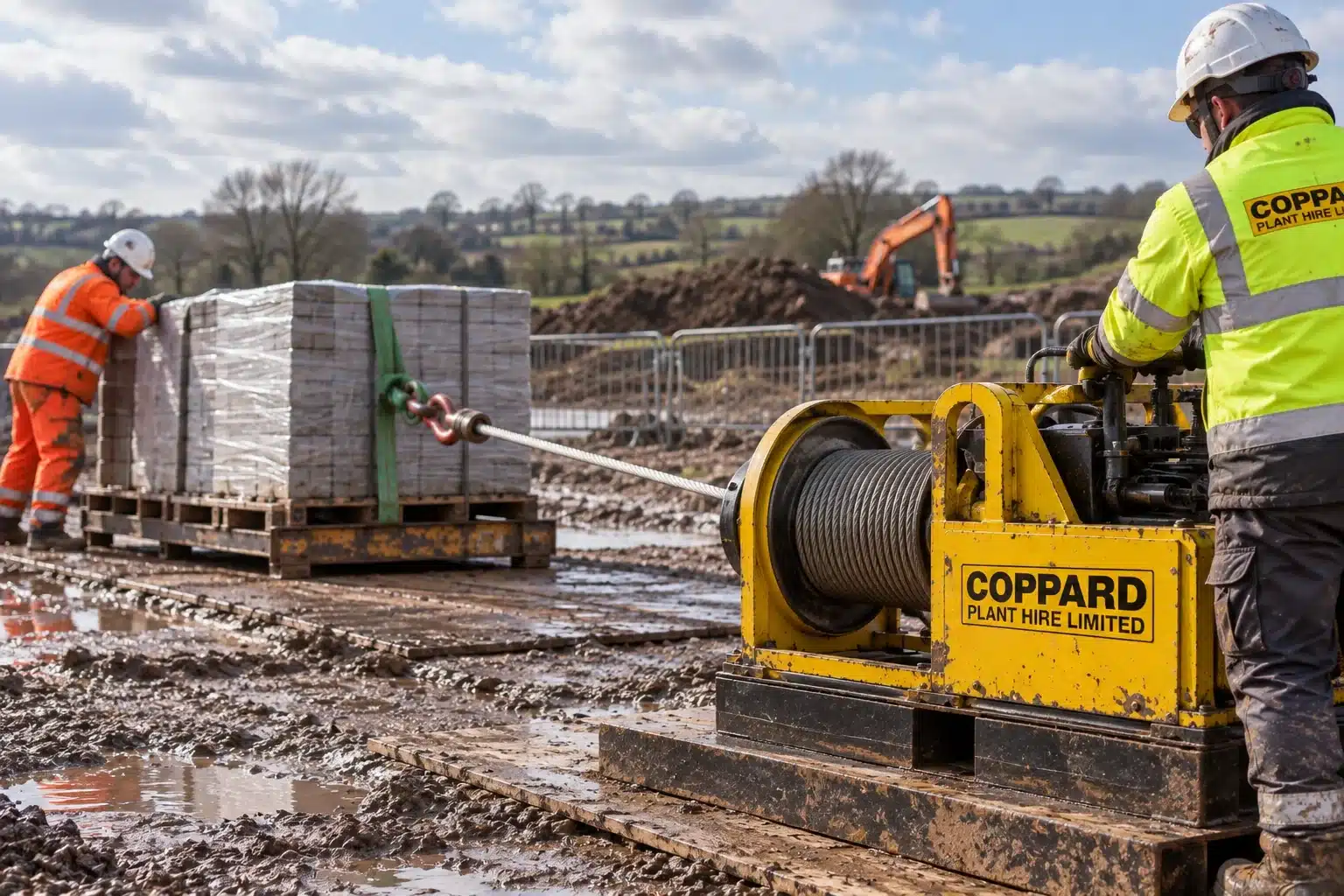
A winch is sized around the force it must apply and the way that force is directed, not the bare weight of the object. Dragging a stalled machine up a wet incline, easing a component into position or holding tension on a fixed line are three different demands, and friction, gradient and any snatch as the load breaks free all add to the figure the winch has to handle.
Set out the start position, the finish position and the travel distance first. Around Reading, a slope down to the Thames, a soft verge or a confined loading bay can turn an apparently light pull into a harder one. Give those conditions to the depot rather than a single tonnage, and the winch class becomes a sensible choice instead of a guess.
Cable, Manual and Electric Suit Different Recoveries
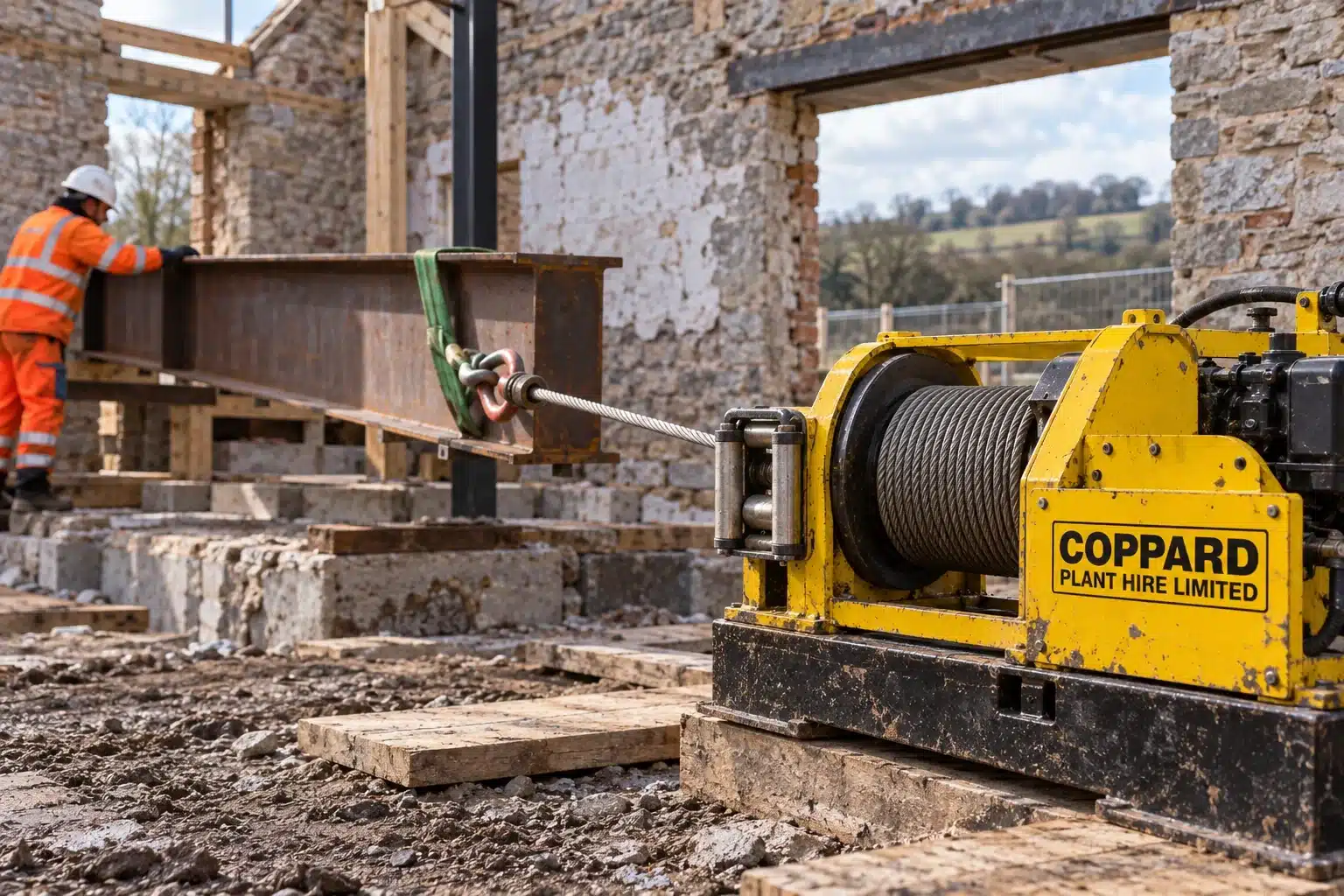
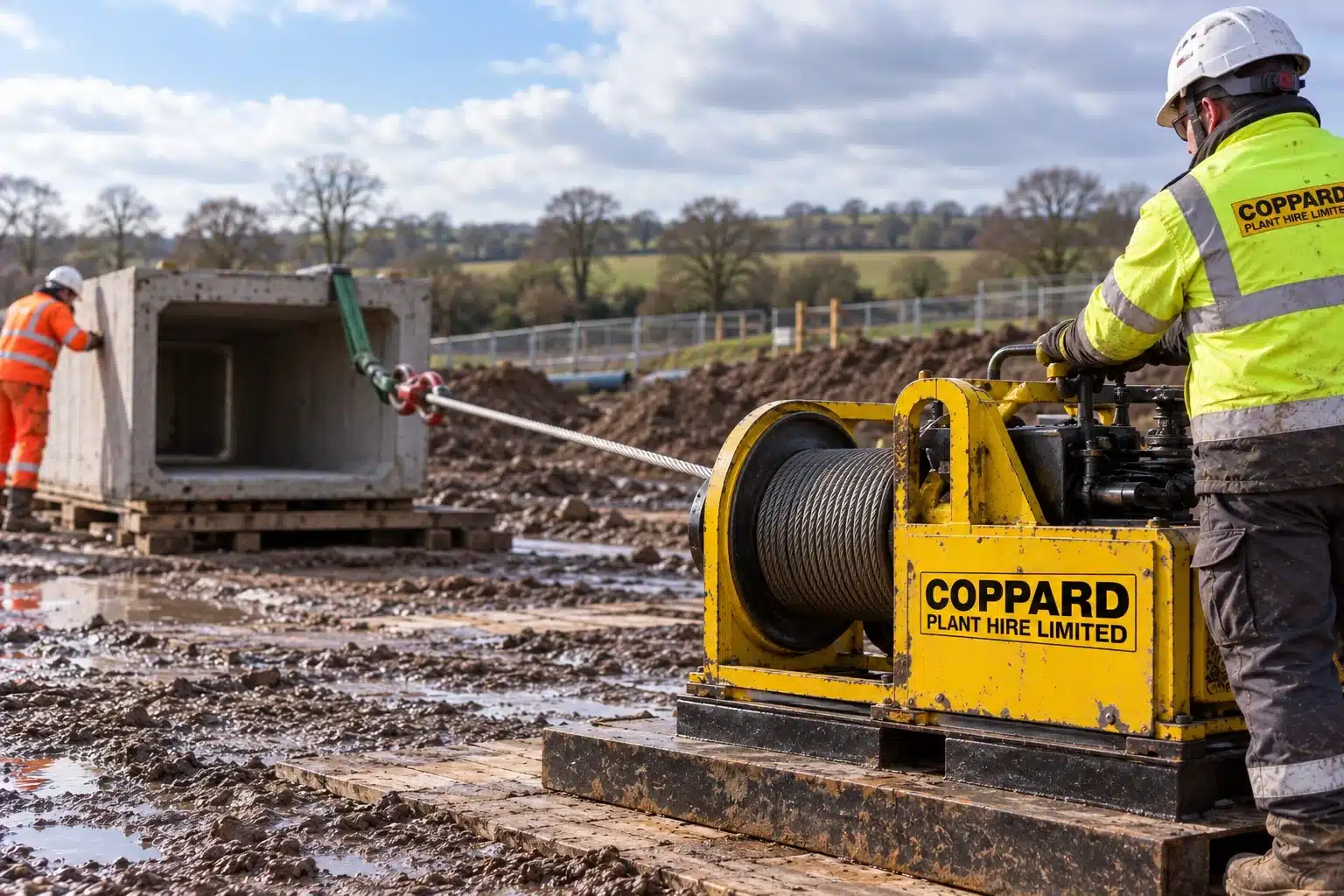
The Coppard winch range runs from a heavy cable winch through manual units to a 110V electric winch supplied with rope and a stated maximum load. A high-capacity cable winch handles the heavier drags; a manual unit gives slow, deliberate control with no power on site; the electric unit takes the effort out of repeated pulls where a supply is available.
Each changes the set-up around it. A manual winch needs a solid stance and a clear line; the electric unit needs its 110V feed and cable route planned, which on a live Reading site often means threading past other trades. Match the type to how the recovery or positioning actually happens, not to the headline pull figure alone.
The Anchor Decides Whether the Pull Is Safe
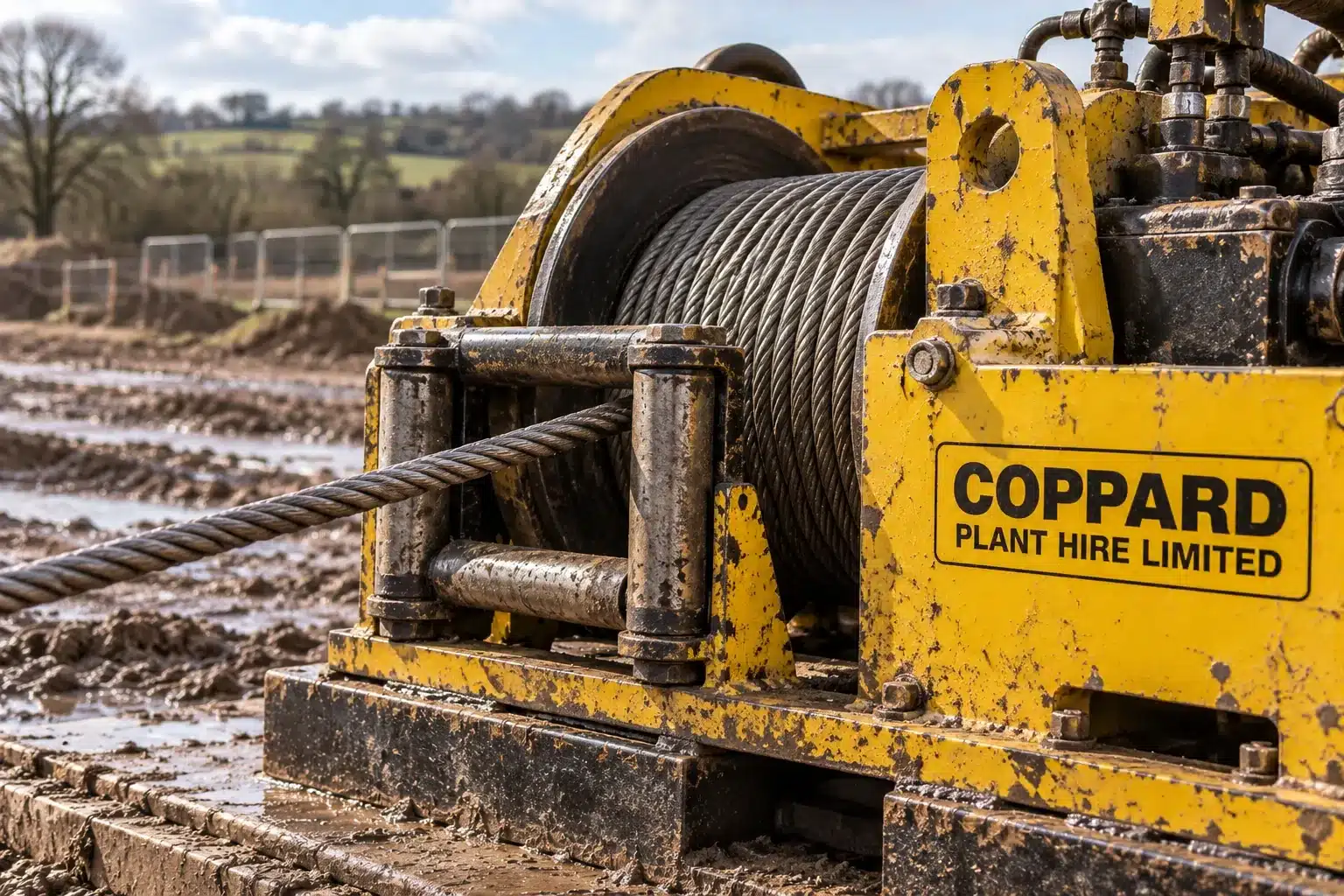
A winch only controls a load if whatever it is anchored to can take the reaction. A correctly rated winch tied to a doubtful post, a light vehicle or an untested fixing is not a safe arrangement, and an anchor that lets go turns a steady pull into a sudden release of stored energy. Establish where the winch stands, what structure or rated point resists the load and whether the line stays straight through the travel.
Any redirection through a pulley changes the forces and usually needs extra rated components. Keep people out of the line of a loaded cable, and avoid improvised attachment points. For an awkward geometry or a heavy recovery near a road or watercourse, get competent lifting or recovery advice before committing to the pull.
Plan the Finish of the Pull, Not Just the Start
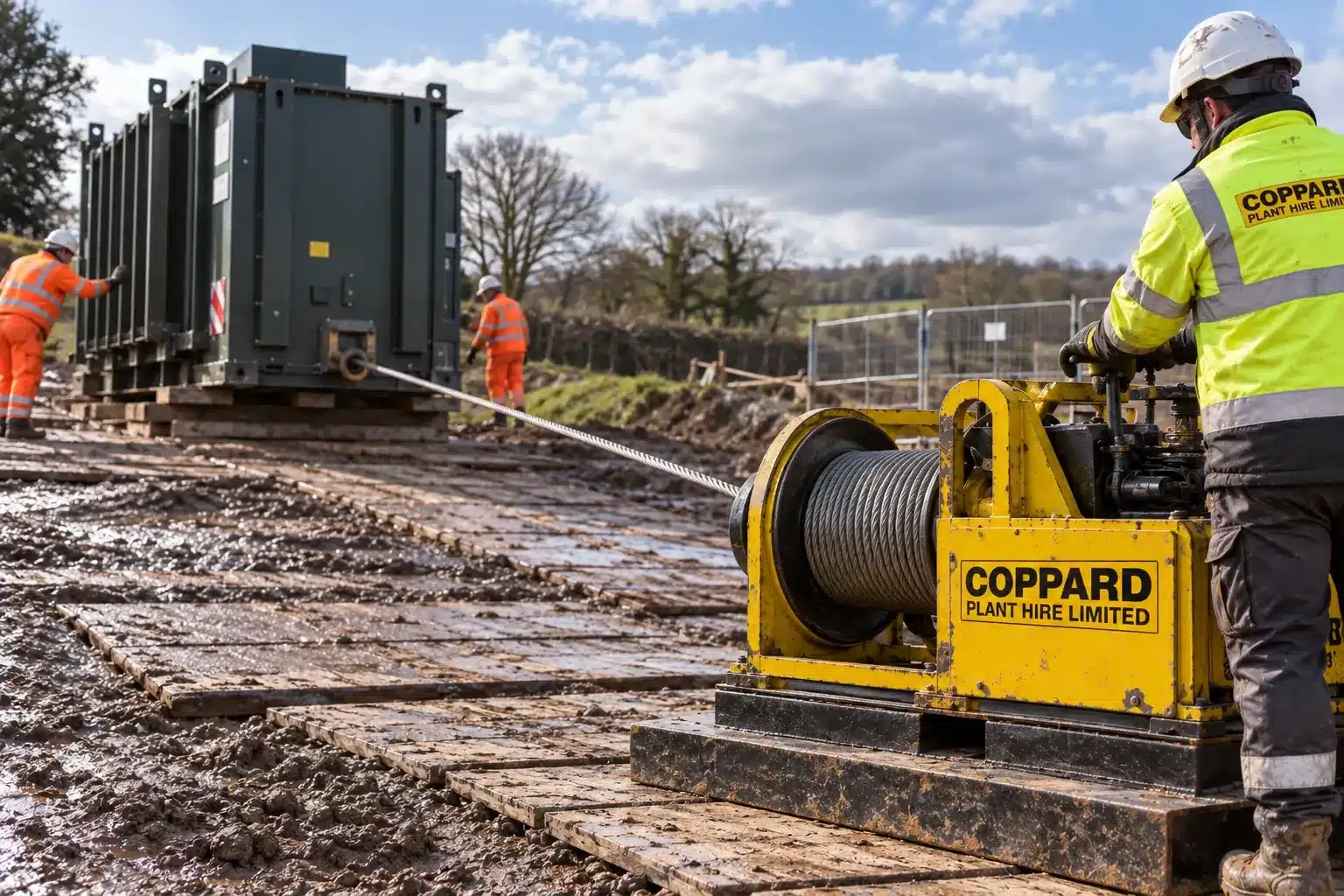
It is easy to plan how a load starts moving and forget how it stops. Decide in advance how the load will be secured once it reaches position, because an unsecured item at the end of a pull, especially on a gradient, is its own hazard. For a positioning job, work out how fine the final adjustment needs to be and whether a manual unit gives better control than a powered one for the last stretch.
Think about where the rope or cable pays out and where the operator stands throughout. A recovery that is well controlled at both ends, with the load held safely at the finish, is far more predictable than one planned only up to the point the load first moves.




Tell the Reading Depot the Load and the Line
When you book through the Reading Tool Rental Service, describe the load rather than asking for a winch by tonnage. Give the rough weight, whether the movement is horizontal, up a slope or vertical, the distance, the anchor points available and the power on site, and mention restricted access, gradients or any change of direction during the operation.
That lets the team choose between the cable, manual and 110V electric options and point out where competent advice is worth arranging. Coppard can then confirm current availability and the hire period for jobs across Reading and the wider Thames Valley. Call 0118 979 2828 before you settle the method.
Frequently Asked Questions - Winch Hire in Reading, Berkshire
Is a winch the same as a hoist?
Not quite. A winch is built mainly to pull a load along a line, often horizontally or up a slope, while a hoist is designed to raise and lower a load vertically. Some winches can be used for certain lifting duties, but only within the maker’s rating and instructions, and lifting brings extra duties that pulling does not. If the job is genuinely a vertical lift, say so, because a lifting appliance and its accessories may be the correct equipment rather than a pulling winch.
How do I estimate the pulling force I need?
Start with the weight, then add for the conditions. Friction on the surface, the gradient, whether the load is dug in or free, and any sudden shock as it breaks away all raise the force above the bare mass. A load on a wet slope or soft Berkshire ground can need far more pull than the same weight on level hardstanding. Give the depot the weight and the conditions together, and let them match a unit with a suitable margin rather than one sized to the weight alone.
Can I anchor a winch to my vehicle or a fence post?
Only if that anchor is genuinely rated for the reaction force, which a fence post and many light vehicles are not. The anchor has to resist the full pull without moving, deforming or failing, because if it lets go the stored energy in the line is released suddenly. Identify a structural or purpose-made anchor point, keep clear of the loaded line, and where the fixing is uncertain get competent advice before you take up tension.
What accessories should I plan for with a winch?
Think about the whole system, not just the winch body. Depending on the job you may need suitable rope or cable, rated shackles or hooks, a pulley if the line changes direction, and for the electric unit a 110V supply and lead route. Redirecting the pull through a pulley changes the forces, so any additional components must be rated for it. Describe the pull to the depot and the correct supporting items can be confirmed alongside the winch.
What UK rules apply when a winch is used for lifting rather than pulling?
If a winch is used to lift a load rather than pull it, the Lifting Operations and Lifting Equipment Regulations 1998, known as LOLER, apply on top of the general duty to provide suitable, maintained equipment. You can read the official regulations at LOLER 1998 legislation on legislation.gov.uk. Lifting must be planned by competent people, so treat a pulling winch and a lifting winch as different tools and tell the depot which duty the job involves.
Need winch hire in Reading?
Give us the load, the pulling direction, the distance, the access and the anchor point. Call Coppard on 0118 979 2828.