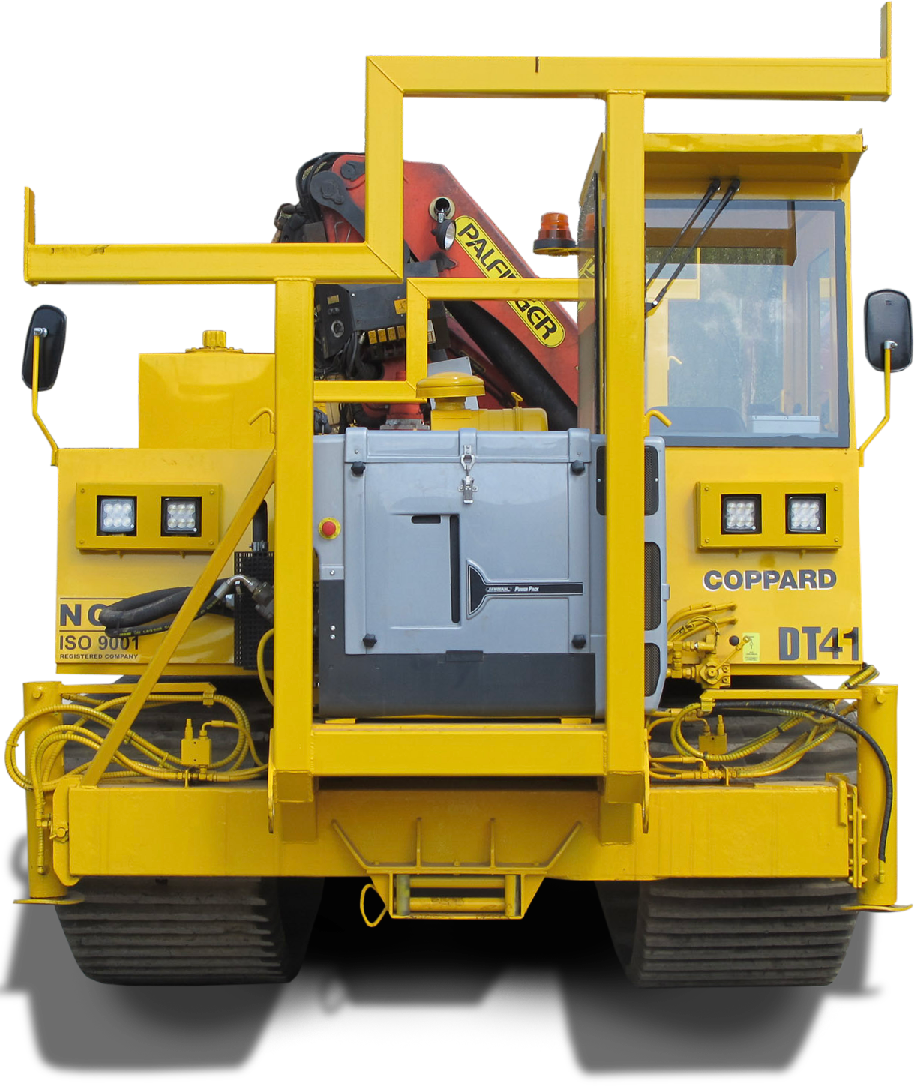
Road Signs Hire in Reading, Berkshire
Road sign hire in Reading to run temporary traffic management for utility jobs, construction and quick short-duration works. Coppard supplies signs, cones, manual Stop/Go boards, barrier fencing and flashing lamps across Berkshire. Call 0118 979 2828 with the layout you need to set up.
What you hire should come off the traffic-management drawing, not a rough guess at a few cones and boards. The size of the order, and which items go in it, follow from what the layout is trying to achieve: slowing traffic past a dig, closing a lane, holding a footway, or running a two-way Stop/Go. Bring the plan and the depot can fill it.
The Order Comes Off the Layout Drawing
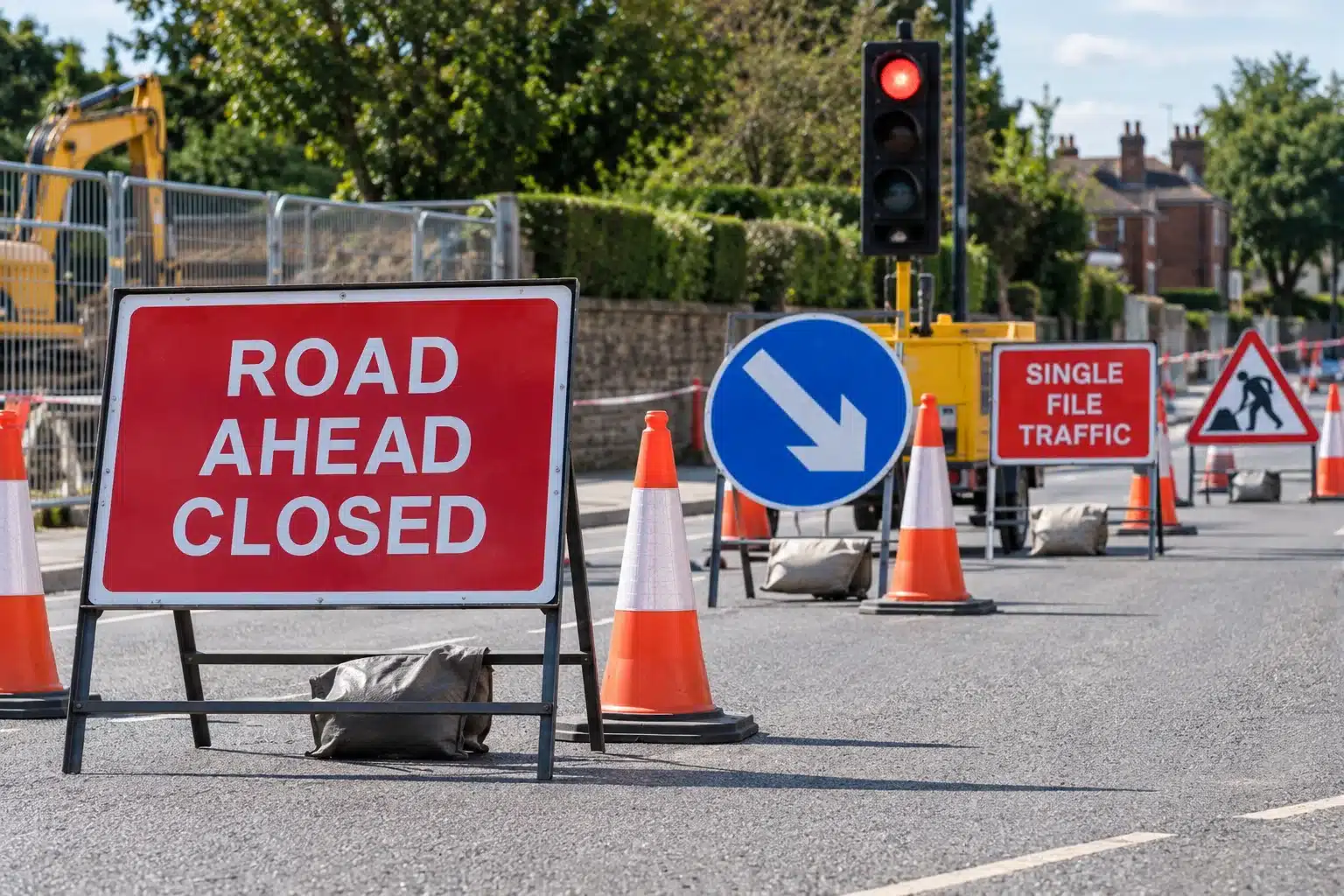
A traffic-management layout tells you what to hire far better than an equipment list does. It shows how far ahead of the works a driver is warned, how the lane or footway is tapered, where cones guide traffic through, and where a Stop/Go operator stands. Read those requirements off the plan and the hire almost writes itself; guess at it and you take a boot-load of cones but find yourself a sign short.
The Coppard road-work equipment range holds the parts most Reading layouts draw on: advance warning signs, cones, manual Stop/Go boards, barrier fencing and flashing lamps. Give the depot the works type and the road it sits on and the equipment can be matched to the drawing rather than to a general idea of what road works usually need.
Warn Early, Then Guide, Then Light
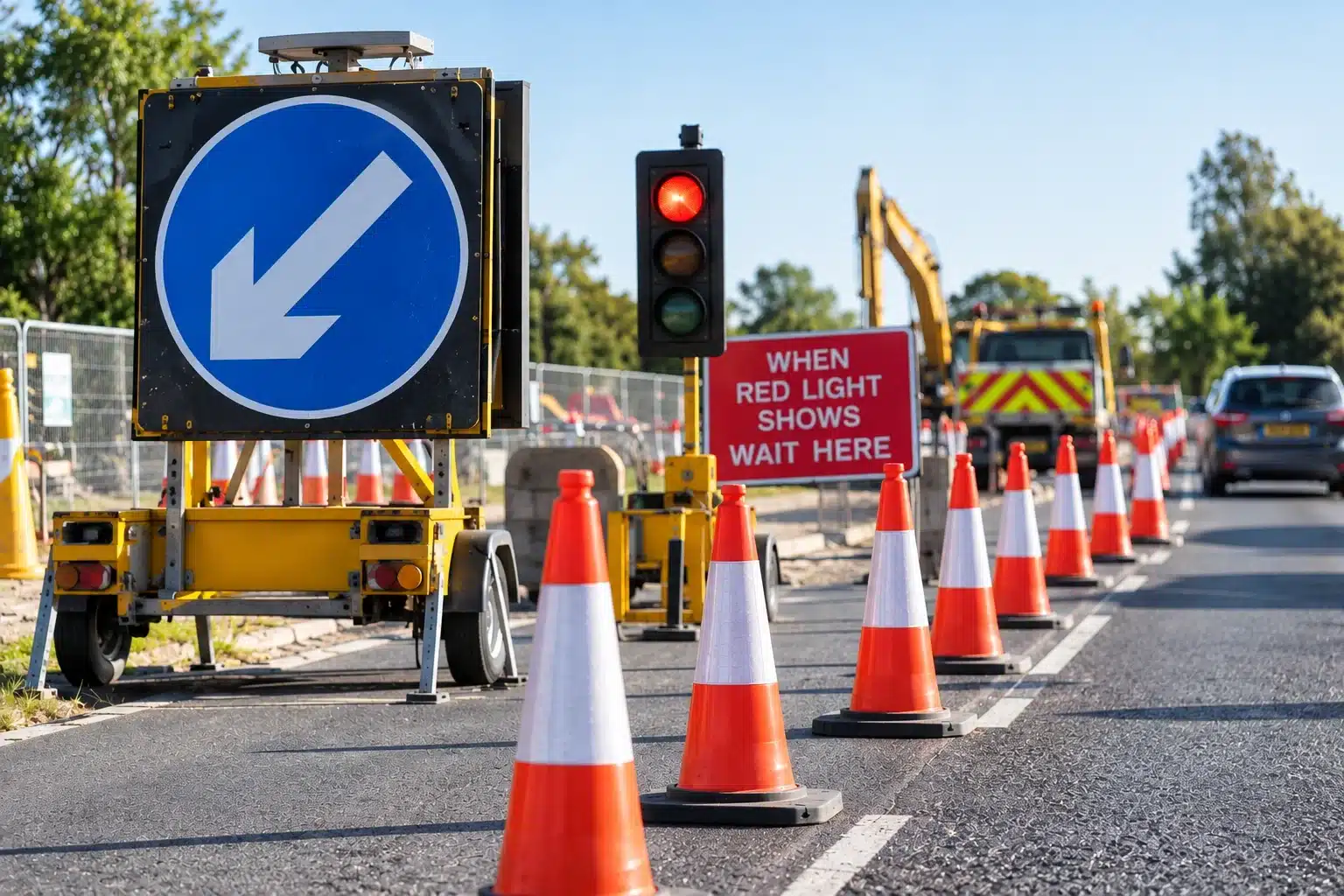
The three jobs a layout does are warn, guide and light, in that order as a driver approaches. Signs give the warning far enough back that there is time to slow or move over; cones then physically define the route past the works; flashing lamps make the whole thing show up in poor light and after dark. Miss the first and the later two arrive too late to help.
On a busier Reading through-route the approach speed and the sight lines set how far back the first sign has to go, and a bend or a line of parked cars can hide it. When arranging the hire through the Reading Tool Rental Service, describe the road as well as the works, so the warning distance and the sequence are right, not just the quantity of kit.
Give Pedestrians Their Own Safe Route
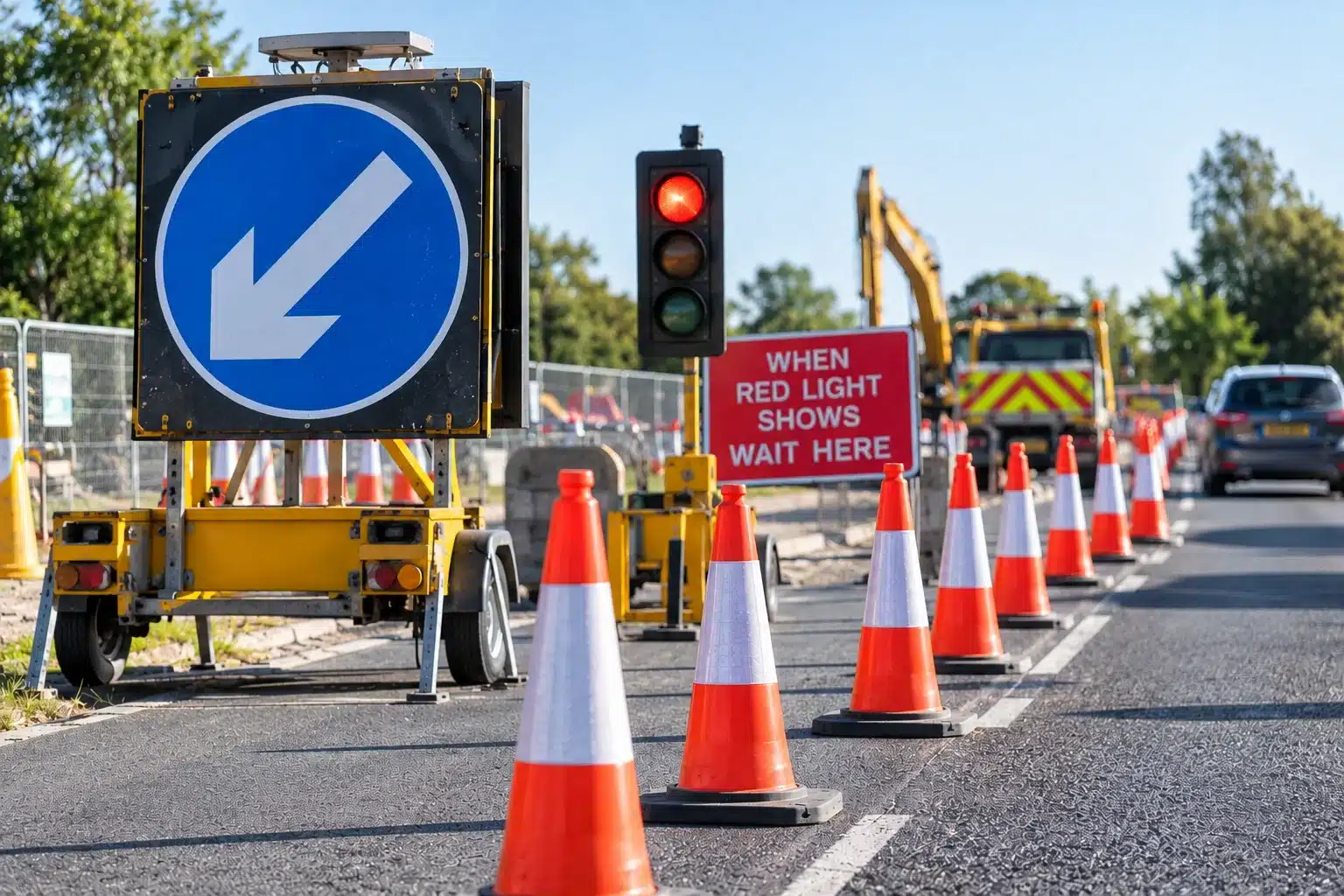
People on foot are not just slow traffic; they need their own provision, and that includes wheelchair users, buggies and people who do not know the works are there. Where a footway is closed or narrowed, the alternative has to be continuous, obvious and separated from the carriageway and the plant, and a barrier may need to walk people to a proper crossing rather than simply wall off the hole.
Barrier fencing sits in the road-work range for this; formal pedestrian walkway systems are a depot-confirmation item. Plan the walking route at the same moment as the traffic route, because a scheme that keeps cars flowing but tips pedestrians into the road has solved the wrong problem.
A Layout Is Not Finished When It Is Installed
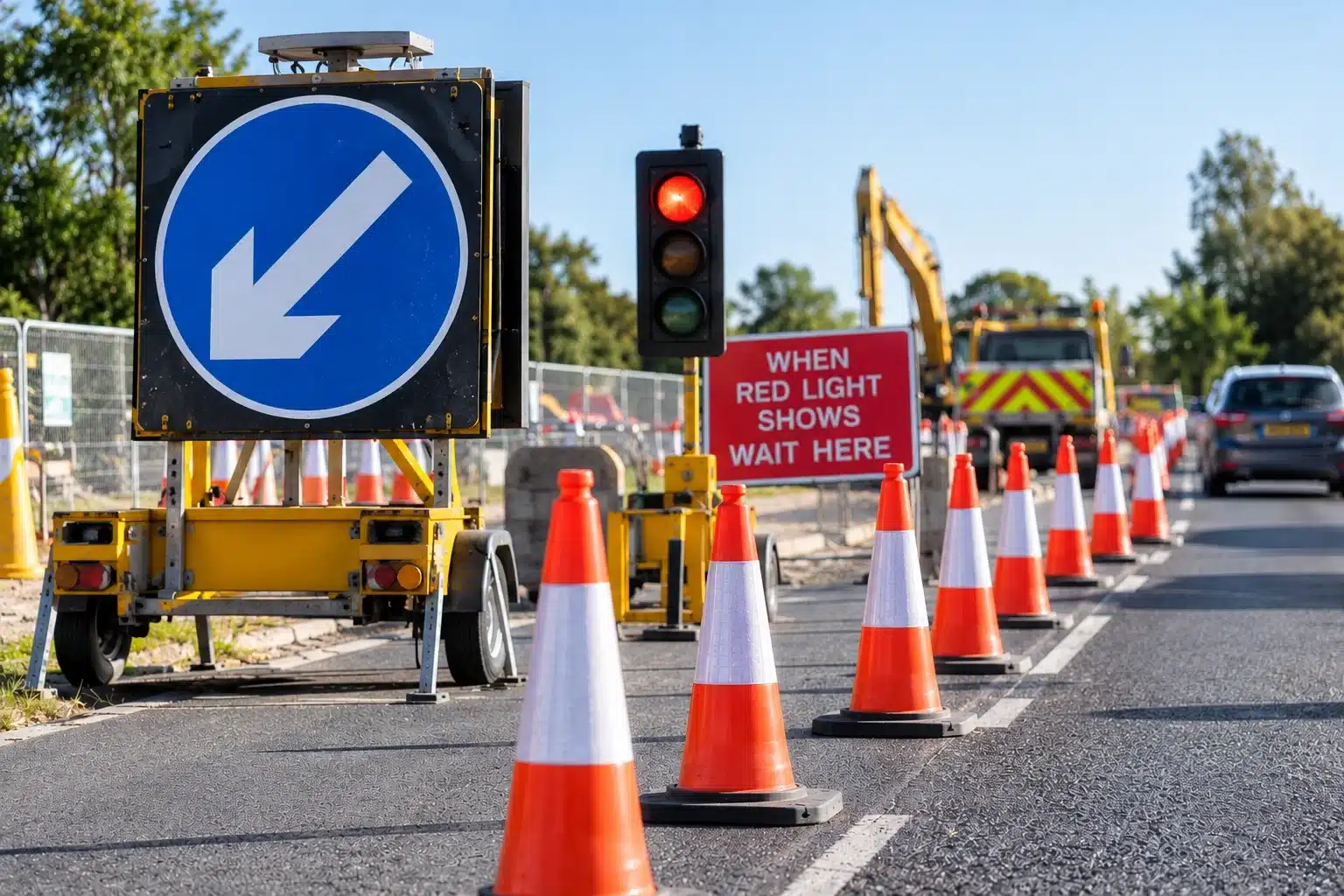
Setting the signs and cones out is the start, not the end. Cones get clipped and dragged, signs get knocked or turned, and a line of newly-parked cars can blank out an advance warning that was clear at 8am. Someone has to keep checking that the layout still reads as intended, especially after dark and in wet Reading weather when glare and spray cut visibility.
Longer works move: the dig advances, the access point shifts, the pedestrian route may have to change. Build those checks and changes into the plan, and match the hire period to how long the works genuinely run, including any overnight period, rather than to the first day’s set-up.






Tell the Reading Depot the Works and the Duration
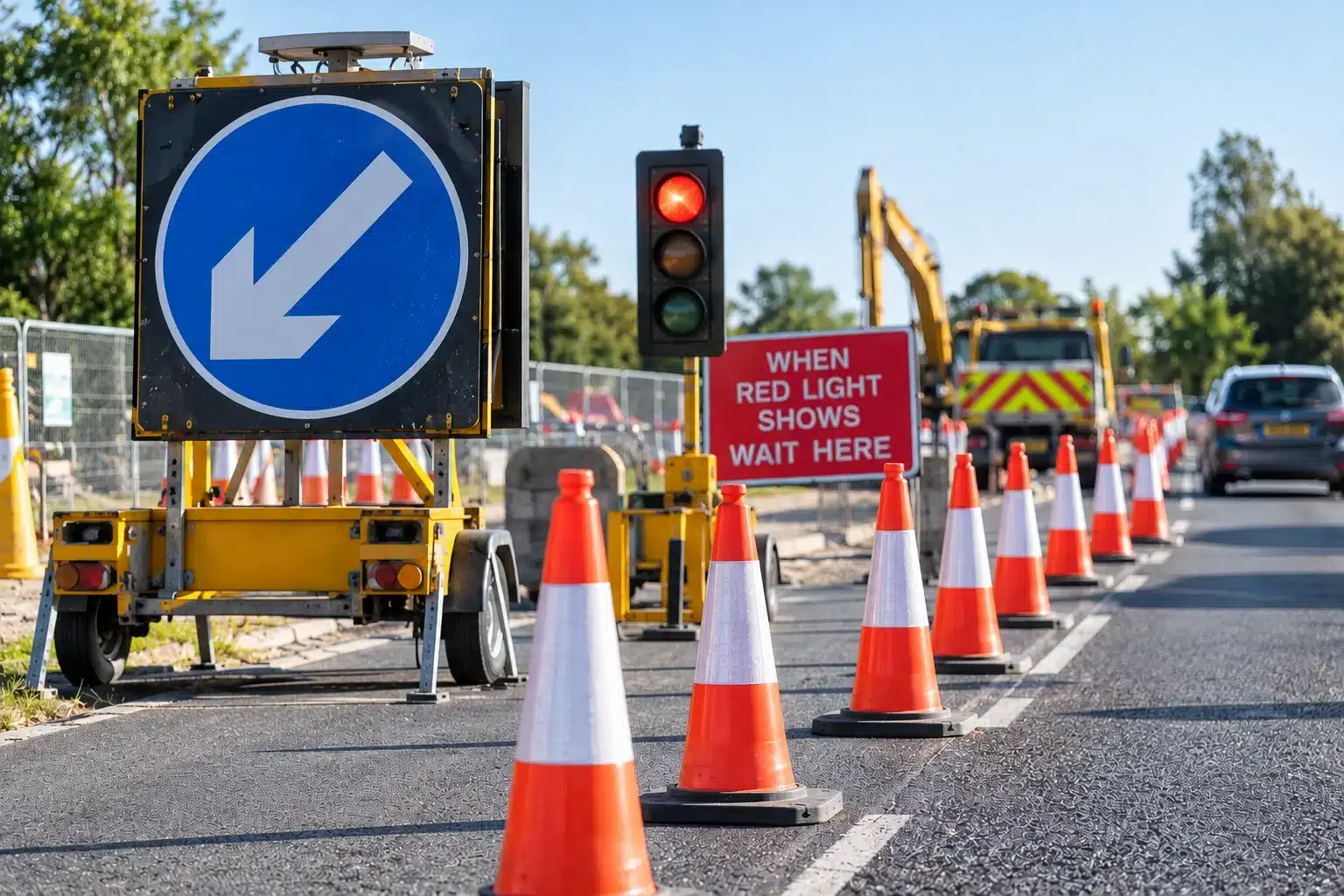
Give the works type, the location, how long it runs, whether it stays out overnight and what the layout specifies, plus any pedestrian diversion. That lets the depot check quantities and availability against the plan rather than assembling a stock bundle that may not fit.
Coppard supplies road-work equipment across Reading and the Thames Valley. Call 0118 979 2828 before the start date, particularly where the scheme repeats signs along a route or needs a larger run of cones and barriers, so what turns up matches the drawing and the programme.
Frequently Asked Questions - Road Signs Hire in Reading, Berkshire
Does hiring the signs make my road works compliant?
No. The kit is only compliant once it is set out to a proper traffic-management plan for that road. Where the first sign sits, how the taper is coned, how pedestrians are handled, what happens after dark and who keeps checking it all decide whether the layout actually works. Getting the right products from the depot is the easy half; the plan and the placement, on a live Reading road, are what keep drivers and pedestrians safe.
Can I hire what I need for a footway closure?
Barrier fencing is in the current road-work range, and formal pedestrian walkway systems are a confirm-with-the-depot item. Whatever is used, the diverted route has to be continuous, obvious and kept clear of traffic and plant, taking in wheelchair users and buggies, and it may need to lead to a safe crossing rather than just fence off the works. Plan the walking route alongside the traffic route rather than bolting it on afterwards.
How far back should the first warning sign go?
Far enough that a driver at that road’s speed has time to react before the works, which is why the approach speed and the sight lines matter as much as the works themselves. A bend, a crest or parked cars can hide a sign that looked fine on paper. The traffic-management plan should set the distances; give the depot the road as well as the works so the advance signs and the sequence suit it, not just the quantity.
What should I give the depot when booking?
The works type, the location, the duration, whether it stays overnight and the equipment the layout specifies, plus any pedestrian diversion. Flag repeated signs along a route, Stop/Go control or a substantial footway closure. That gives the depot a proper basis to check quantity and availability before the start, rather than putting together a generic set of cones and boards that may not match the drawing or the road.
Where is the official UK guidance for temporary road signs?
The Traffic Signs Manual, published by the Department for Transport, is the reference, and its Chapter 8 deals specifically with road works and temporary situations. It is at Traffic Signs Manual on gov.uk. Because it lays down how temporary signing and layouts ought to be arranged, your scheme can be drawn to it rather than to habit or to whatever was done last time.
Need road signs hire in Reading?
Send the layout, the duration and any pedestrian requirement. Call Coppard on 0118 979 2828 to confirm stock for the start date.