Drill Hire in Reading, Berkshire
Drill hire in Reading for fixings, service penetrations and holes in timber, masonry, steel and concrete. Coppard’s range across Berkshire runs to SDS and hammer drills, diamond coring, right-angle and battery machines and a magnetic drill for steel. Call 0118 979 2828 with the material, the hole size and depth, and what sits behind it.
Describe the hole and you have very nearly described the drill. A wall plug into blockwork, a 120mm core punched through a reinforced wall for a duct, and a run of bolt holes in a steel beam are three unrelated machines. So the useful starting point is the material, the finished hole and, just as important on a Reading refurbishment, what is hidden on the other side.
A Fixing, a Core and a Steel Hole Are Three Machines
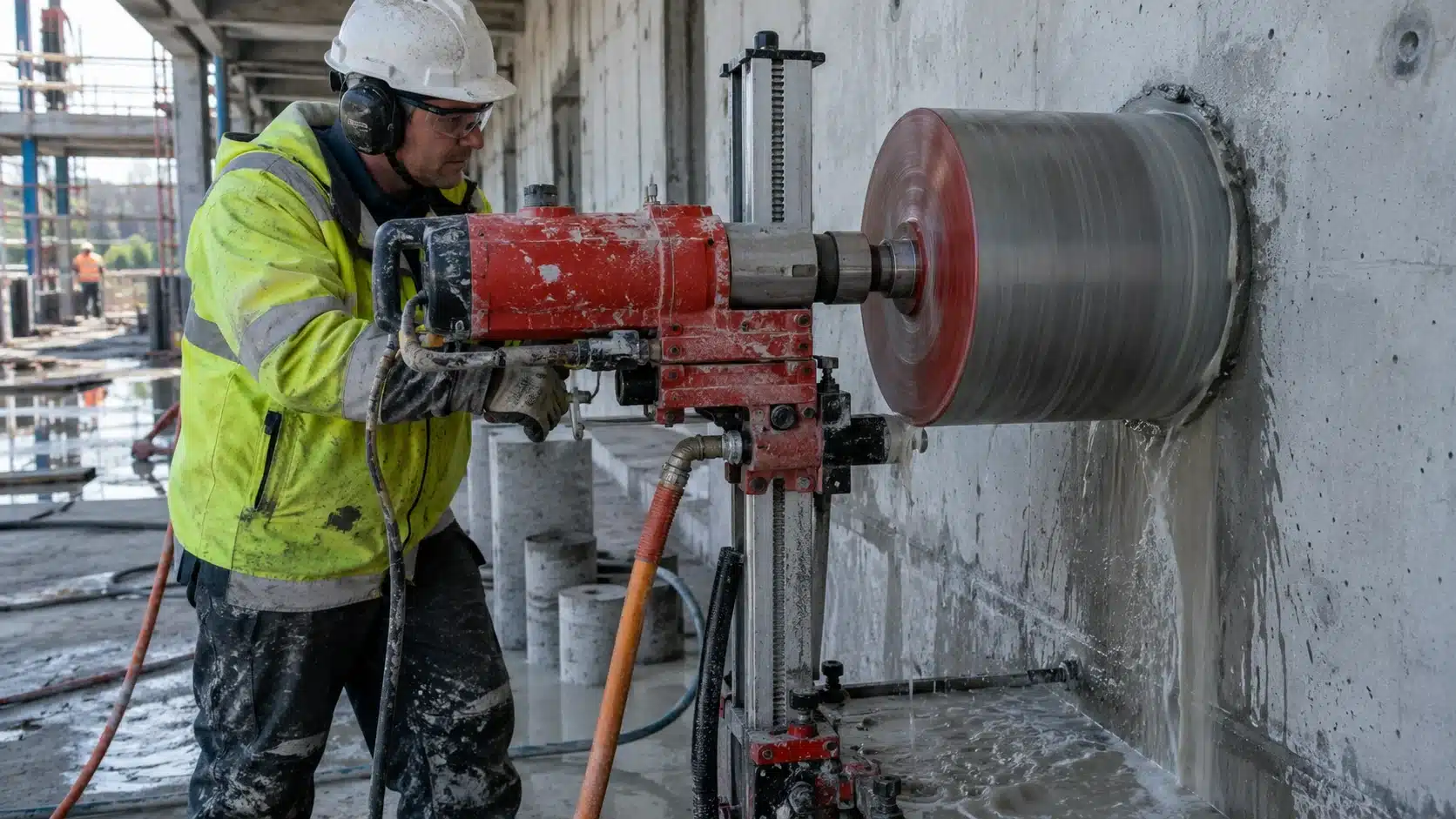
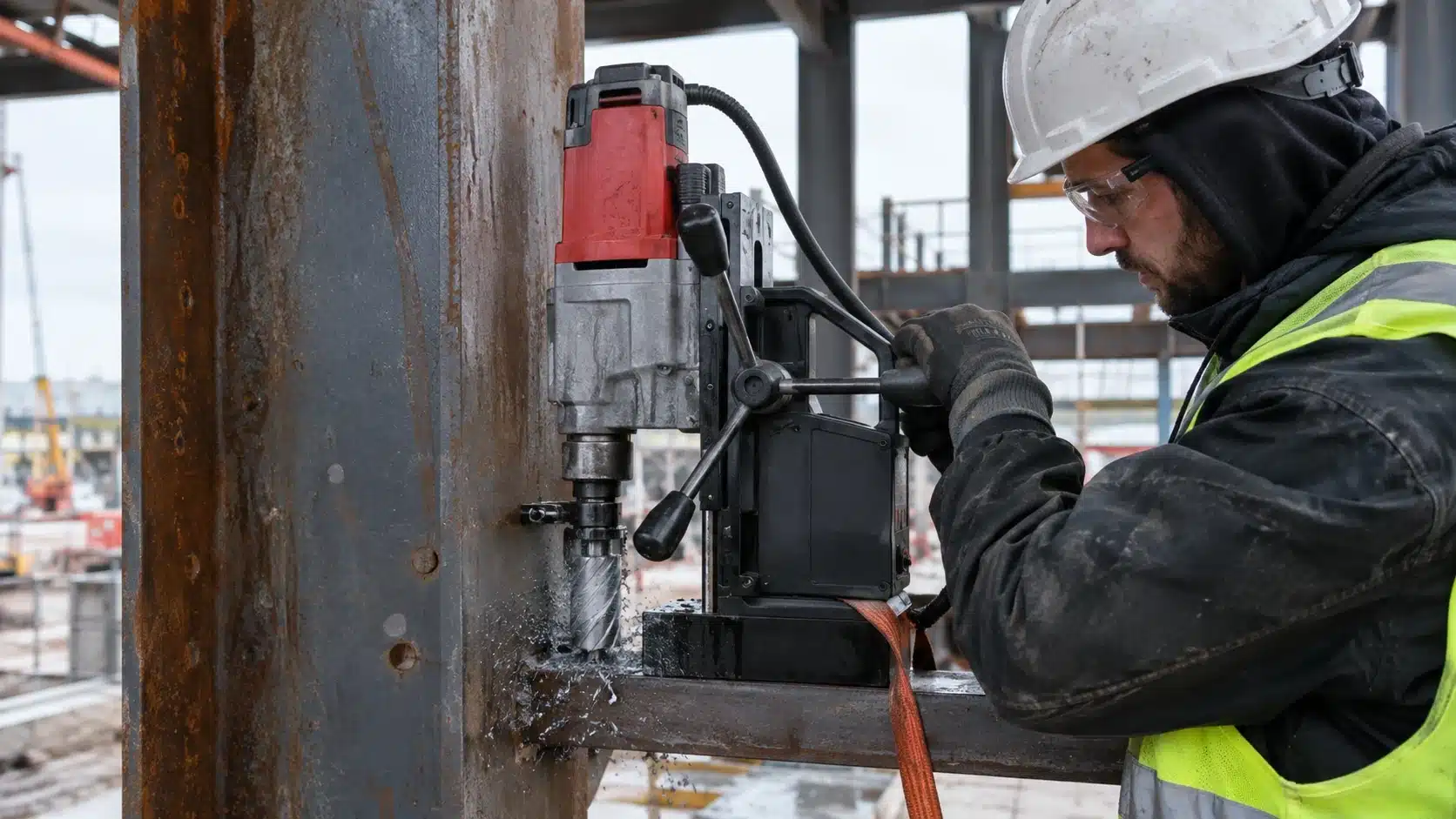
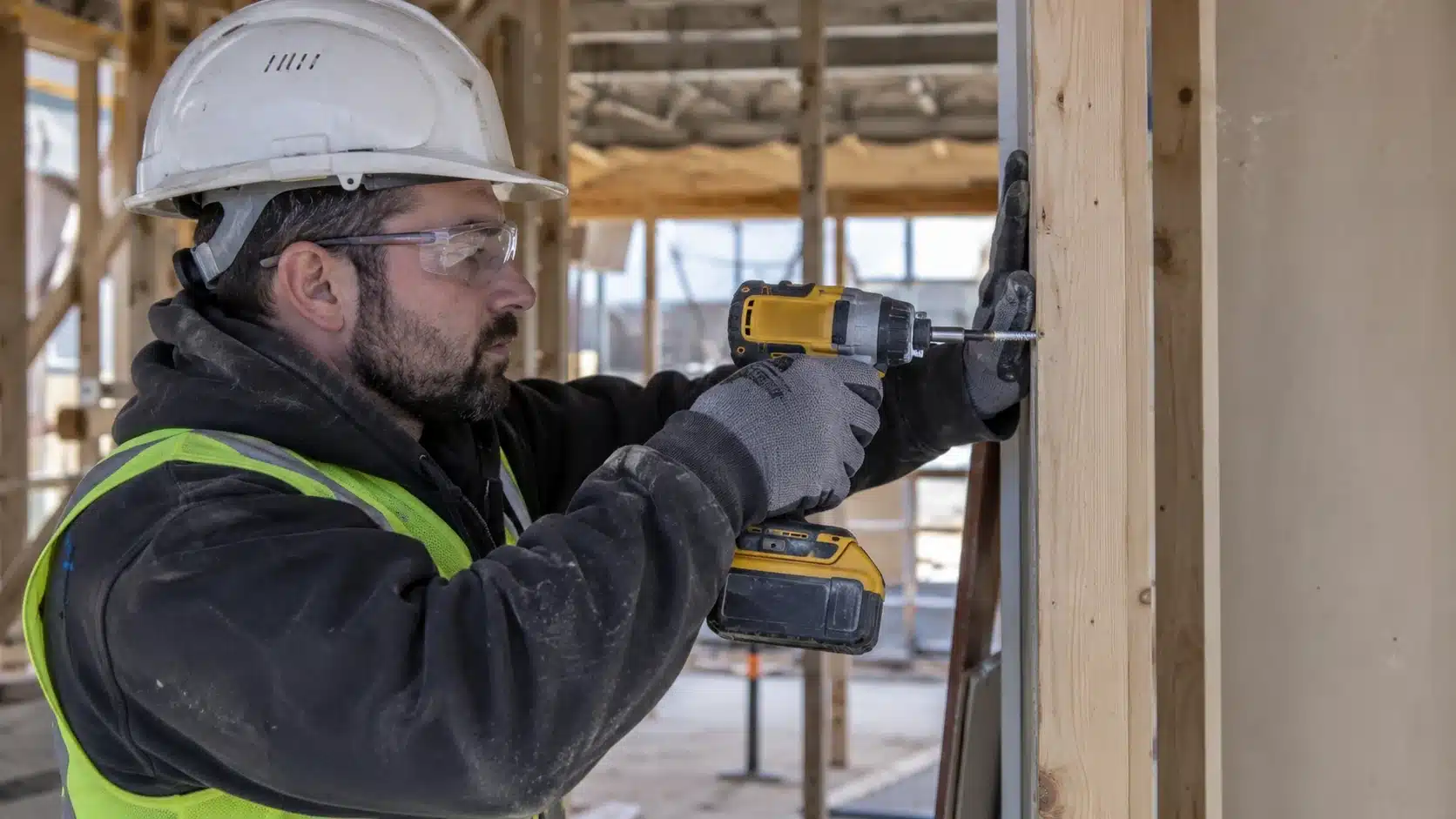
It helps to sort the job into one of three before looking at the Coppard drill range. Fixings and small holes into masonry or concrete are hammer-drill or SDS work. A larger clean opening, a duct or pipe through a wall, is diamond core drilling. Holes into structural steel are magnetic-drill work, the machine clamping itself to the steel with its magnetic base.
Those are not swappable: a masonry hammer drill will not core a clean 100mm hole, and it certainly will not drill steel. Decide which of the three your job is, whether the material is solid or hollow, and whether reinforcement is in the way, and the range narrows itself to a handful of machines rather than the whole list.
The Bore and the Depth Do the Real Sizing
Once the type is settled, the bore and depth size the machine. A 10mm fixing and a 150mm cored duct are worlds apart in the load they put on the drill and the operator, and the Reading Tool Rental Service cores up to 150mm. Depth changes the bit or barrel, complicates clearing the debris, and raises the chance of meeting steel or a service part-way in.
For a run of larger holes, mounting the drill on a rig beats wrestling a hand-held machine through each one. Tell the depot the finished bore and depth, and every different size if the job has several, so the bits, cores and any stand or pump are ready before the machine leaves for your Reading site.
Can the Machine Even Sit Square to the Hole?
The drill has to physically line up with the work, and that is where Reading interiors catch people out. A hole tight into a corner, up under a soffit, inside a cupboard or against a steel frame may leave no room for a standard drill body. A right-angle machine gets into some of those; a core rig needs clear floor or wall to anchor to.
So measure the space around the mark, not just the mark itself, and picture the operator’s stance and where a stand’s feet or vacuum base would go. A drill that is perfect for the material is the wrong hire if there is nowhere to stand it, and finding that out on site loses a half-day.
Know What Is Behind the Surface First
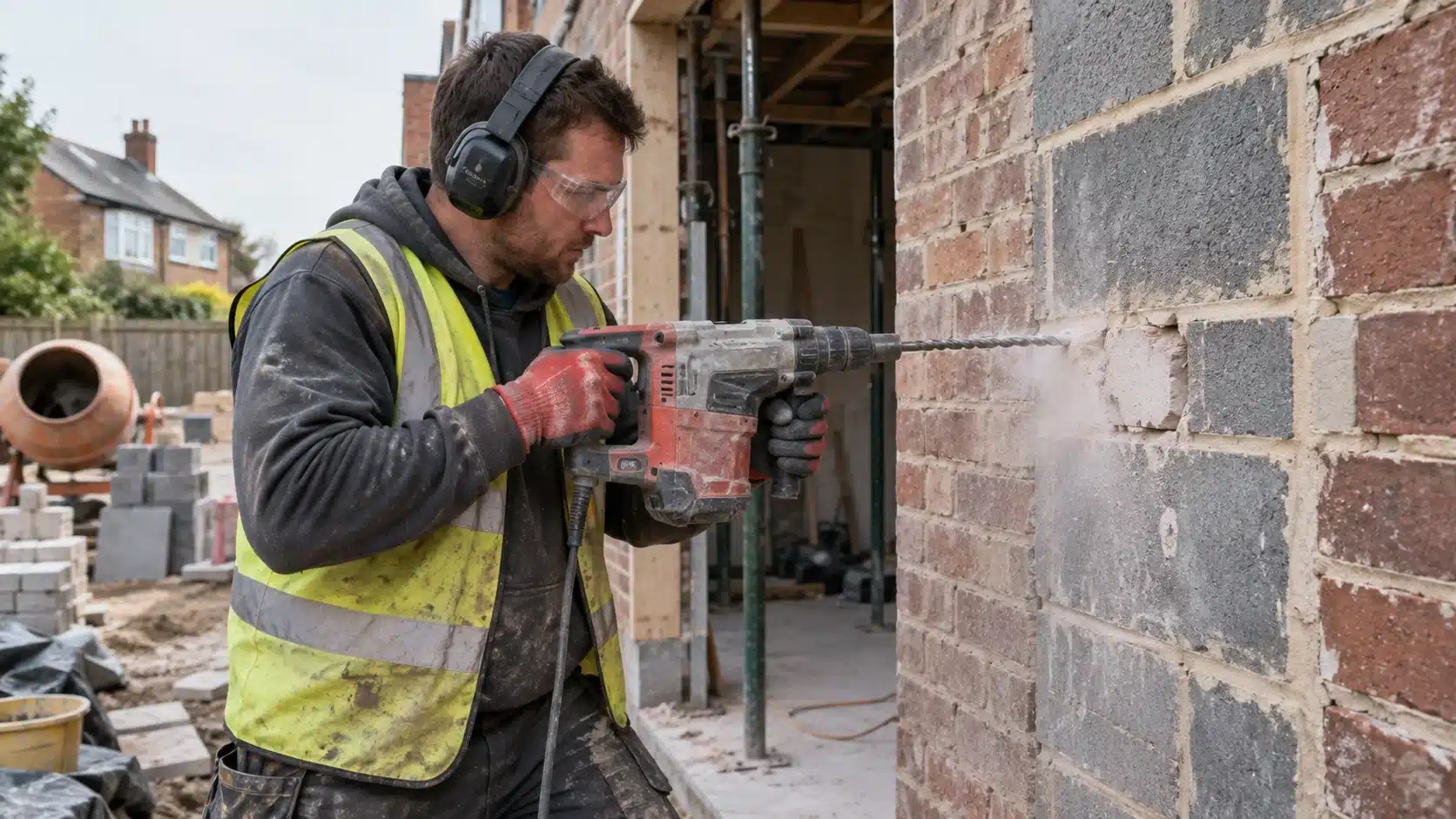
Every hole is a small excavation into the unknown, and in an older Reading building the unknown can include live cables, water and gas, post-tensioning, reinforcement, or simply a room full of people on the far side. Drawings, a cable locator and the site’s own information all help, and anything structural or uncertain wants the right sign-off before a bit turns.
Coring adds water, slurry and a heavy plug of material that has to break out safely on the far face. The depot supplies the drill; the survey and permission are the site’s to complete. The right machine never removes the duty to understand the whole path the hole takes through the wall or floor.






Book the Drill With Everything the Method Needs
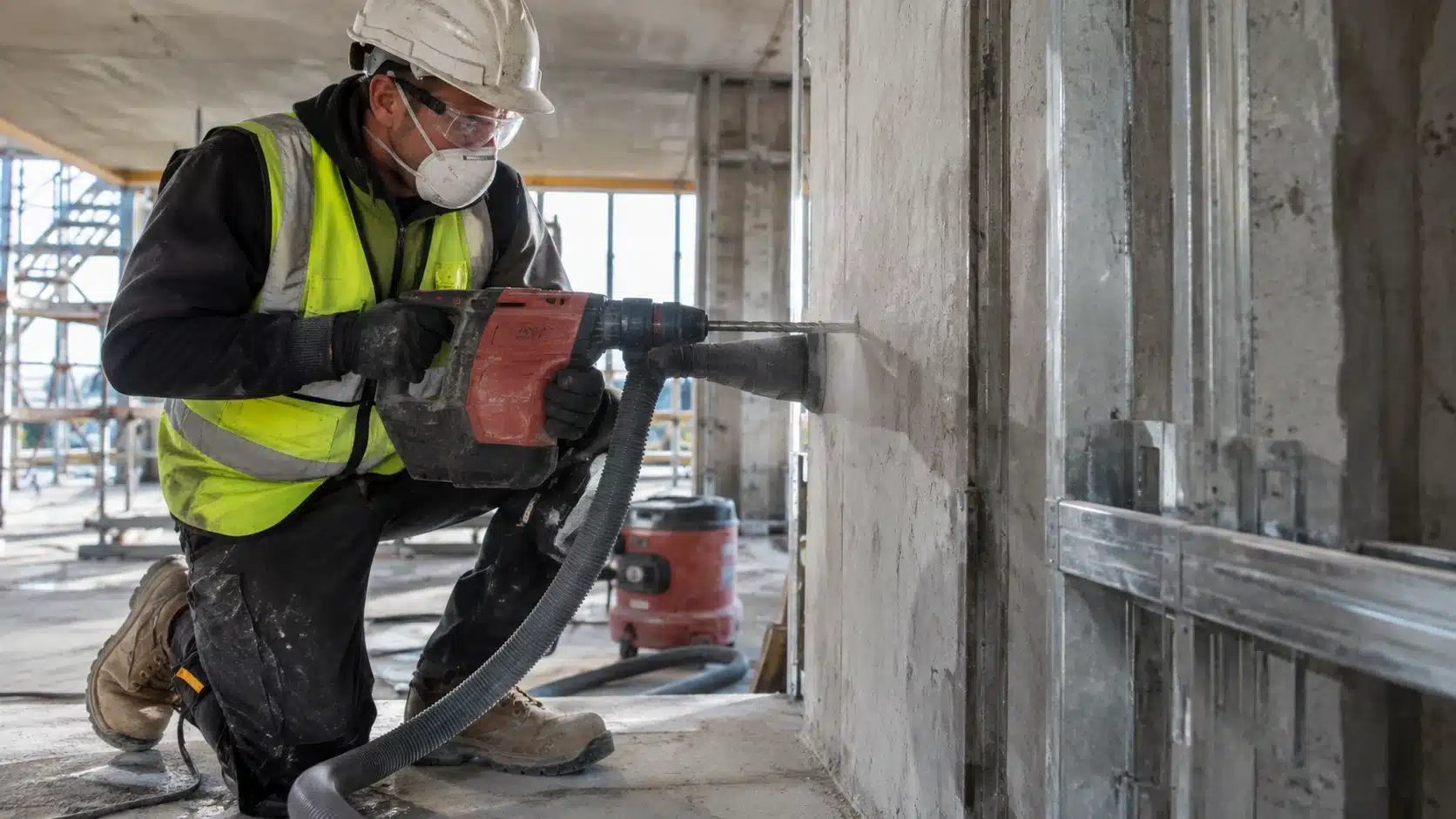
The bare machine rarely finishes the job. Depending on the method you may need specific bits or diamond cores, a stand, a vacuum base or water pump, a transformer and leads, and a way to catch the dust or slurry, and a rig-and-core set-up is really three items working together.
Give the depot the material, the hole sizes, how many there are and which way the drill points. Coppard supplies drilling equipment across Reading and the Thames Valley. Call 0118 979 2828 before the work starts so the drill and its consumables travel together and a missing core or pump does not hold up the first hole.
Frequently Asked Questions - Drill Hire in Reading, Berkshire
Which drill for which job?
Sort it into three. Fixings and small holes in masonry or concrete are hammer-drill or SDS work; a larger clean opening or a service duct through a wall is diamond core drilling; holes in structural steel are for a magnetic drill that clamps to the steel. They are not interchangeable, so give the depot the material, the size of hole you need and its purpose, and the machine is decided by that rather than by which drill has the most power.
How much does hole size and depth change things?
A great deal. A 10mm fixing and a 150mm cored duct load the drill and the operator completely differently, and cores run up to 150mm, so the bore is a key booking figure. Depth changes the bit or barrel, makes clearing debris harder, and raises the odds of meeting reinforcement or a service. Give the finished bore and depth, and every size if there are several, so the correct bits, cores and any stand or pump are ready before the machine arrives.
What if there is no room to line the drill up?
That is common in Reading interiors. A hole tight in a corner, under a soffit, in a cupboard or against a steel frame can leave no space for a standard drill body. A right-angle machine reaches some of those; a core rig needs clear floor or wall to anchor to. Measure the space around the mark, not just the mark, and picture the operator’s stance and any stand base, because a drill right for the material is wrong if there is nowhere to stand it.
What has to be checked before drilling a wall or floor?
What is behind or inside it: cables, water and gas, post-tensioning, reinforcement or an occupied room beyond, any of which can move the hole or change the method. Use drawings, a cable locator and the site information, and get proper sign-off for anything structural or uncertain. Coring also brings water, slurry and a heavy plug breaking out the far side. The drill is supplied by the depot; the survey and permission are the site’s to complete before any hole is started.
What UK rules cover powered drilling at work?
Drilling machines are work equipment, so PUWER, the Provision and Use of Work Equipment Regulations 1998, applies: the equipment must be right for the task, maintained, and in the hands of someone properly instructed. The regulations are at Provision and Use of Work Equipment Regulations 1998 on legislation.gov.uk. In practice, pick the machine and the consumable for the material, look after both, and work to the instructions that come with the particular drill you are given.
Need drill hire in Reading?
Give us the material, the bore and depth, the working position and the number of holes. Call Coppard on 0118 979 2828.