Load Mover Hire in Melksham, Wiltshire
Load mover hire in Melksham for repositioning production and processing equipment in food and light-industrial units across Wiltshire. Coppard supplies multidirectional skates, rollers and a pallet truck across the area. Call 01380 828988 with the equipment weight, the floor and the time window you have to work in.
Moving a piece of production or processing plant in a working Wiltshire food or light-industrial unit usually has to happen in a defined downtime window, without damaging a hygiene-grade floor finish or holding up the line either side of it. That combination, a hard time limit and a floor that has to stay pristine, is a different pressure from an ordinary workshop move.
A Hygiene Floor Changes What You Can Put On It
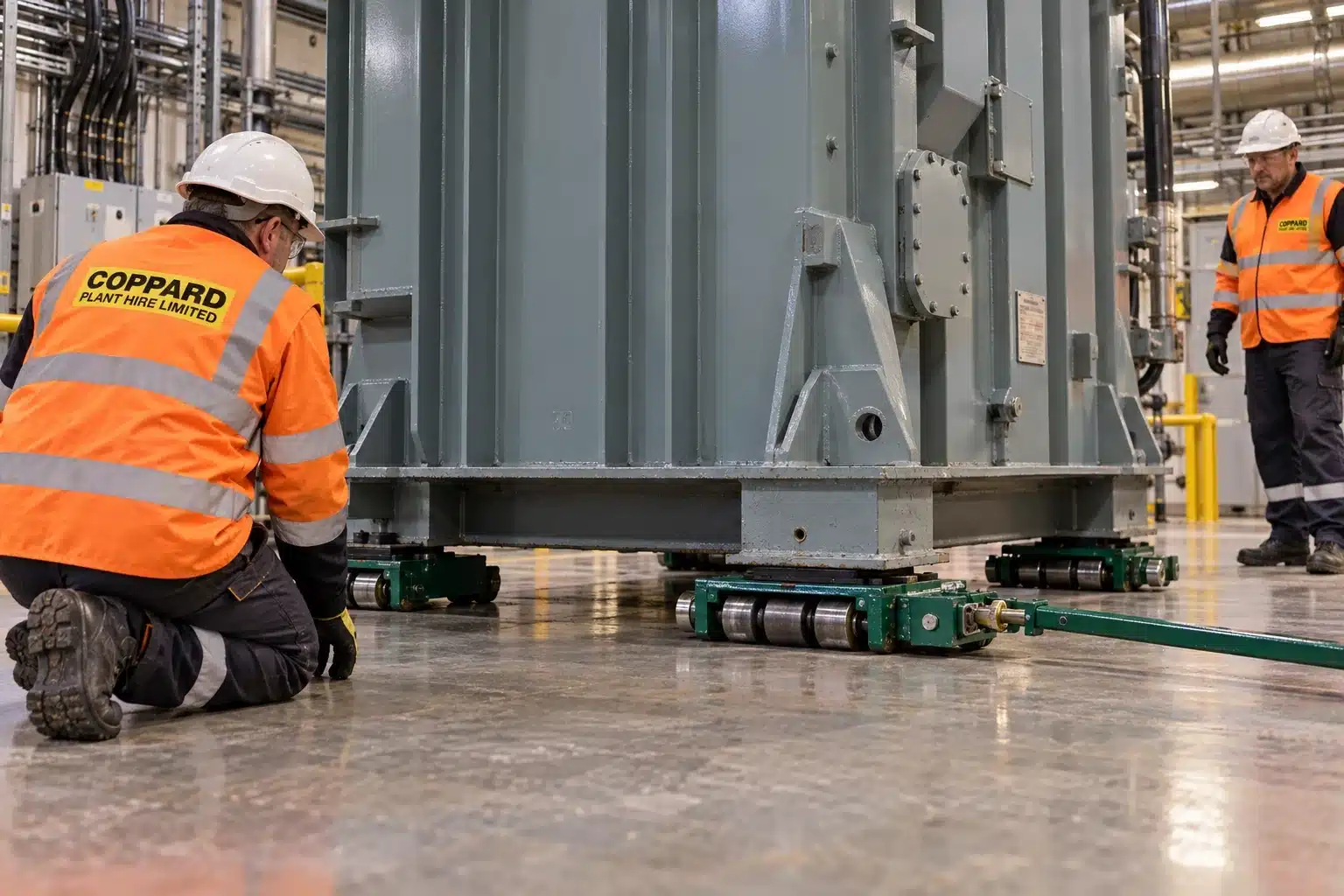
A sealed or hygiene-grade floor common in food processing has to survive the move without scoring, denting or contaminating the finish, and that rules out anything that might mark or leave residue on a surface designed for washdown and food safety. Check the floor specification before assuming standard skates and rollers are appropriate for the exact surface.
Where the floor is drained, sloped for washdown, or coated in a specific way, the wheels and the contact points of the moving equipment need to suit that surface, not just carry the weight, through the Melksham Tool Rental Service. A scratch or a mark that would be cosmetic in a warehouse can be a real problem on a floor that has to pass hygiene inspection.
Plan Around a Fixed Downtime Window
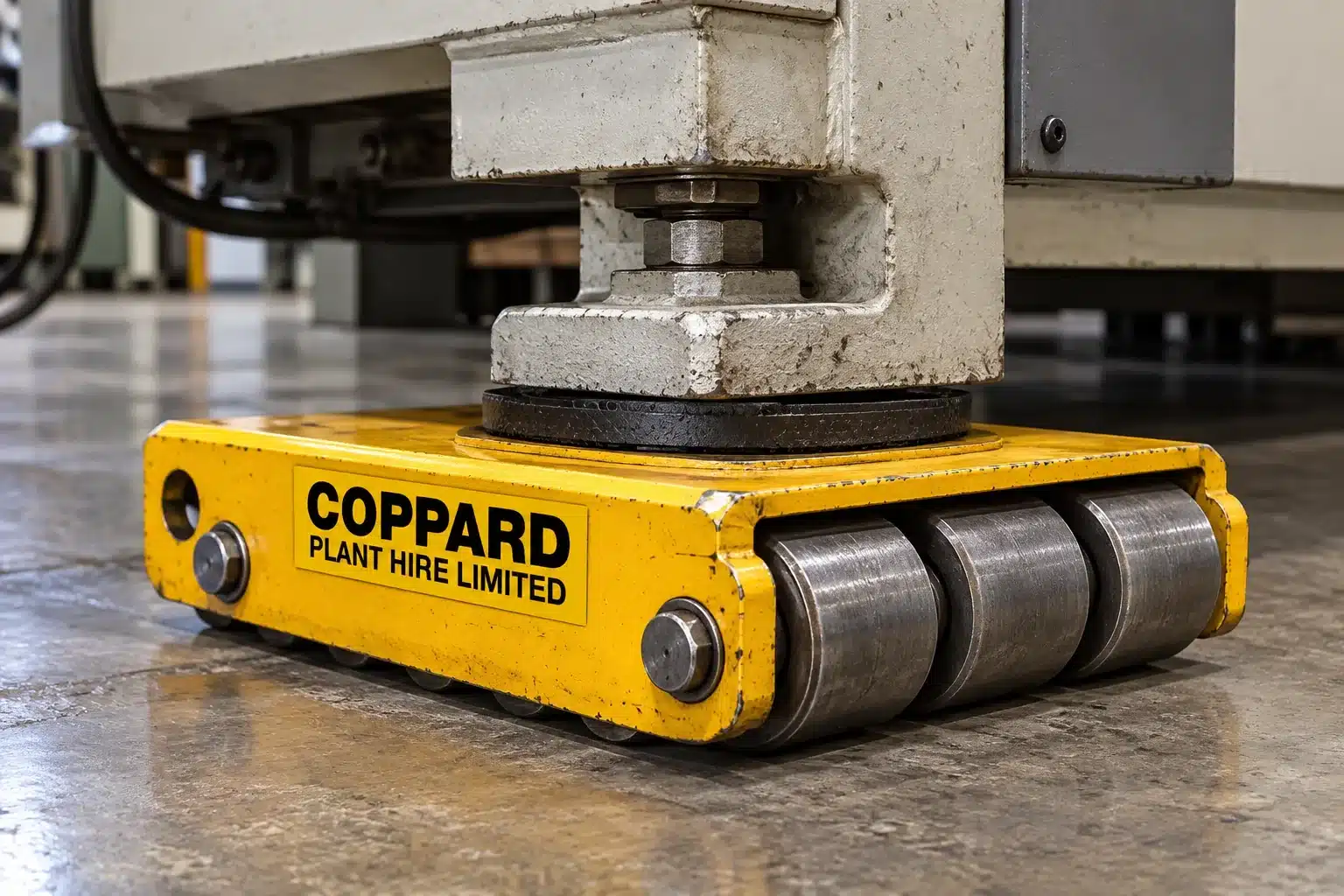
Production and processing equipment often can only be moved during a scheduled downtime, a maintenance shutdown, overnight, or a defined gap in the production schedule, which puts real time pressure on the move that a workshop job rarely has. Everything, the jacking, the transfer onto the movers, the travel and the set-down, has to fit inside that window with margin for something going wrong.
Plan the whole sequence and rehearse it mentally before the window opens, since there is no simply picking up again the next day if the line needs to restart. The Coppard load mover range can confirm the right multidirectional skates, rollers or pallet truck for the equipment, but the time pressure is what should shape the whole plan, not just the machine choice.
Find the True Weight Distribution on Processing Equipment
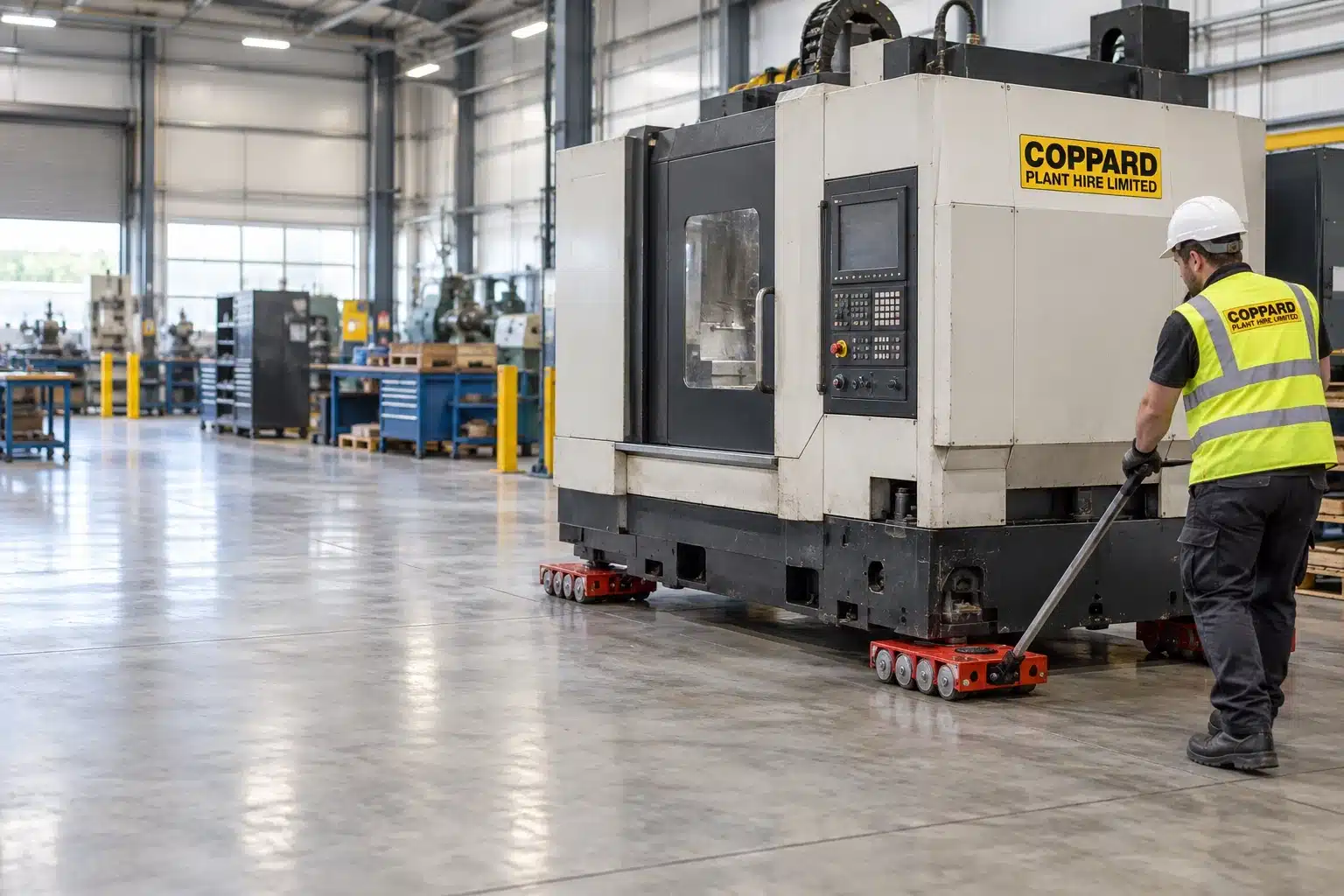
Food and processing machinery often has heavy motors, tanks, hoppers or drive components concentrated at one end, quite unlike the more even weight of general workshop plant, so the true centre of gravity needs establishing properly before anything is jacked. Use the maker’s lifting points where marked, and do not guess from the equipment’s outward shape.
A machine that looks symmetrical can still be heavily weighted to one side once tanks, motors or product residue inside it are accounted for. Get this wrong and the load can tip during a transfer that has to happen fast inside a tight downtime window, which is a worse outcome here than on a slower workshop move with time to recover.
Coordinate With Production and Hygiene Teams
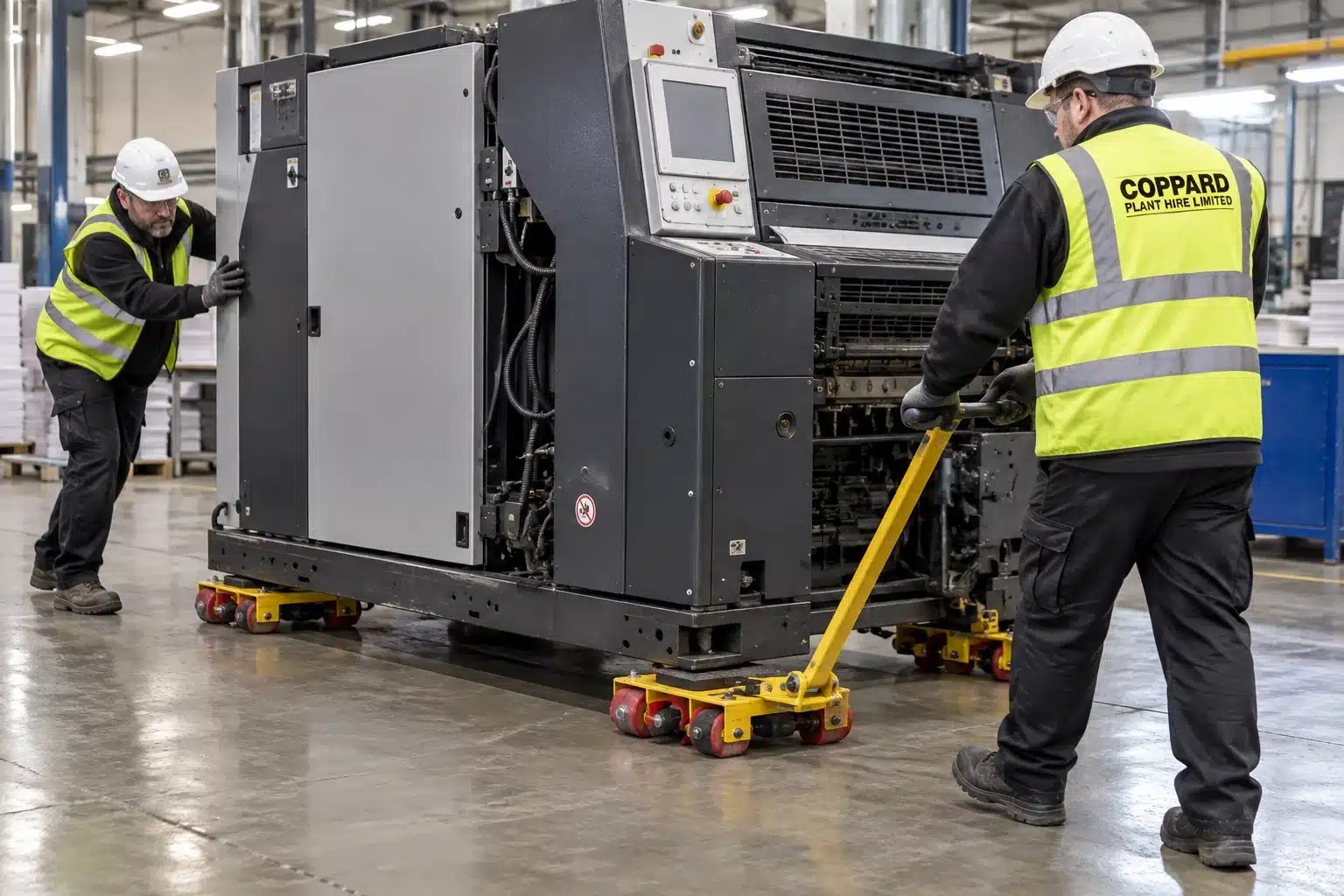
A move inside a working food or processing unit usually needs sign-off from more than just the maintenance team; hygiene, quality and production scheduling may all have a stake in when and how the move happens. Confirm early who needs to approve the move and the floor protection method, rather than assuming a straightforward mechanical job needs no wider coordination.
Plan any temporary floor protection, mats or covers, that itself needs to meet hygiene requirements and be fully removed afterwards, leaving nothing behind that could contaminate a food-grade area once production resumes.





Tell the Melksham Depot the Equipment and the Window
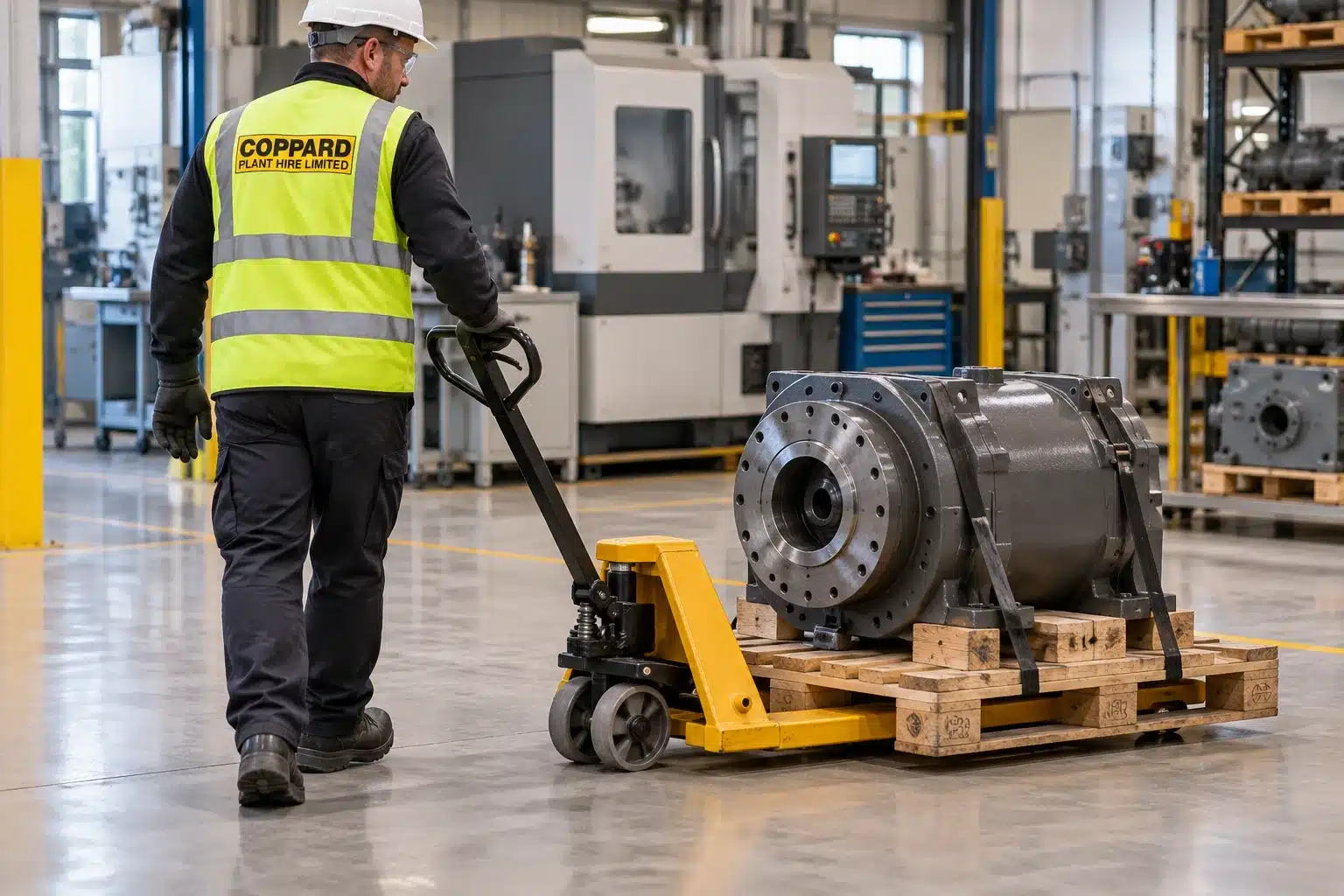
Give the equipment weight and dimensions, the true weight distribution if known, the floor type and any hygiene requirements, and the length and timing of the downtime window available. Say whether the route crosses production, storage or hygiene-controlled areas.
Coppard supplies load movers for work across Melksham and the wider Wiltshire area. Call 01380 828988 well before the planned move, so the equipment, the floor protection and the sequence are all ready before the downtime window opens rather than sorted out once the clock has started.
Frequently Asked Questions - Load Mover Hire in Melksham, Wiltshire
Will standard skates mark a hygiene-grade floor?
They can, if not matched to the surface, so check the floor specification first. A sealed or hygiene-grade floor common in food processing has to survive the move without scoring, denting or contaminating the finish, which rules out anything that might mark or leave residue. Where the floor is drained, sloped or specially coated for washdown, confirm the wheels and contact points suit that exact surface before booking, not just that they carry the weight.
How do I plan a move that has to fit a fixed downtime window?
Plan the whole sequence in advance and build in margin, since production equipment often can only move during a scheduled shutdown or overnight gap with no simply picking up again the next day. Cover the jacking, the transfer onto the movers, the travel and the set-down as one timed sequence rather than separate steps, and rehearse it mentally before the window opens so nothing is worked out for the first time under time pressure.
Why does processing equipment need extra care with weight distribution?
Because motors, tanks, hoppers or drive components are often concentrated at one end, unlike the more even weight of general workshop plant, and a machine that looks symmetrical can still be heavily weighted to one side once contents or components are accounted for. Use the maker’s marked lifting points rather than guessing from the outward shape, since getting this wrong risks a tip during a transfer that has to happen fast inside a tight window.
Who needs to sign off a move in a working food unit?
More people than just maintenance, usually. Hygiene, quality and production scheduling teams may all have a stake in when and how the move happens, so confirm early who needs to approve it and the floor protection method rather than assuming a mechanical move needs no wider coordination. Any temporary floor protection also needs to meet hygiene requirements and be fully removed afterwards before production resumes.
What UK rules cover moving heavy loads by these means?
The Manual Handling Operations Regulations 1992 require employers, so far as reasonably practicable, to avoid hazardous manual handling and otherwise to assess and cut the risk of injury. The text is at Manual Handling Operations Regulations 1992 on legislation.gov.uk. In a food or processing environment that assessment also has to account for the hygiene and downtime constraints shaping how safely the move can actually be carried out.
Need load mover hire in Melksham?
Tell us the equipment weight, the floor type, and the downtime window you have. Call Coppard on 01380 828988.