Block and Tackle Hire in Melksham, Wiltshire
Block and tackle hire in Melksham for lifting motors, gearboxes and drive components on production equipment, in confined plant rooms and machine enclosures where a crane cannot manoeuvre. Coppard supplies manual chain lifting gear across Wiltshire. Call 01380 828988 with the component weight, the enclosure dimensions and the lifting point available.
A modern Wiltshire manufacturing building usually has a rated structural steel frame, so the anchor point itself is rarely the uncertainty a hand hoist faces here. The real constraint is fitting the hoist and the operator into a confined machine enclosure or plant room to lift a motor, gearbox or drive component out from equipment that was never designed with a maintenance lift in mind.
The Steel Frame Is Rated; the Space Around It Is Not Generous
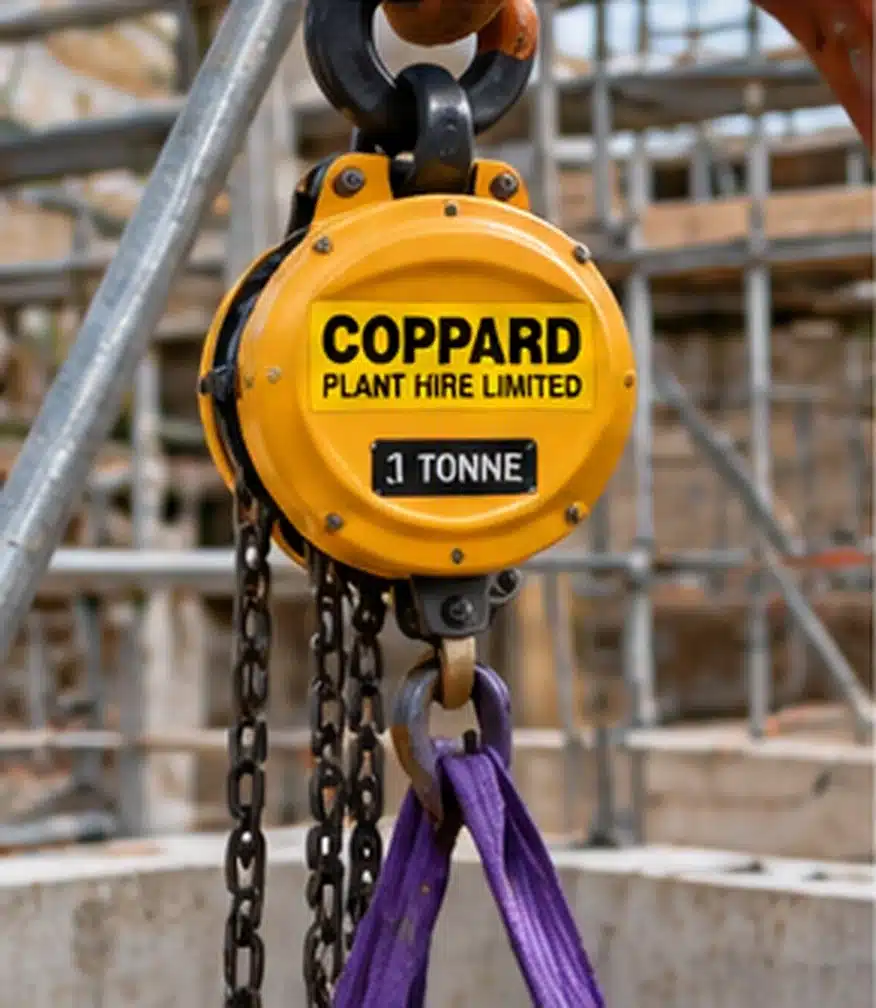
A structural steel building typically offers genuine rated lifting points, purpose-fitted beams or eyes, unlike an old barn or a domestic loft where the anchor itself is the question. Here the challenge shifts to whether a hoist and an operator can actually fit into the space around the component being lifted, inside a machine enclosure, beneath low pipework, between adjacent equipment.
Through the Melksham Tool Rental Service, measure the actual clear space around the lift, not just the lifting point’s rated capacity, since a perfectly good rated beam is no use if there is no room to hang the hoist and operate it without the chain or the operator fouling on surrounding plant.
Lifting a Component Out of Its Own Machine
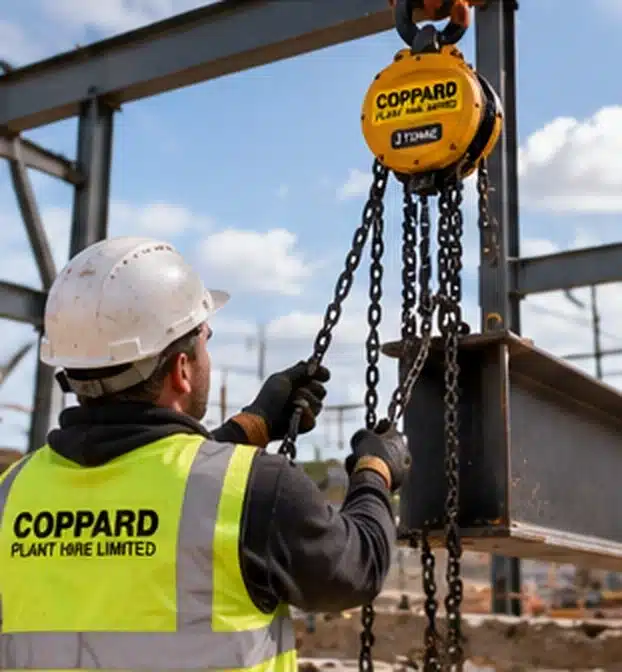
Removing a motor or gearbox from production equipment often means lifting it up and out through a specific access point built into the machine itself, a hatch, a removable guard, a defined lift path the manufacturer intended, rather than a free vertical lift in open space. Follow the equipment manufacturer’s specified removal method and lift path where one exists.
Where the component has to travel at an angle or around an obstruction to clear the machine housing, plan that geometry carefully, since a chain block pulled off true vertical puts sideways load on gear rated for a straight pull, and confined machine access often makes an angled lift harder to avoid entirely.
Weight, Headroom and the Access Route Together
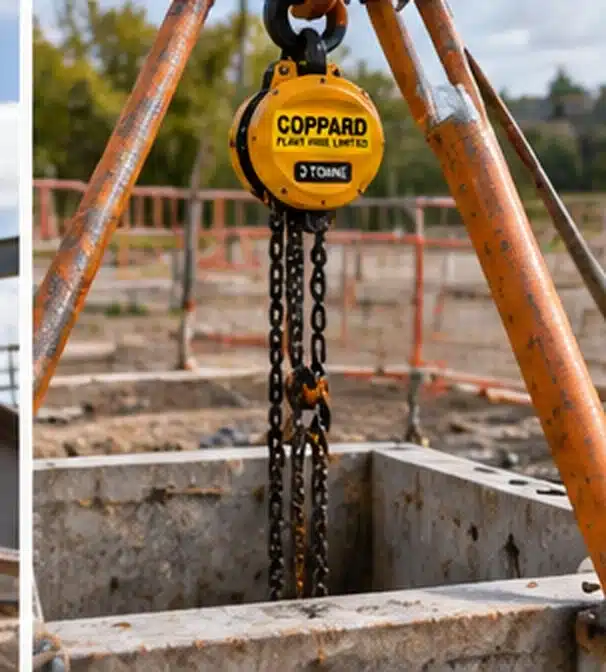
Get the component’s actual weight from the manufacturer’s documentation rather than estimating, since motors and gearboxes vary considerably even in similar-looking housings, and confirm the headroom between the rated point and the component, plus the route the component travels once lifted clear, out of the enclosure, onto a trolley, through a doorway.
The Coppard block and tackle collection can match a suitable hoist once the weight, the headroom and the access route are all known together, since a hoist correctly rated for the weight is still the wrong choice if its chain length does not suit the headroom or the lifted component cannot then be moved out through the available route.
Coordinate the Lift With Production Downtime
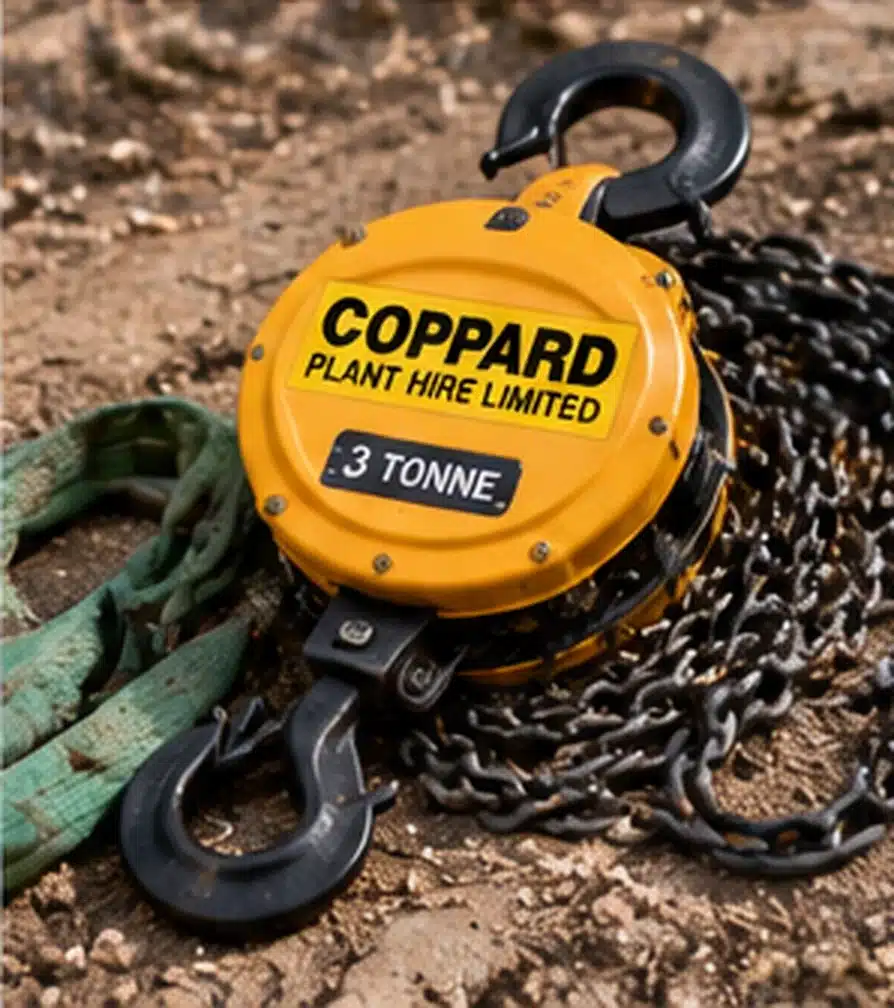
Removing or installing a major component on production equipment usually happens during scheduled maintenance downtime, so plan the lift itself, and any awkward manoeuvring the confined space requires, against that fixed window rather than an open-ended timescale. A lift that takes longer than expected in a tight enclosure eats directly into time the line needs back in production.
Rehearse the sequence, how the hoist goes up, how the component is guided out, where it lands, before the maintenance window opens, since working out the geometry for the first time under downtime pressure in a confined space is where problems occur.

Tell the Melksham Depot the Component and the Enclosure
Give the component weight from the manufacturer’s data, the enclosure or plant room dimensions, the lifting point available, and the intended access route once the component is lifted clear. Say whether the lift has to happen within a maintenance downtime window.
Coppard supplies manual lifting gear for work across Melksham and the wider Wiltshire area. Call 01380 828988 with the confined-space dimensions described, so the hoist chosen actually fits and operates within the enclosure rather than being sized on weight alone.
Frequently Asked Questions - Block and Tackle Hire in Melksham, Wiltshire
Is the anchor point usually rated in a modern manufacturing building?
Often, yes, since a structural steel building typically has genuine rated lifting points already built in, purpose-fitted beams or eyes, unlike an old barn or domestic loft where the anchor itself is uncertain. The real challenge here usually shifts to whether a hoist and an operator can actually fit into the confined space around the component being lifted, not whether a suitable rated point exists at all.
How do I lift a motor or gearbox out of a confined machine enclosure?
Follow the equipment manufacturer’s specified removal method and lift path where one exists, since components are often designed to come out through a specific access point, a hatch, a removable guard, rather than a free vertical lift. Where the component has to travel at an angle to clear the housing, plan that geometry carefully, since pulling a chain block off true vertical puts sideways load on gear rated for a straight pull.
Where do I get the correct weight for a component like a motor or gearbox?
From the manufacturer’s documentation rather than estimating, since motors and gearboxes vary considerably in weight even within similar-looking housings. Confirm the headroom between the rated lifting point and the component, and the route it will travel once lifted clear, out of the enclosure, onto a trolley, through a doorway, so the depot can match a hoist that suits the whole picture, not just the bare weight.
How do I plan a lift that has to happen during a maintenance window?
Rehearse the sequence beforehand, how the hoist goes up, how the component is guided out, where it lands, since working out the geometry for the first time under downtime pressure in a confined Melksham plant room is where problems occur. Plan the lift against the fixed maintenance window rather than an open-ended timescale, since a lift that takes longer than expected eats directly into time the production line needs back.
What UK rules cover lifting equipment at work?
The Lifting Operations and Lifting Equipment Regulations 1998, known as LOLER, set the duties for lifting gear and lifting operations at work, covering suitability, marking of the safe working load and regular thorough examination. The text is at LOLER 1998 legislation on legislation.gov.uk. In a confined plant room this also means confirming the space allows the equipment to be used as intended, not just that the anchor point is rated.
Need block and tackle hire in Melksham?
Tell us the component weight, the enclosure dimensions and the lifting point. Call Coppard on 01380 828988.