Winch Hire in Godstone, Surrey
Winch hire in Godstone for hauling, recovering and holding loads along a controlled line. Coppard supplies cable, manual and 110V electric winches across Surrey. Call 01883 743322 with what you are anchoring to, the load, the direction and the distance.
Most winch jobs are won or lost at the anchor, not the drum. A machine rated well above the load is no safer than the point it is fixed to, and on the wooded, sloping ground around Godstone a sound anchor is not always where you want it. So the sensible order is to find what will hold the reaction first, then size the pull to it.
Find the Anchor Before You Choose the Winch
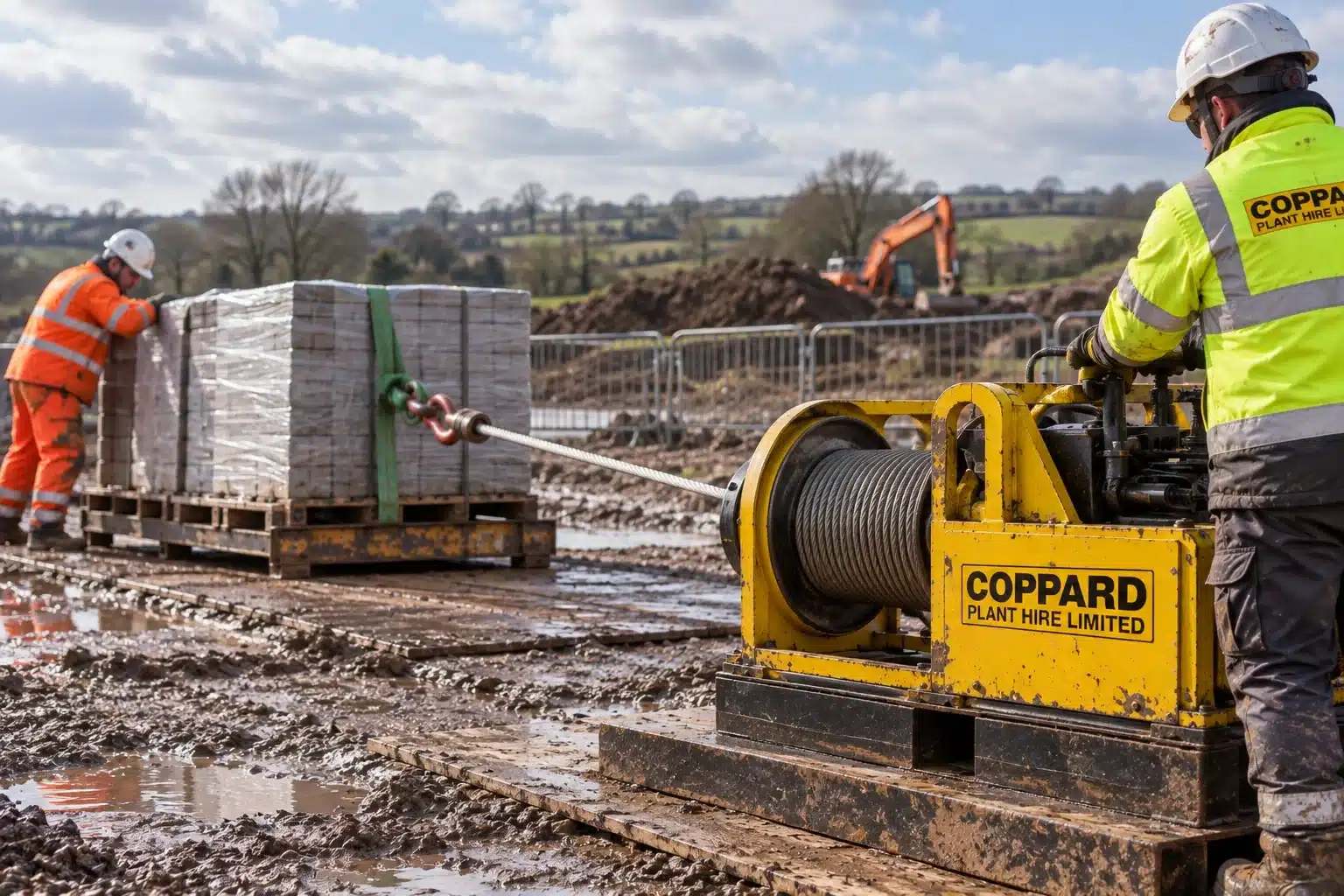
Everything a winch does depends on what resists it. The point it is fixed to has to take the full reaction without moving, bending or pulling out, and if it fails the energy stored in a loaded line is released in an instant. A post, a light vehicle or an untested fitting is not that point. So the first question on a Godstone job is what genuinely rated structure or fixing is available where you need to pull from.
On the sloping, tree-lined plots around the North Downs the obvious anchor is often in the wrong place, which changes the line of the pull and may bring a pulley into it. Work that out with the Godstone Tool Rental Service before sizing anything, because a winch chosen before the anchor is a winch chosen blind.
Cable, Manual and Electric Are Three Different Tools
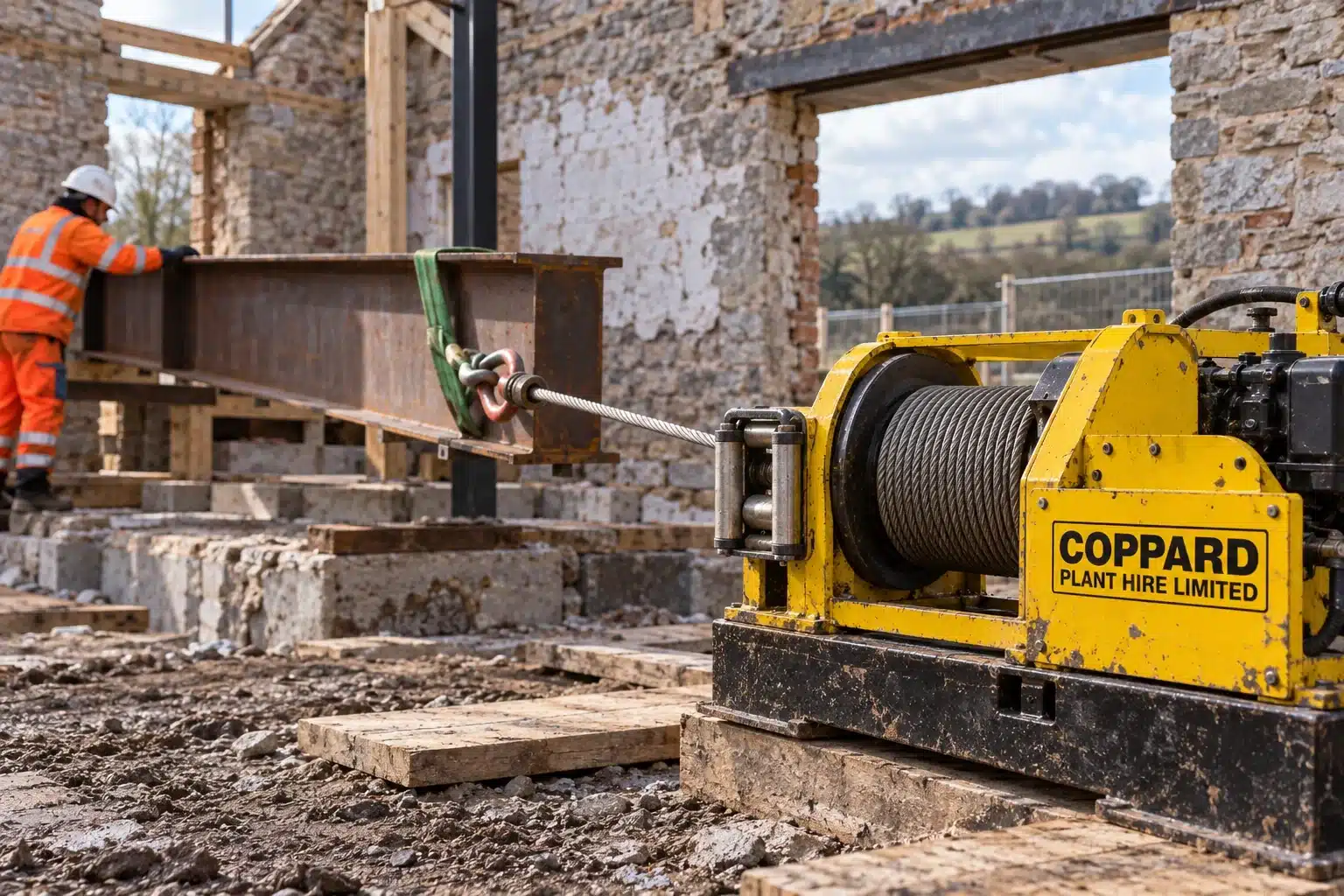
The Coppard winch range spans a heavy cable winch, manual units and a 110V electric winch supplied with rope and a stated safe load. They are not simply small, medium and large. The cable winch is for the heavier hauls and recoveries; a manual unit gives inch-by-inch control with nothing to power it, which suits a remote Surrey plot; the electric one removes the labour where a supply is at hand and the same pull repeats.
Each shapes the work around it. A manual winch wants a firm footing and a clear run; the electric one wants its feed and lead planned across the ground. Pick by how the pull is made and how often, since a tool that is right for a single heavy recovery is wrong for a long day of repeated positioning.
Gradient and Friction Set the Real Force
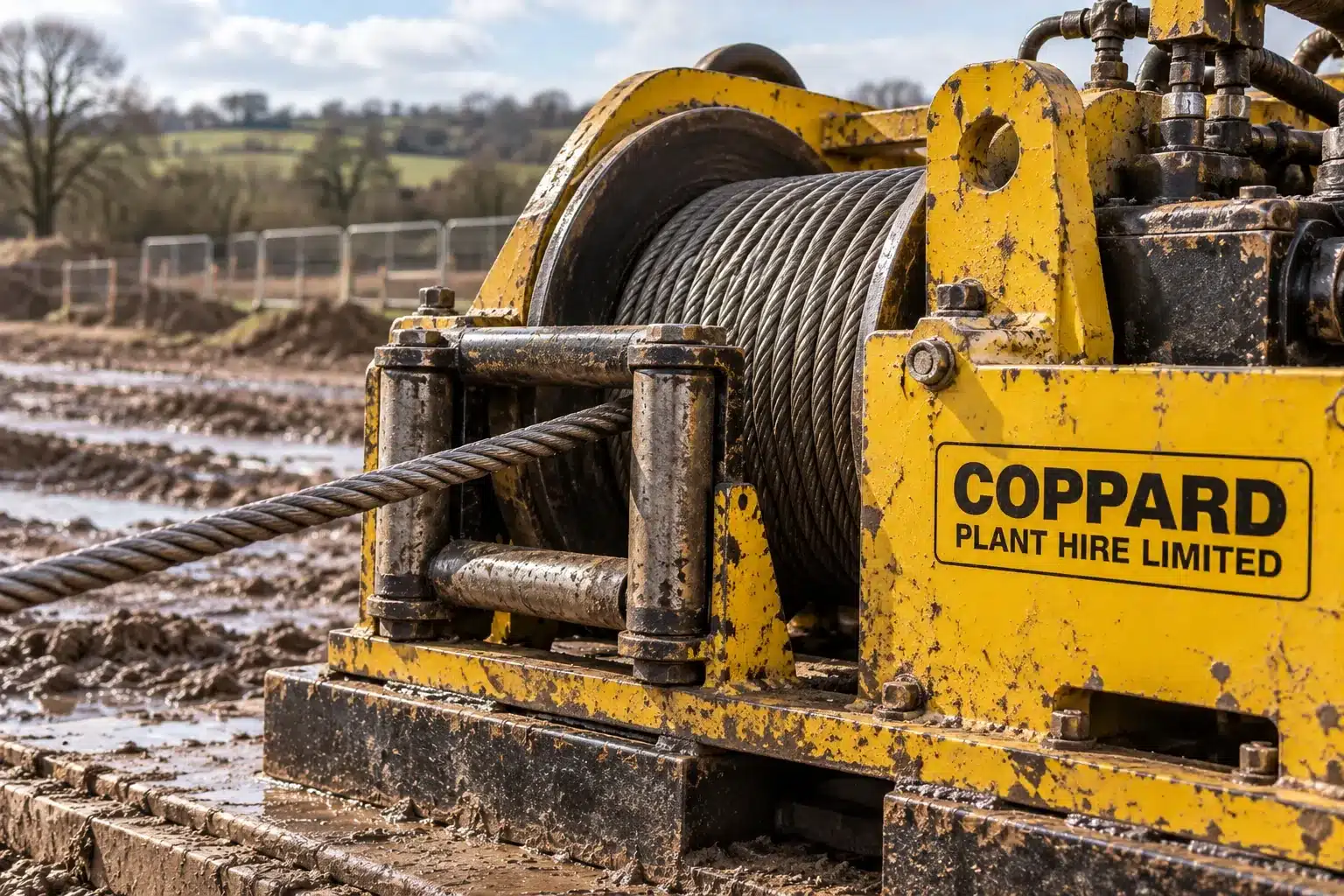
The load’s weight is only the starting figure. Friction against the ground, the gradient it is dragged up or eased down, whether it is dug in, and any snatch as it breaks free all push the true force well above the bare mass. Around Godstone that gradient is often the deciding factor, a modest weight on a wet bank can demand far more than a heavier load on the level.
Give the depot the weight and the ground together, and let them match a unit with a sensible working margin rather than one sized to the mass alone. A winch running at its limit on a slope leaves nothing in hand if the load shifts or the surface gives, which is exactly when the margin earns its place.
Redirect the Line Only With Rated Gear
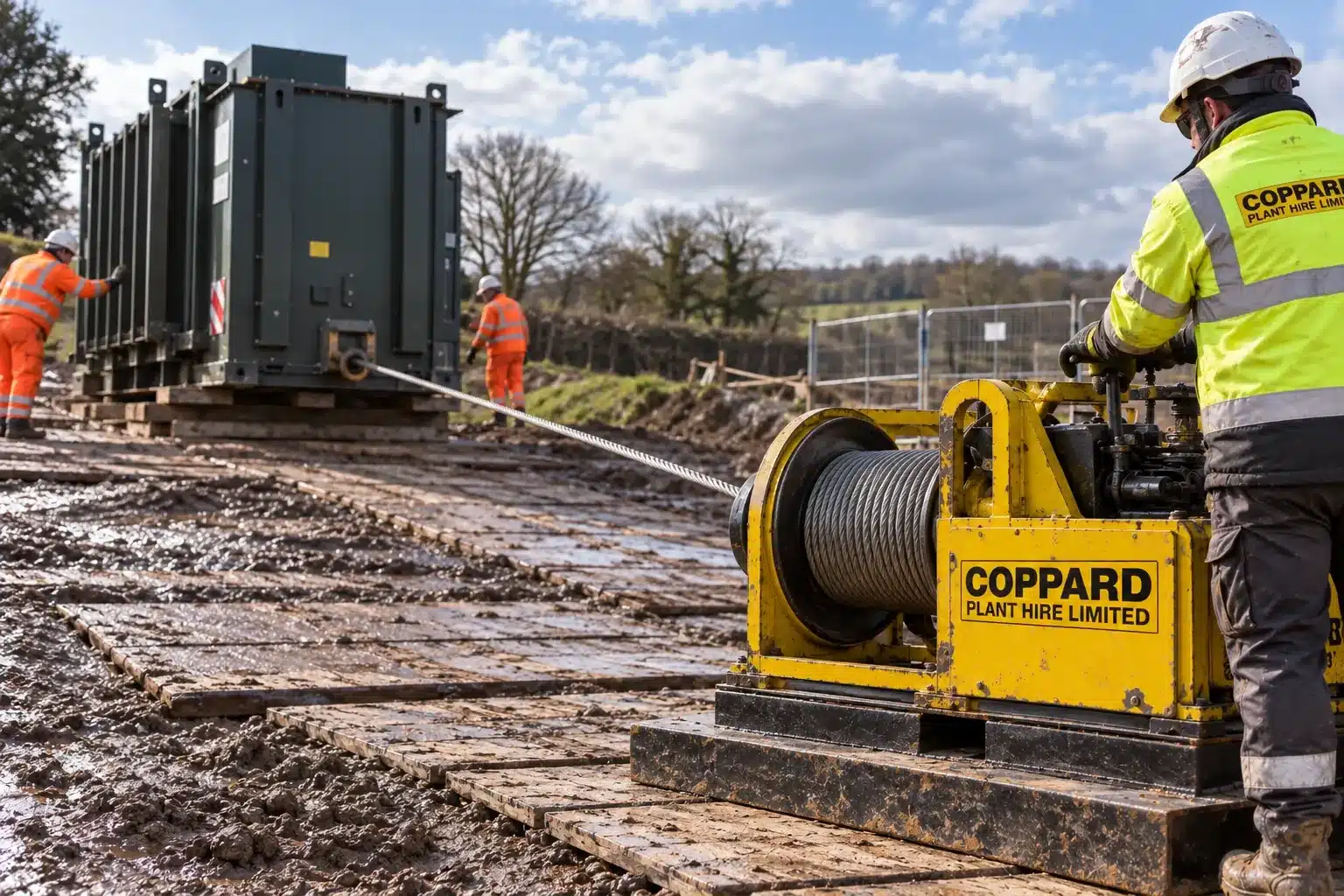
When the anchor and the load do not sit on a straight line, a pulley can turn the pull, but it changes the forces at the pulley and its own anchor, sometimes greatly, so every part in that redirect has to be rated for it. An improvised block or a convenient tree limb is not a rated point. Keep people out of the angle of a loaded line, because that is where a failure sends the load or the cable.
Plan the geometry before tension goes on: where the winch stands, where the line turns, and what each anchor carries. For an awkward Godstone pull with a change of direction, or a heavy roadside recovery near the A22, get competent advice through the Coppard winch range rather than working the angles out as you go.





Tell the Godstone Depot the Anchor, the Load and the Line
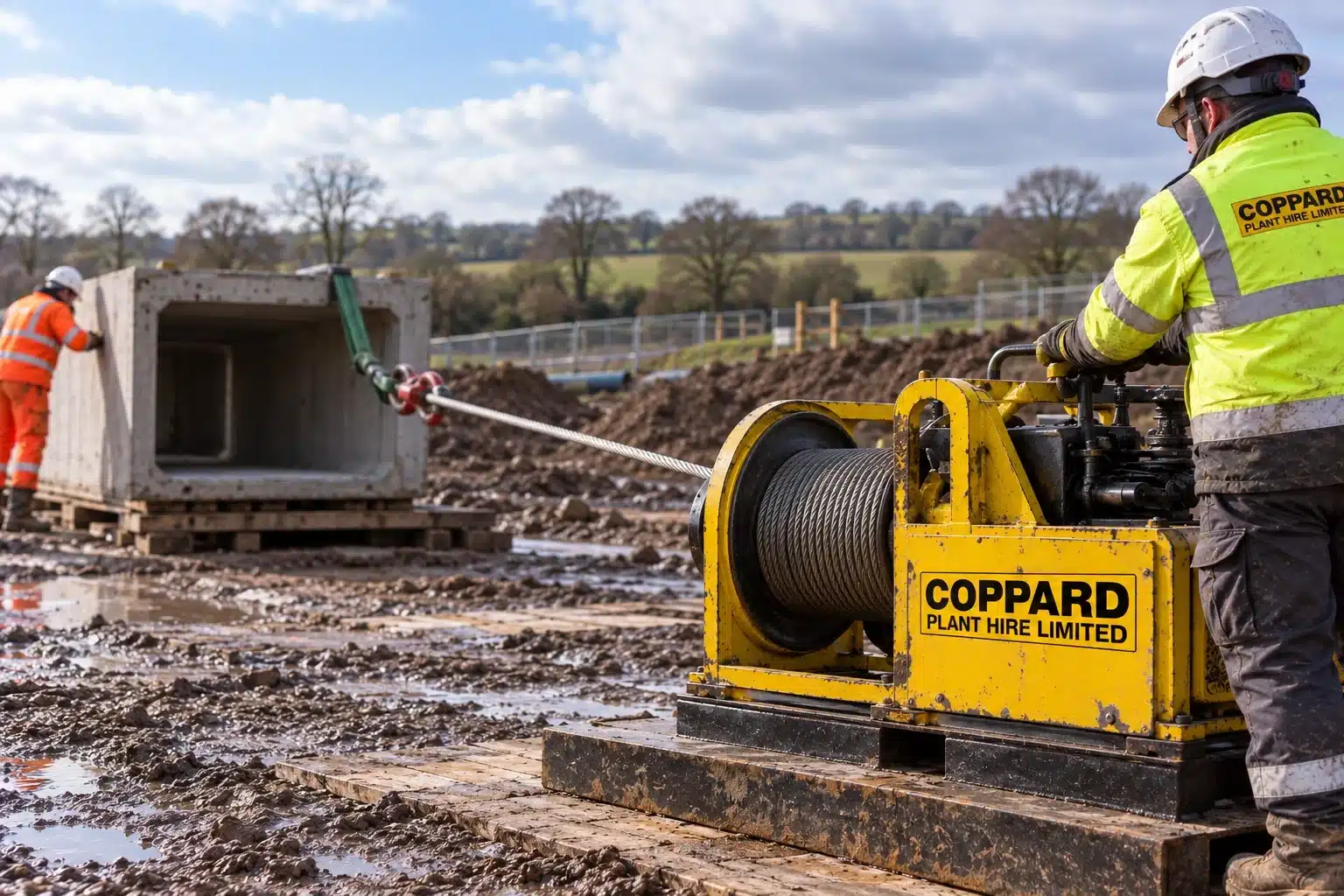
When booking, lead with what you can anchor to, then the load, the direction, the distance and the power on site. Say whether the pull is level, up or down a slope, or a hold under tension, and flag any change of direction or restricted access.
The team can then match a cable, manual or 110V electric unit and flag where a pulley or competent advice is needed, for work across Godstone and the wider Surrey area. Call 01883 743322 before you fix the method, especially where the pull runs on a gradient or beside a road.
Frequently Asked Questions - Winch Hire in Godstone, Surrey
What can I actually anchor a winch to?
Only a point genuinely rated to take the full reaction without shifting, bending or pulling out, which rules out most fence posts, trees and light vehicles. If the anchor lets go, the energy in the loaded line comes off all at once. On a Godstone plot the sound anchor is often not where you would like to pull from, so identify a structural or purpose-made point first, keep clear of the loaded line, and get advice where the fixing is in any doubt before taking up tension.
Does a slope change how big a winch I need?
Considerably. Gradient adds to the friction and the weight so the real pulling force climbs well above the load’s mass, and a wet bank around the North Downs can make a modest load demand a much larger unit. Give the depot the weight and the slope together, not the weight on its own, and let them size a winch with a working margin, since one running at its limit on a gradient has nothing spare if the load shifts or the surface gives way.
Is a winch the same as a hoist?
Not quite. A winch is built mainly to haul a load along a line, level or on a slope, while a hoist is made to raise and lower vertically. Some winches can do certain lifting duties, but only within their rating and instructions, and lifting brings extra legal duties that hauling does not. If the job is genuinely a vertical lift, say so, because a lifting appliance and rated accessories may be the correct kit rather than a pulling winch.
Can I turn the direction of the pull with a pulley?
Yes, but a pulley changes the forces at itself and at its anchor, often by more than people expect, so the pulley and both anchors have to be rated for the redirected load. An improvised block or a handy tree is not a rated point. Plan where the line turns and what each fixing carries before tension goes on, keep clear of the angle of the loaded line, and get competent advice for an awkward Godstone geometry rather than improvising it.
What UK rules apply if the winch lifts a load?
Where a winch raises a load rather than hauling it, the Lifting Operations and Lifting Equipment Regulations 1998, LOLER, apply alongside the general duty to supply suitable, maintained equipment. The text is at LOLER 1998 legislation on legislation.gov.uk. A lift has to be planned by competent people, so a pulling winch and a lifting winch are treated as different tools; tell the depot which the job actually needs.
Need winch hire in Godstone?
Tell us the anchor point, the load, the direction and the distance. Call Coppard on 01883 743322.