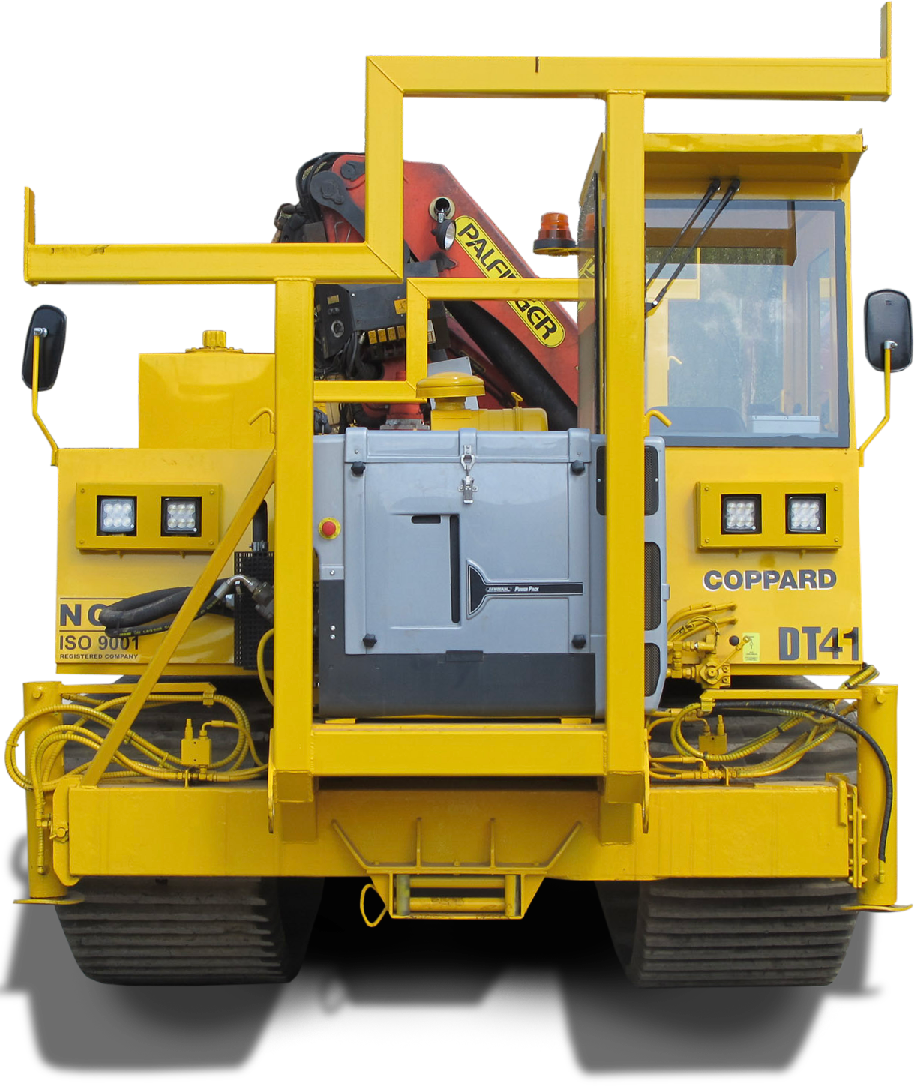
Load Mover Hire in Crowborough, East Sussex
Load mover hire in Crowborough for repositioning machinery and heavy equipment across suitable floors. Coppard supplies multidirectional skates, rollers and a pallet truck across East Sussex. Call 01892 662777 with the load weight, the footprint and the proposed route.
Moving a machine horizontally is more about route planning and weight distribution than headline capacity. Check the floor condition, thresholds, turning space and where the load can safely be supported. A workable method often combines skates or rollers with jacks or other handling equipment to raise, position and secure the machine at each stage.
Use Low-Level Movers When the Job Is Horizontal Relocation
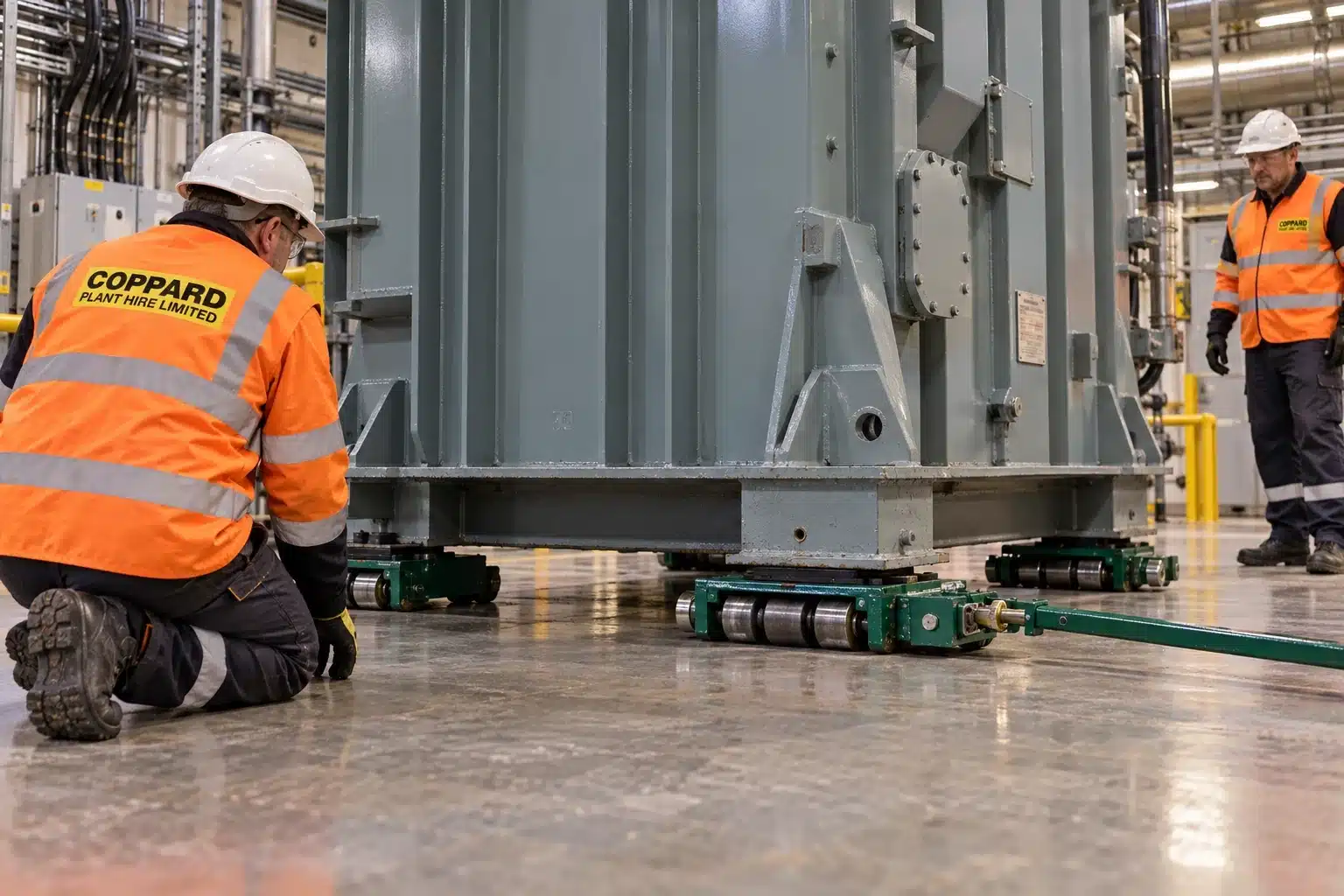
Machinery skates and rollers keep the load close to the floor while it is repositioned, which helps where a forklift cannot travel the full route or overhead lifting is impractical. The method still includes a lifting stage, because the machine must be raised enough for the movers to go underneath.
Plan how that first lift is achieved, where the load is supported and how the movers are recovered at the destination. Low-level movement is not a shortcut around lifting; it is a different handling sequence. Workshops, factories and plant rooms benefit most where headroom is limited but the floor and route suit concentrated wheel or roller loads.
Let the Floor Surface and Turns Decide the Mover Type
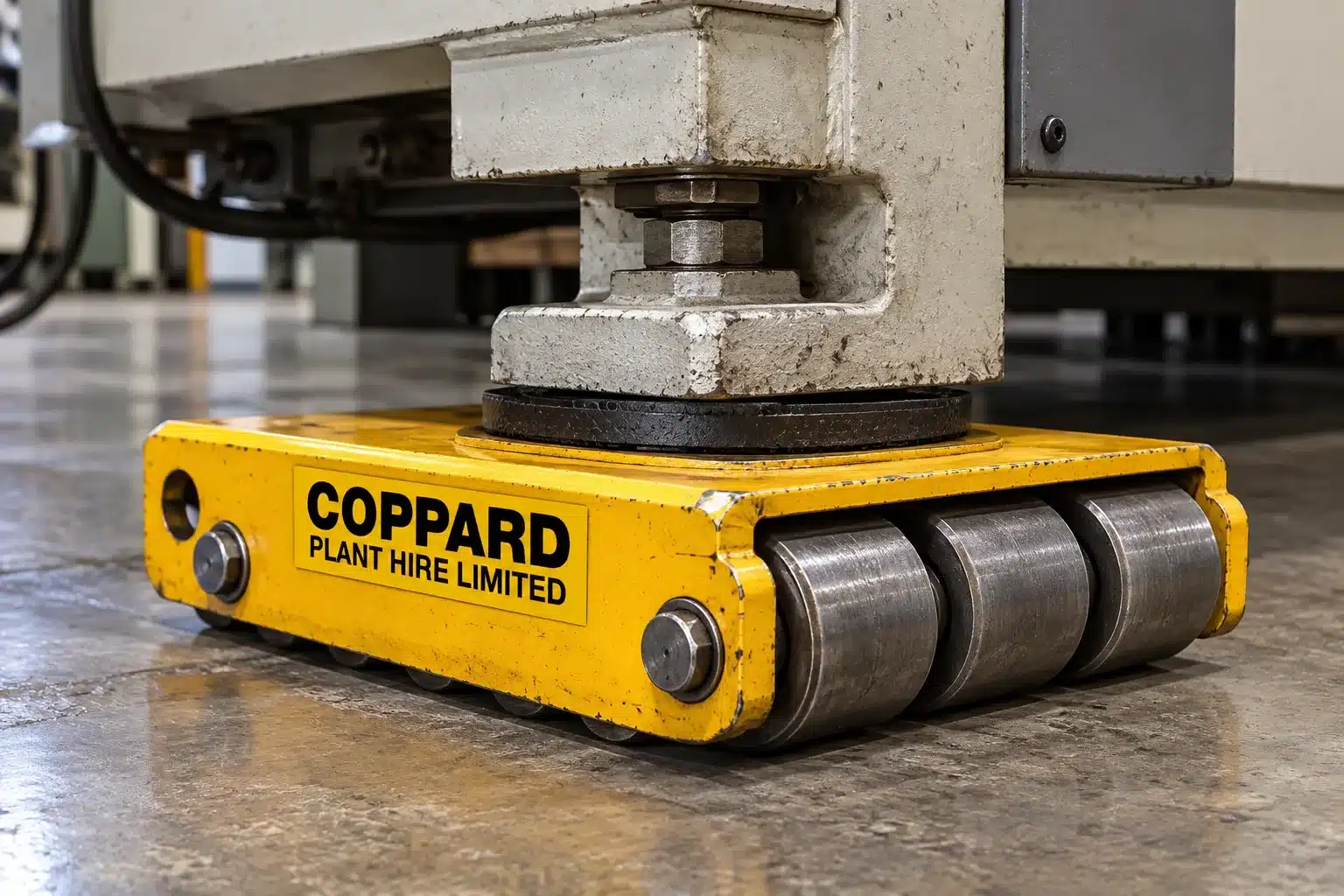
See the Coppard load mover range to compare multidirectional skates, rollers and a pallet truck. A multidirectional skate helps where the route has tight changes of direction, while roller systems suit planned travel across a good surface. Before hiring, walk the full route and note thresholds, joints, gradients, damaged concrete, debris and tight corners.
Small rollers that run smoothly on a clean factory floor can stop dead at an uneven joint or become hard to steer on a slope. Measure doorways and pinch points as well as the machine footprint. Choosing the mover from the route conditions often matters more than choosing from the capacity printed on the equipment.
Support the Machine at Structural Points and Watch the Centre of Gravity
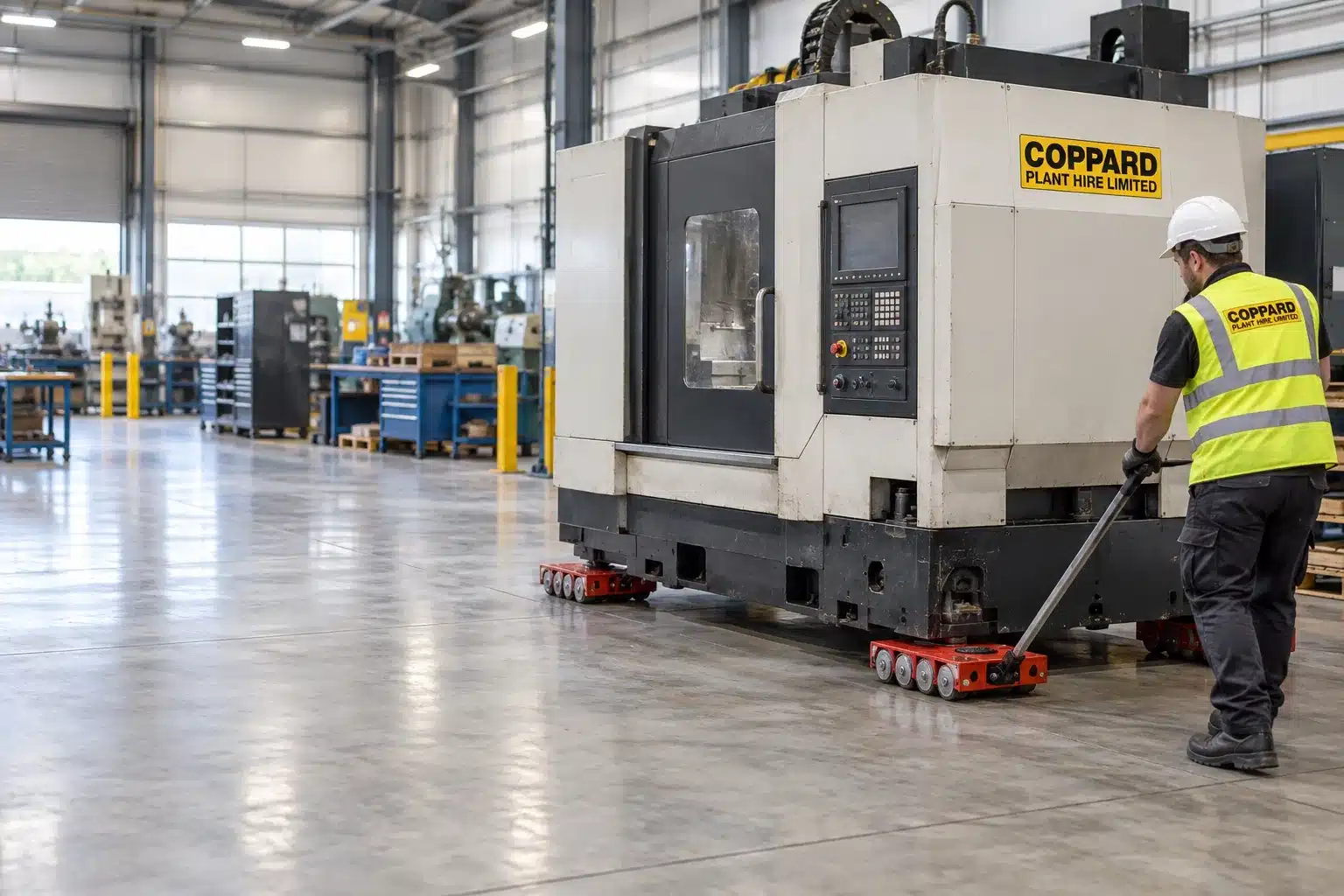
Heavy equipment rarely carries its mass evenly. Motors, gearboxes, tanks and frames create concentrated loads or an offset centre of gravity, while covers and sheet panels may be no support at all. Before raising the machine, find the maker’s lifting or jacking points where they exist, and decide how the skates or rollers share the weight.
A mover with enough headline capacity can still be used badly if the load is unstable or sits on weak parts of the structure. If the weight distribution is uncertain, get expert moving advice before the first jack goes in. The aim is a load that stays stable through the lift, the transfer, the steering and the final lowering.
Plan the Lifting Stage That Comes With Low-Level Moving
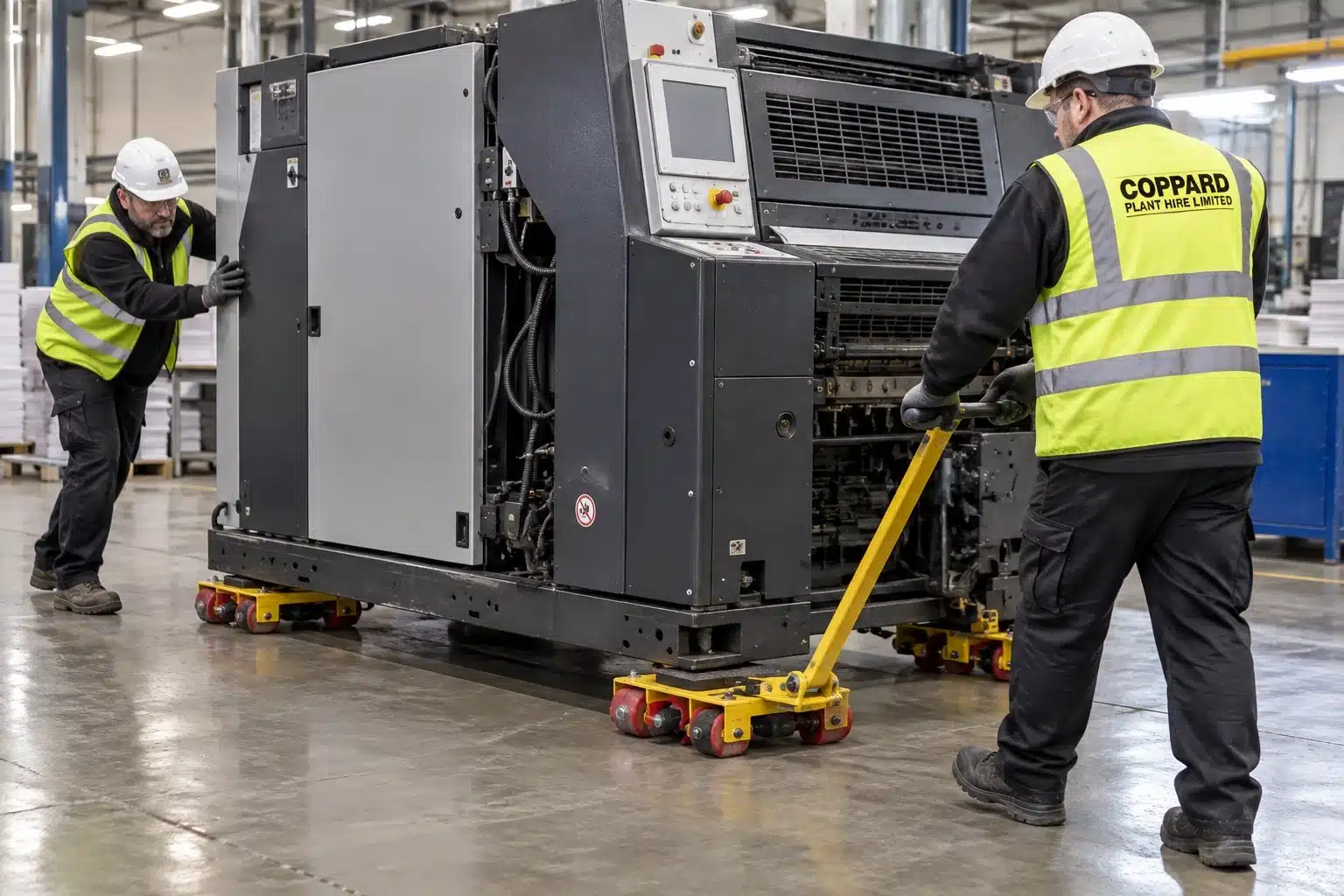
Skates and rollers move a load along, but something has to raise it onto them and lower it at the end. That lifting stage needs its own suitable equipment and method, whether that is jacks, toe jacks or other handling gear. Treat it as part of the job, not an afterthought once the movers arrive.
Think about where the machine will be jacked, how it stays supported while the movers go under, and how it comes off cleanly at the destination. A move that is well planned at the ends is far easier to control than one where the raising and lowering are improvised on the day.






Give Crowborough the Route as Well as the Weight
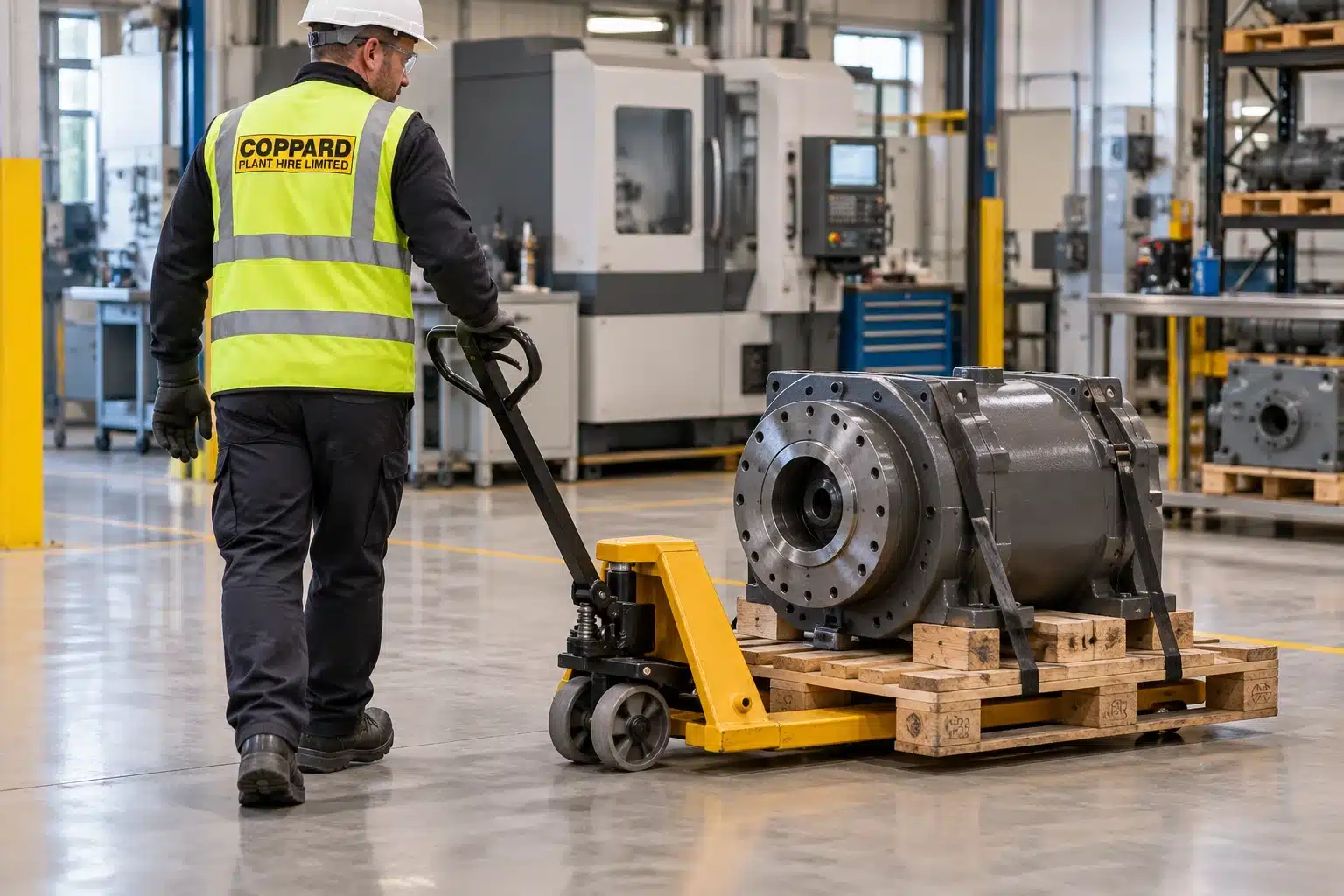
When speaking to the Crowborough Tool Rental Service, give the machine weight, dimensions and support points, but also describe the whole travel route: floor type, gradients, thresholds, tight turns, doorway widths and the distance. Explain how the machine will be raised onto the movers and whether it must be aligned precisely at the destination.
Those details show whether skates, rollers, pallet handling or supporting lifting gear are needed together. For difficult installation or removal, the safest method may need expert handling input rather than a single hire item. Call 01892 662777 before the machine is disconnected or the route is cleared.
Frequently Asked Questions - Load Mover Hire in Crowborough, East Sussex
Can machinery skates be used on rough or uneven ground?
They work best on firm, reasonably smooth surfaces. Broken concrete, debris, thresholds, joints and gradients can interrupt movement or make steering unpredictable, especially under a heavy load. Inspect the complete route before choosing the equipment. If the surface is unsuitable, a different handling method or some temporary route preparation is usually better than assuming a higher-capacity skate will simply overcome the problem.
How should skates be positioned under a heavy machine?
Position them around the machine’s structural support points, its weight distribution and its centre of gravity, not just at equal spacing. Use the maker’s lifting or jacking information where it exists, because concentrated components can make one side far heavier than the other. If the structure or the weight distribution is uncertain, get expert advice before raising the load, since a stable transfer onto the movers sets up everything that follows.
Will I need jacks as well as the movers?
Often, yes. The machine normally has to be raised enough for skates or rollers to go under suitable support points, then lowered safely at the destination, and that lifting stage needs its own equipment and method. Discuss the whole sequence rather than hiring movers on their own. Depending on the machine and route, jacks, lifting accessories or other handling gear may be needed alongside the low-level movers.
What should I tell the depot when hiring a load mover?
Give the machine weight and dimensions and the support points, then describe the route: floor type, gradients, thresholds, tight turns, doorway widths and distance. Say how the machine will be raised onto the movers and whether it must be aligned accurately at the end. That lets the depot judge whether skates, rollers, a pallet truck or supporting lifting equipment are needed together, rather than sending one item that only solves part of the move.
What UK rules are relevant to reducing hazardous manual handling?
The Manual Handling Operations Regulations 1992 require employers, so far as reasonably practicable, to avoid hazardous manual handling and otherwise to assess and reduce the risk of injury. You can read the official regulations at Manual Handling Operations Regulations 1992 on legislation.gov.uk. Mechanical load-moving equipment reduces some manual effort, but the whole method still has to address stability, the lifting stages, the route conditions and the people involved.
Need load mover hire in Crowborough?
Tell us the machine weight, the dimensions, the floor condition, and the turns and thresholds on the route. Call Coppard on 01892 662777.